
To plan low-gas meals, I focus on fermentation techniques like soaking and fermenting beans and vegetables to reduce their gas-causing properties. I slow introduce soluble fiber, cook ingredients thoroughly, and include probiotic-rich foods like yogurt. I avoid mixing too many high-fiber items at once and chew each bite well. With these simple strategies, I create digestion-friendly meals that minimize bloating. If you keep exploring, you’ll discover even more tips to enjoy meals with less gas.

Get oils, diffusers and self-care delivered free — and shop member deals
- Fast, free delivery on millions of items
- Access to Prime Big Deal Days deals on October 6–7
- Prime Video, Amazon Music and more included
Key Takeaways
- Incorporate fermented foods like yogurt, kefir, and fermented vegetables to boost probiotics and reduce gas.
- Gradually introduce high-fiber ingredients, focusing on soluble fiber for easier digestion.
- Use soaking or fermenting techniques on beans, grains, and vegetables to decrease gaseogenic properties.
- Opt for cooked, well-chewed ingredients and stay hydrated to support digestion and minimize bloating.
- Plan balanced meals with moderate fiber and probiotic-rich foods to prevent excessive gas and promote gut comfort.
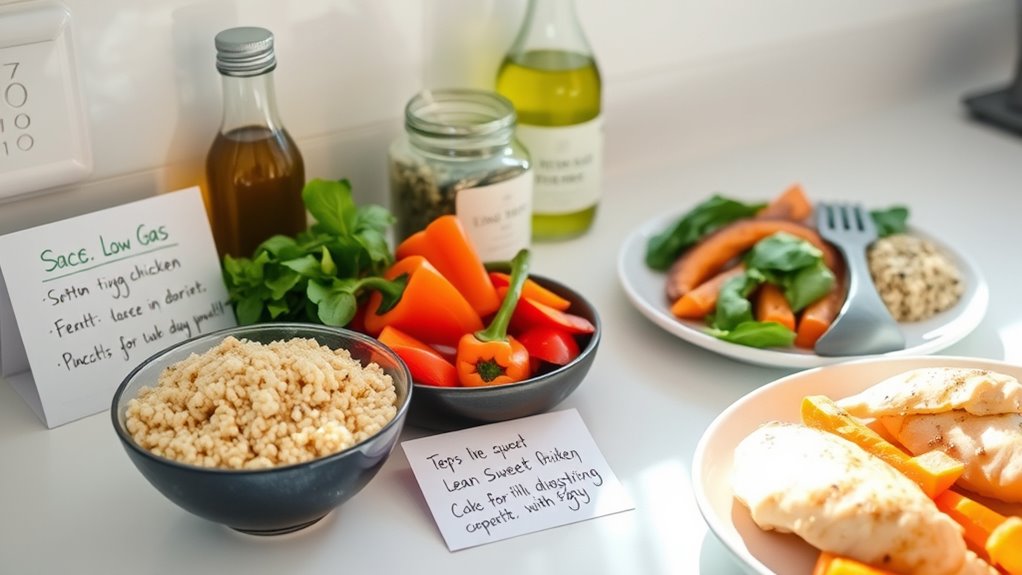
If you’re looking to reduce gas and bloating, planning meals carefully can make a big difference. One of the most effective strategies is understanding how fermentation tips can help you minimize excess gas. Fermentation is a natural process that breaks down certain foods, making them easier to digest and less likely to cause bloating. For example, soaking or fermenting beans, grains, and vegetables before cooking can considerably decrease their gaseogenic properties. I’ve found that taking the time to ferment or soak your ingredients not only reduces gas but also enhances flavors and nutrient absorption. It’s a simple step that pays off in comfort and digestion.
Fermentation reduces gas and enhances flavor—soaking and fermenting foods makes digestion easier.
At the same time, paying attention to dietary fiber is vital. While fiber is essential for overall health, some types can lead to increased gas if not introduced gradually or if consumed in excess. Soluble fiber, found in foods like oats, apples, and carrots, tends to be gentler on the gut and can actually help regulate digestion. Insoluble fiber, present in whole wheat and certain vegetables, can sometimes cause more bloating if your body isn’t used to it. My approach is to start with small portions of high-fiber foods and gradually increase intake, giving my gut time to adjust. This way, I avoid sudden bloating or discomfort.
When planning low-gas meals, I focus on combining ingredients carefully. For instance, I avoid mixing too many high-fiber vegetables in one meal and prefer cooked over raw vegetables, since cooking breaks down some of the fibers and makes them easier to digest. I also incorporate fermented foods like yogurt, kefir, or fermented vegetables because they contain beneficial probiotics that support healthy gut bacteria, aiding digestion and reducing gas. These fermented foods are part of my routine, especially when I’m trying to keep my meals gentle on my stomach.
Another tip I use is to chew thoroughly. Proper mastication starts the digestive process and reduces the workload on my gut. I also drink plenty of water, which helps fiber do its job without causing constipation or additional bloating. Additionally, choosing digestible ingredients that are less likely to produce excess gas can further improve comfort. Planning ahead and choosing ingredients wisely makes a noticeable difference. I find that when I follow fermentation tips and manage my dietary fiber intake thoughtfully, I experience less gas and bloating, and my digestion feels smoother. It’s all about balancing what I eat, preparing ingredients properly, and giving my gut the best environment to function comfortably.
fermentation starter kit for vegetables
As an affiliate, we earn on qualifying purchases.
As an affiliate, we earn on qualifying purchases.
Frequently Asked Questions
How Can I Identify Gas-Producing Ingredients in My Diet?
To spot gas-producing ingredients, I pay attention to common culprits like beans, cabbage, and carbonated drinks. I also watch my intake of fermentation foods, which can cause bloating, and dairy alternatives if I’m sensitive to dairy. Keeping a food diary helps me identify patterns. Sometimes, I experiment by removing these foods temporarily to see if my symptoms improve, then reintroduce them gradually.
Are There Specific Cooking Methods to Reduce Gas?
Think of cooking like taming a wild horse—careful methods can keep things calm. Using fermentation techniques, like fermenting vegetables, pre-digests tough fibers, reducing gas. Gas reducing cookware, such as pressure cookers, tenderizes and breaks down foods efficiently, minimizing gas production. Steaming is gentle and helps retain nutrients while decreasing gas. These methods help you enjoy meals without the usual discomfort, making your digestion smoother and more manageable.
Can Meal Timing Affect Gas Production?
Yes, meal timing can definitely affect gas production. I find that eating smaller, more frequent meals helps my digestive health by giving my gut less work at once, reducing gas. Avoiding large meals late at night also prevents bloating and discomfort. Being mindful of when I eat allows my digestion to proceed smoothly, minimizing gas and promoting better overall digestive health.
What Are Some Quick Low-Gas Snack Options?
If you’re looking for quick low-gas snack options, I recommend focusing on portable choices like bananas, rice cakes with almond butter, or carrot sticks. I always keep snack portioning in mind to avoid overeating, which can cause discomfort. These snacks are easy to carry, gentle on digestion, and help me manage gas efficiently. They’re perfect for a quick, satisfying, low-gas boost anytime I need it.
How Do I Balance Nutrition With Low-Gas Requirements?
Balancing nutrition with low-gas needs means choosing foods that support healthy fermentation processes and have moderate fiber content. I focus on easily digestible carbs, lean proteins, and low-FODMAP vegetables to keep gas at bay while maintaining balanced nutrition. I avoid high-fiber foods that can trigger bloating, and incorporate probiotics to support gut health. This approach helps me nourish my body without discomfort, making meal planning both effective and enjoyable.
Conclusion
If you’re worried that low-gas meals mean sacrificing flavor or variety, don’t be! With the right ingredients and simple strategies, you can enjoy delicious, satisfying dishes without discomfort. It might take a little planning at first, but once you get the hang of it, low-gas eating becomes second nature. Trust me, you’ll find plenty of tasty options that keep your meals enjoyable and gentle on your digestive system.
Halloween Picks
halloween
As an affiliate, we earn on qualifying purchases.