
TL;DR

Get oils, diffusers and self-care delivered free with Prime
- Fast, free delivery on millions of items
- Prime Video, Amazon Music and more included
- Member-only deals all year
Florida health officials have reported more than 250 locally acquired dengue cases this year, most of them in Hillsborough County near Tampa. Available state and medical-journal records suggest it is the highest calendar-year total in a U.S. state since at least the 1940s, though historical data are limited.
Florida health officials have reported more than 250 locally acquired dengue cases so far this year, most in Hillsborough County, where Tampa is located. Available records suggest the outbreak may be the largest in a U.S. state in a calendar year since at least the 1940s, although federal officials say historical dengue data are limited.
The outbreak was first reported in July and is centered in the Tampa area. Local officials in Hillsborough and nearby counties have declared emergencies, while mosquito-control workers have been spraying in the area and checking properties for standing water where mosquitoes can breed. The report says Florida’s locally acquired cases had reached 252, compared with 245 travel-associated cases as of the previous week. At least 13 cases in Hillsborough County were diagnosed in travelers.
Florida’s previous highest annual count was just under 200 locally acquired cases in 2023. The Tampa-area total is approaching the 264 cases reported in Hawaii over six months in 2015–16, the largest state outbreak reported since the 2009–10 Key West cases. Florida has also reported one dengue death this year: an elderly Tampa woman who died on Sept. 4, according to the report.
Dengue is a virus transmitted by mosquitoes. Many infected people do not become ill; others develop fever, flu-like symptoms and severe aches. In some cases, the disease can cause bleeding, shock and death. Four dengue virus types circulate. Infection with one type provides lasting antibodies against that type, but a later infection with another type can be more serious, a factor that has complicated vaccine development.
Tampa Faces a Rising Local Risk
The case count matters because it reflects ongoing transmission by local mosquitoes, not only infections brought back by travelers. That increases the relevance of mosquito precautions for people who live in or visit affected areas. The report notes that Florida’s local case count has slightly exceeded its travel-associated count, though the two totals are close.
Most dengue infections are not severe, but serious illness can require urgent medical care. The report also says many people in the Tampa area may lack prior immunity to any dengue type. Dawn Wesson, a Tulane University expert on mosquito-borne disease, told MedPage Today that Florida’s travel flows may contribute to the state’s dengue burden, while saying it is difficult to explain why the surge is occurring in Tampa this year.
The outbreak also puts pressure on local mosquito-control operations and public-health messaging. The source report says climate conditions and the expanding geographic reach of mosquitoes that can carry dengue could make local outbreaks more frequent. That is an expert assessment, not a confirmed forecast for the timing or scale of future outbreaks.
mosquito repellent for dengue prevention
As an affiliate, we earn on qualifying purchases.
As an affiliate, we earn on qualifying purchases.
How Florida Reached This Record
For decades, most dengue infections identified in the continental United States were associated with international travel; locally acquired cases were also reported in Puerto Rico, where dengue is regularly widespread. Florida typically records the most locally transmitted cases among the 50 states. The first reported continental U.S. cases outside the Texas-Mexico border since 1945 were identified in Key West in 2009–10.
Hawaii reported 264 locally acquired cases over six months in 2015–16. Florida’s current total is nearing that count, but comparisons across outbreaks should be treated cautiously: the available records are incomplete, and the Hawaii figure covers a six-month period while Florida’s count is reported for the year to date. The source report says there have been nearly 1,900 locally acquired U.S. cases this year, most in Puerto Rico, citing the CDC, and more than 2.2 million infections and nearly 1,200 deaths worldwide, citing the World Health Organization.
Warm-weather mosquito species capable of transmitting dengue are present in Florida and other hotter U.S. locations. Wesson said climate change may be contributing to their broader geographic reach. She also said Florida’s substantial travel connections with Puerto Rico and other places where dengue circulates can introduce the virus; the precise reasons for the Tampa-area concentration remain uncertain.
““There’s a good chance that this is the new normal.””
— Dawn Wesson, Tulane University expert on dengue and other mosquito-borne diseases
Limits in the Outbreak Data
The claim that this is the largest state outbreak in decades is based on available information from state health departments and medical journals, not a complete federal historical database. The CDC has said its dengue outbreak data are limited, so the precise ranking cannot be treated as definitive. The case total is also a snapshot from the source report and may change as officials identify and report additional infections.
It is not yet clear why Hillsborough County has accounted for most of Florida’s cases this year. Wesson said travel patterns may be part of the explanation but described the cause as difficult to determine. The report also does not establish how much climate conditions contributed to this specific outbreak, or how long local transmission will continue.
Mosquito Control and Case Tracking
Local mosquito-control teams are continuing efforts to reduce mosquito populations through spraying and by identifying standing water, according to the report. State health officials will need to keep tracking locally acquired and travel-associated infections to establish how the outbreak develops and whether the current total rises further. The source does not give a schedule for a new statewide case update.
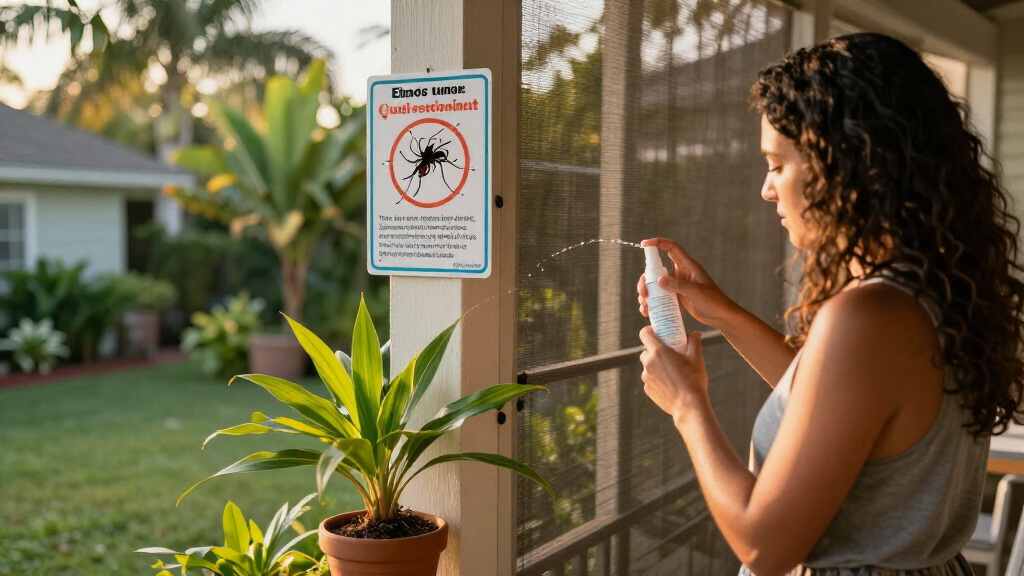
People in affected areas can reduce exposure by using an EPA-registered insect repellent, wearing loose-fitting long sleeves and pants, using screens or air conditioning, and emptying containers that collect water. The report says dengue-carrying mosquitoes can bite during the day, with activity often higher after sunrise and around sunset. Anyone who develops concerning symptoms after possible exposure should seek medical advice.
Key Questions
How many locally acquired dengue cases has Florida reported?
Florida officials had reported more than 250 locally acquired cases this year. The source report gives a count of 252 as of the previous week; totals can change as cases are reported.
Where is the outbreak concentrated?
Most reported cases were in Hillsborough County, which includes Tampa. The outbreak is described as centered in the Tampa area, just north of the city.
Is this definitively the largest state outbreak in decades?
Available records suggest it may be the highest calendar-year total in a U.S. state since at least the 1940s. The CDC says its dengue outbreak data are limited, so the historical comparison is not definitive.
How can people reduce the chance of mosquito bites?
Use an EPA-registered repellent, wear loose-fitting clothing that covers skin, spend time in screened or air-conditioned spaces, and remove standing water around the home. The source report says the mosquitoes can bite throughout the day.
Source: rss
Halloween Picks
halloween
As an affiliate, we earn on qualifying purchases.