A breath test can reveal specific health details like bacterial overgrowth, liver function, and infections by analyzing gases you exhale. It’s quick, non-invasive, and useful for targeted issues, but it can’t give a full view of your overall health or diagnose everything. Factors like food, medications, or smoking can affect results. To understand what breath tests can genuinely tell you—and what they can’t—keep exploring these insights further.
Key Takeaways
- Breath tests can diagnose bacterial overgrowth, liver function, and infections through analysis of exhaled gases.
- They cannot detect all health conditions or replace invasive diagnostic procedures.
- Results may be influenced by recent antibiotic use, smoking, or certain foods, affecting accuracy.
- Breath tests provide specific metabolic information but do not offer a comprehensive health assessment.
- Proper preparation and testing protocols are essential for accurate, reliable results.
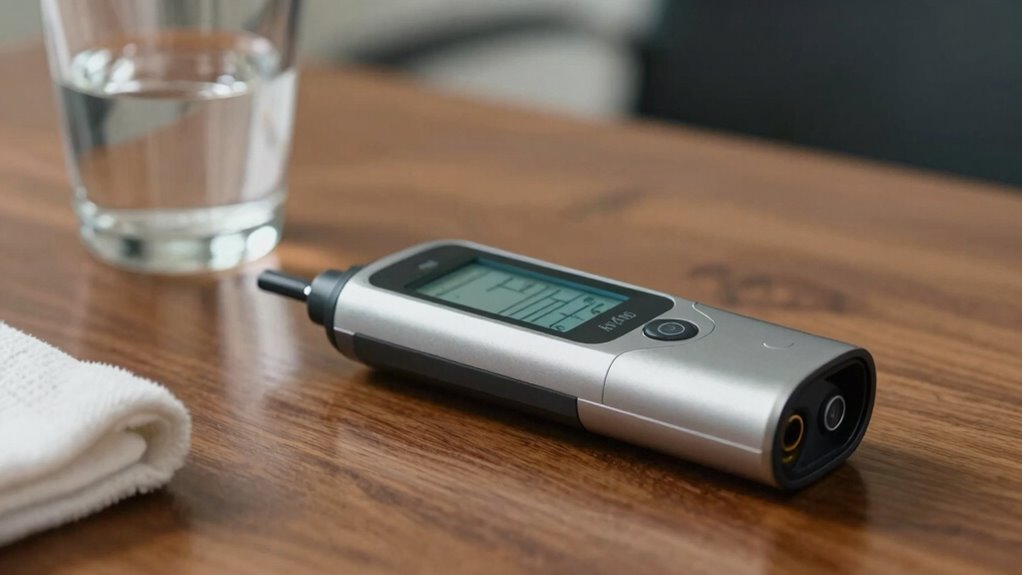
Have you ever wondered how a simple breath sample can reveal so much about your health? It might seem surprising, but breath tests are a powerful tool in modern medicine. These non-invasive medical procedures can detect and diagnose a variety of conditions by analyzing the gases you exhale. When you undergo a breath test, you’re fundamentally providing your body’s metabolic information in a quick, painless way. But knowing what a breath test can tell you—and what it can’t—is key to understanding their true value.
Breath tests are renowned for their impressive test accuracy, especially when performed correctly. Medical procedures involving breath analysis have advanced greatly, allowing doctors to identify issues like bacterial overgrowth in your gut, liver function, and even certain infections. The process is straightforward: you breathe into a device that measures specific gases or compounds, such as hydrogen or methane, which are produced by bacteria or your body’s metabolic processes. Because these tests are highly sensitive, they can detect even small changes in gas levels, providing valuable clues about your health. Additionally, research demonstrates that they can be effectively used for diagnosing certain infections, further enhancing their diagnostic utility. The reliability of these tests can also be impacted by proper pre-test instructions, such as fasting or avoiding specific foods, to ensure accurate results. Implementing proper testing protocols can significantly improve the accuracy and consistency of the results. Properly controlled testing environments and standardized procedures contribute to the overall accuracy of breath tests, making them a dependable diagnostic tool when used correctly. When executed correctly, they offer reliable, quick results that can guide further diagnosis or treatment.
Breath tests are highly sensitive and accurate when performed correctly, providing quick insights into your health.
That said, breath tests aren’t magic. They can’t diagnose every health condition or replace more exhaustive medical procedures like blood tests or imaging. For example, while they’re useful for detecting bacterial overgrowth or Helicobacter pylori infection, they won’t give you a full picture of your overall health or identify issues that require more invasive testing. Additionally, factors like recent antibiotic use, smoking, or certain foods can influence test results, sometimes leading to false positives or negatives. Proper test preparation can help minimize these issues and improve accuracy. So, while breath tests are valuable tools, they’re best used as part of a broader diagnostic process, not as standalone solutions.
In the end, a breath test offers a quick, non-invasive way to gather useful health information, especially when it comes to specific digestive conditions. Its strength lies in its ease and the accuracy of the results when performed correctly. Still, it’s essential to have realistic expectations—these tests can’t tell you everything. They’re a piece of the puzzle, helping your healthcare provider make more informed decisions. Understanding both what a breath test can and can’t tell you empowers you to take an active role in your health and to trust the medical procedures that help keep you well.
home breathalyzer for health testing
As an affiliate, we earn on qualifying purchases.
As an affiliate, we earn on qualifying purchases.
Frequently Asked Questions
How Accurate Are Breath Tests for Diagnosing Specific Diseases?
Breath tests are generally accurate for diagnosing specific conditions like H. pylori infection and lactose intolerance, but they’re not perfect. You should consider alternative diagnostic methods if results are unclear. They’re also cost-effective and accessible, making them a practical choice. However, factors like recent medication or certain health issues can affect accuracy. Always consult your doctor to interpret results and decide if additional tests are needed.
Can Breath Tests Detect All Types of Infections?
Think of breath tests like a flashlight in a foggy night—they reveal some details but not everything. They can’t detect all types of infections, especially those deep within tissues or blood. While they’re useful for conditions like H. pylori, alternative diagnostic methods like blood tests or biopsies often provide clearer answers. Breath test limitations mean you shouldn’t rely solely on them for thorough infection detection.
Are There Any Risks or Side Effects From Breath Testing?
Breath tests are generally safe, but you might experience mild side effects like nausea or bloating, especially if your diet restrictions or test preparation involve fasting or avoiding certain foods. These steps help guarantee accurate results but can cause discomfort. Follow your healthcare provider’s instructions carefully to minimize risks. Usually, there are no serious side effects, but inform your provider if you feel unwell during or after the test.
How Long Does It Take to Get Results From a Breath Test?
You’ll get your breath test results pretty quickly—usually within 30 minutes to a few hours, ironically, making the wait almost the hardest part. During test preparation, you might have diet restrictions, like avoiding certain foods, to guarantee accuracy. These steps can slightly extend your wait, but generally, you won’t be waiting long. Just follow the instructions, and your results should be ready before you know it.
Can Breath Tests Be Used to Monitor Treatment Progress?
Yes, breath tests can help monitor your treatment progress, but keep in mind dietary considerations are essential for accurate results. You should follow specific guidelines before testing, like avoiding certain foods or medications. However, testing limitations exist, so results might not fully reflect your health status. Regular testing, combined with your doctor’s advice, can give you a clearer picture of how well your treatment is working.
Conclusion
While breath tests offer valuable insights into certain health conditions, they’re no substitute for thorough medical evaluation—think of them as your modern-day alchemist’s tool, not the Holy Grail. They can reveal a lot, but not everything, so don’t rely solely on a single test to diagnose or dismiss a concern. Remember, a wise healer of yore would always combine test results with keen observation and history—wisdom that still holds true today.