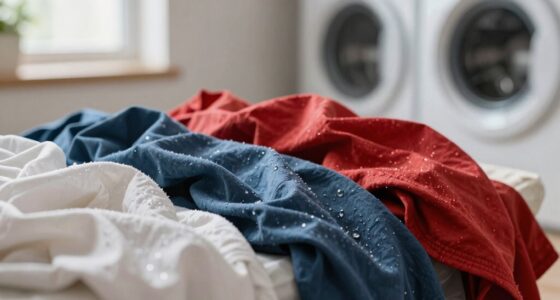
Kitchen textiles become hidden odor sources because their fibers trap moisture, organic matter, and bacteria, creating a perfect environment for microbial growth. Over time, these microorganisms produce unpleasant smells that seep deep into the fibers, making odors tough to remove. Simply washing may not reach all the hidden bacteria or neutralize embedded odors. If you want to learn how proper cleaning and drying methods can eliminate these persistent smells, keep exploring the details ahead.

Get oils, diffusers and self-care delivered free — and shop member deals
- Fast, free delivery on millions of items
- Access to Prime Big Deal Days deals on October 6–7
- Prime Video, Amazon Music and more included
Key Takeaways
- Natural and synthetic fibers trap organic matter and moisture, creating environments for bacteria and mold growth.
- Microorganisms settle deep into fabric fibers, producing odors that are difficult to eliminate with regular washing.
- Damp textiles left in humid or enclosed areas promote microbial proliferation, leading to persistent odors.
- Embedded odors become resistant over time as bacteria and mold continue to colonize fibers.
- Proper drying, deep cleaning, and regular replacement of textiles prevent microbial buildup and hidden odors.

Your kitchen textiles—such as dish towels, sponges, and oven mitts—may seem clean, but they can harbor hidden sources of odor that linger despite regular washing. These textiles are made from various fabric fibers designed to absorb moisture and dirt, making them prime environments for bacteria and mold growth. Over time, these microorganisms settle deep into the fabric fibers, releasing unpleasant smells that traditional laundering often fails to eliminate fully. This is especially true if your cleaning methods don’t penetrate the fibers thoroughly or if you reuse textiles before they’re completely dry.
The key to understanding why odors persist lies in the nature of fabric fibers. Natural fibers like cotton and linen can trap organic matter and moisture, creating a perfect breeding ground for bacteria. Synthetic fibers, such as polyester or microfiber, can also trap odors because they don’t breathe as well as natural fibers, and their structure can hold onto oils, grease, and food particles. If your cleaning methods rely solely on regular washing with detergent, you might not be ascertaining the bacteria hidden deep within these fibers. High temperatures, vinegar, baking soda, or specialized cleaning agents are often necessary to break down and remove embedded odors.
Additionally, improper drying can exacerbate the problem. Leaving damp textiles in a pile or in a humid environment encourages microbial growth. When microbes thrive, they produce smelly compounds, which settle into the fabric fibers, making the smell more stubborn over time. To combat this, you should take into account that textiles are thoroughly dried in sunlight or a well-ventilated area after washing. Sunlight acts as a natural disinfectant, helping to eliminate bacteria and reduce odors. Proper drying techniques are crucial for preventing microbial growth and ensuring textiles stay fresh.
Another aspect to consider is how often you replace or deep-clean your textiles. Over time, the fabric fibers become saturated with oils, food residues, and bacteria, making it increasingly difficult to remove odors with conventional cleaning methods. Regularly replacing dish towels and sponges, or sanitizing oven mitts with vinegar or bleach solutions, can prevent odors from becoming embedded. For stubborn smells, soaking textiles in a mixture of vinegar and water or running them through a hot water cycle with added baking soda can help loosen and neutralize odor-causing particles within the fibers. Recognizing that microbial growth is a primary factor in odor development emphasizes the need for thorough cleaning and proper drying techniques. Using appropriate cleaning products that target bacteria and mold can significantly improve odor removal results.
Furthermore, understanding the fiber structure of textiles can guide you in choosing the most effective cleaning strategies. Proper maintenance not only prolongs the lifespan of your kitchen textiles but also ensures a healthier environment free from persistent odors.
kitchen dish towel odor eliminator
As an affiliate, we earn on qualifying purchases.
As an affiliate, we earn on qualifying purchases.
Frequently Asked Questions
Can Specific Fabrics Retain Odors Longer Than Others?
Yes, specific fabrics can retain odors longer than others because of their porosity and odor absorption properties. Fabrics with high porosity, like terry cloth or microfiber, trap more odor molecules, making them harder to eliminate. Conversely, tightly woven fabrics resist odor absorption better. To keep your kitchen textiles smelling fresh, choose less porous materials and wash them regularly, especially after handling strong-smelling foods or spills.
How Often Should Kitchen Textiles Be Replaced?
Ever wonder how often you should replace your kitchen textiles? You should replace them every 1-2 years to prevent odors and maintain fabric storage hygiene. Textile durability varies, but keeping an eye on signs of wear, like fraying or persistent smells, helps you know when it’s time. Regularly replacing towels, cloths, and dish mats keeps your kitchen fresh and safe, ensuring you’re always cooking in a clean environment.
Are There Effective Natural Methods to Eliminate Odors?
Yes, you can use natural deodorizers like baking soda or lemon to eliminate odors from kitchen textiles. Sprinkle baking soda on fabrics, let it sit for a few hours, then wash. For fabric treatment, soak textiles in a mixture of vinegar and water before washing to neutralize smells. These natural methods are effective, affordable, and safe, helping your textiles stay fresh without harsh chemicals.
Do Dishwasher or Washing Machine Settings Affect Odor Removal?
Yes, your dishwasher or washing machine settings directly impact odor removal. Using the right machine cycles, like a sanitize or deep-clean cycle, helps eliminate bacteria and lingering smells. Additionally, selecting effective detergent types, such as those with enzyme or antibacterial properties, enhances odor elimination. Make sure to run these cycles regularly at high temperatures and choose detergents suited for the textiles to keep your kitchen linens fresh and odor-free.
Can Odors Transfer From Textiles to Food or Utensils?
You might think your textiles only smell when they’re dirty, but ironically, their fabric porosity and odor absorption can transfer odors to your food or utensils. These textiles trap odors deep within their fibers, which can then seep onto your dishes, especially if not thoroughly cleaned. So, even if your kitchen looks spotless, those hidden odors can sneak through, turning your meal into an unintended aroma transfer.
Conclusion
So, next time you’re scrubbing your countertops or air-frying that perfect snack, don’t forget your kitchen textiles. They might look innocent, but they’re secretly harboring odors you can’t see—or smell… until it’s too late. Ironically, those cozy towels and sponges are the true culprits, hiding behind their fluffy facades. Stay vigilant, wash often, and don’t let your kitchen’s hidden odor sources turn your culinary paradise into a stinky mystery.
Fall Picks
fall essentials
As an affiliate, we earn on qualifying purchases.