To control cooking odors, I start by turning on the exhaust fan and opening windows before I cook. During, I cover pots, use vinegar or lemon for odor neutralization, and keep ventilation strong. After, I open windows, refresh charcoal or baking soda, and wipe surfaces to remove lingering smells. Mixing these simple steps helps keep my kitchen smelling fresh. If you want to learn more, I’ll share additional tips for effective odor management throughout your cooking process.

Get oils, diffusers and self-care delivered free with Prime
- Fast, free delivery on millions of items
- Prime Video, Amazon Music and more included
- Member-only deals all year
Key Takeaways
- Use ventilation tools like range hoods, fans, and open windows before, during, and after cooking to dissipate odors.
- Cover pots and pans during cooking to trap smells and add odor-neutralizing ingredients such as vinegar or lemon juice.
- Open windows and turn on fans immediately after cooking to ventilate indoor air and remove lingering smells.
- Place odor absorbers like baking soda or activated charcoal around the kitchen to absorb smells proactively.
- Maintain regular cleaning and filter replacement for ventilation systems to prevent odor buildup over time.
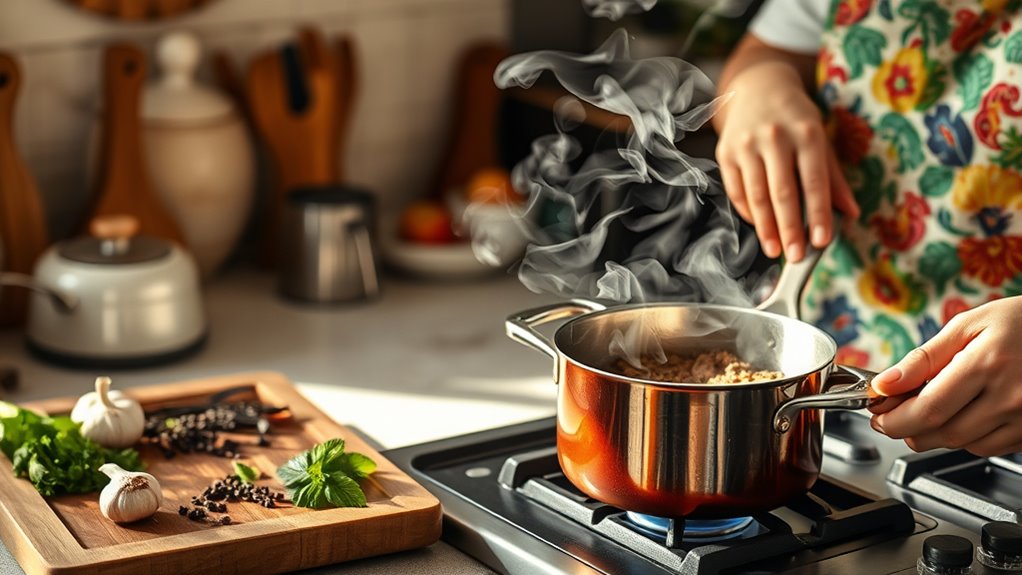
Have you ever noticed how certain cooking smells seem to linger long after you’ve finished? It’s almost like the aroma clings to everything, making your home smell like yesterday’s meal for hours. I’ve learned that managing these odors is all about using the right techniques before, during, and after cooking. One of the most effective ways to prevent lingering smells is to focus on ventilation tips. When I start cooking, I always turn on my range hood or exhaust fan, making sure it’s functioning properly. If I don’t have a vent, I open windows and doors to create a cross-breeze, which helps push the odors outside instead of letting them settle into furniture and curtains. Sometimes, I even position a fan near a window to direct the smell out, especially during more pungent cooking sessions like frying or grilling.
Using ventilation like range hoods, fans, and open windows helps eliminate lingering cooking odors effectively.
Another trick I swear by is using odor absorbers. Baking soda is a classic, and I keep small bowls of it around the kitchen, especially near the stove. Baking soda absorbs odors naturally, so it’s perfect for neutralizing strong smells. For more persistent odors, I’ll sprinkle baking soda on carpets or upholstery after cooking, then vacuum it up later. Activated charcoal is another fantastic odor absorber; I place small bags of it in my kitchen and even in my fridge to keep smells at bay. These simple, inexpensive solutions make a noticeable difference in maintaining a fresh environment.
During the actual cooking process, I also try to minimize smell escape by covering pots and pans whenever possible. Using lids traps steam and odors, preventing them from spreading throughout the house. If I’m sautéing garlic or frying fish, I sometimes add a splash of vinegar or lemon juice to the air during cooking, which helps counteract the smell. Additionally, lighting scented candles or simmering a pot of water with cinnamon sticks, citrus peels, or herbs can mask lingering odors, making the space smell inviting instead of overpowering.
Another helpful tip is to consider using home ventilation systems, such as air purifiers with HEPA filters, which can effectively remove airborne particles and odors from the indoor environment. After I finish cooking, I don’t just forget about the odors. I immediately open windows, turn on fans, and replace any odor absorbers I’ve used. I’ll wipe down surfaces with a mixture of water and vinegar, which helps remove residual smells from counters and stovetops. Regular maintenance of ventilation systems is essential, too — clogged filters or dirty vents can trap odors, making them worse over time. By combining good ventilation tips with effective odor absorbers, I’ve found I can considerably reduce the lingering smell of my meals, keeping my home smelling fresh and inviting long after the last bite.
Top picks for "cook odor strategy"
As an affiliate, we earn on qualifying purchases.
Frequently Asked Questions
How Do Cooking Odors Affect Indoor Air Quality Long-Term?
Cooking odors can negatively impact indoor air quality long-term by lingering in the air and settling on surfaces. I use an air purifier with odor absorption features to keep my home fresh and reduce airborne pollutants. Regular ventilation helps, but an effective air purifier guarantees that lingering smells don’t accumulate, protecting my health and maintaining a cleaner indoor environment over time.
Are There Natural Remedies to Eliminate Persistent Cooking Smells?
Like a whisper in a quiet room, herbal solutions and citrus sprays can naturally banish persistent cooking smells. I often simmer herbs like rosemary or lavender, releasing their fragrant magic, while a quick spray of citrus, like lemon or orange, refreshes the air instantly. These remedies work harmoniously, neutralizing odors without harsh chemicals, leaving your home smelling fresh and inviting—proof that nature’s solutions are often the most effective.
Can Certain Foods Reduce or Enhance Specific Cooking Odors?
Certain foods can definitely influence cooking odors. I find herbal infusions like mint or rosemary to reduce strong smells, while food pairing with citrus or garlic can enhance aromas and mask unwanted odors. By using herbal infusions during cooking and carefully selecting complementary ingredients, we can manage odors effectively. This approach makes your kitchen smell fresher and your meals more enjoyable. Give it a try next time you cook!
How Does Ventilation Influence Odor Control Effectiveness?
Ventilation greatly influences odor control by optimizing airflow, which helps disperse cooking odors more effectively. When I improve airflow through proper ventilation, odors don’t linger or concentrate in one area. This process, called airflow optimization, ensures that odor dispersion is swift, reducing the smell’s intensity and spreading it out. Good ventilation is key to keeping my kitchen fresh, especially during and after cooking, making the space more comfortable.
What Are the Health Implications of Prolonged Exposure to Cooking Odors?
Prolonged exposure to cooking odors can cause airway irritation, leading to sore throats or coughing, especially if you’re sensitive. It may also trigger allergic reactions in some people, worsening asthma symptoms or causing nasal congestion. I suggest good ventilation and regular cleaning to minimize these health risks. Staying aware of how odors affect you ensures you protect your respiratory health while enjoying your meals.
Conclusion
So, next time you’re cooking, will you take these simple steps to keep your home smelling fresh? From pre-meal ventilation to post-cooking cleanup, each strategy makes a difference. I’ve found that a little planning can turn those lingering odors into a thing of the past. Why settle for a stuffy kitchen when you can enjoy the aroma of a well-kept space? Let’s make every meal a fragrant delight, not a lingering reminder.
Fall Picks
fall essentials
As an affiliate, we earn on qualifying purchases.