TL;DR

Get oils, diffusers and self-care delivered free with Prime
- Fast, free delivery on millions of items
- Prime Video, Amazon Music and more included
- Member-only deals all year
A Fit&Well writer’s 30-day trial of weighted vests ended with swollen knees and a fitness plateau after the writer increased load, distance and speed together. Trainer Holly Haywood advised starting light, building gradually and prioritizing form; the report does not establish that weighted vests preserve muscle or bone density.
A Fit&Well report on a 30-day weighted-vest trial says its writer developed swollen knees and a fitness plateau after adding vest weight while also increasing running distance and speed. The account offers a caution about how to introduce extra load, but it does not provide clinical evidence that wearing a vest preserves muscle or bone density.
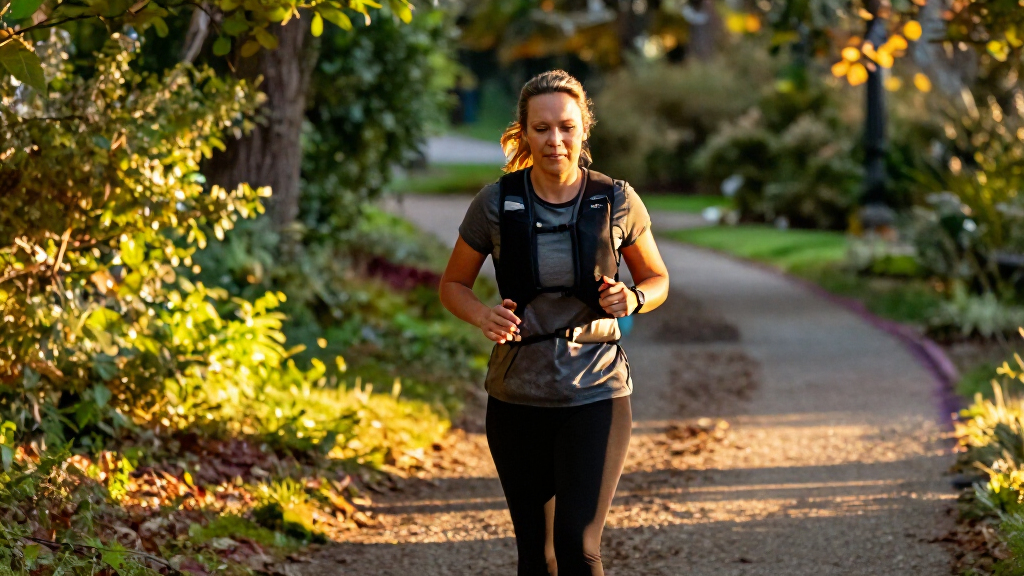
The writer tested an 6-pound OMORPHO G-Vest Run and a 10-pound G-Vest Icon while training for a marathon. The report says the writer wore the vests across workouts for a month, including runs, and later reflected that the additional load was combined with longer or faster sessions. The writer described knee swelling and a plateau in fitness during the trial.
Holly Haywood, identified in the report as a lead instructor at London health club chain Third Space, advised starting with a light vest and increasing weight gradually. She suggested a starting point of no more than 5% of body weight for resistance training, provided technique remains sound. The writer said that, for running, an even lighter initial load—around 1% to 2% of body weight—would have been preferable. That lower figure is the writer’s recommendation, not a reported formal guideline.
Haywood also cautioned that an overly heavy or poorly fitted vest can place extra strain on the knees, hips and ankles and can affect form. The report’s writer found the vest more useful for some bodyweight exercises, including push-ups, dips and pull-ups, where it added resistance without requiring more repetitions. Haywood’s advice was to establish sound movement patterns before adding load.
How Extra Load Changes Training
The report matters because adding weight changes the demands of familiar exercise, and the consequences may depend on the activity, load, duration and the person’s technique. A vest can make a workout feel harder, but the account shows why increasing several training demands together can make it difficult to identify what the body is tolerating. In the writer’s case, vest weight, running pace and distance rose together, followed by knee symptoms.
For readers, the practical point is not that weighted vests are proven to prevent age-related muscle loss or bone weakening. The source provides one person’s experience and a trainer’s recommendations, not a controlled study measuring muscle or bone outcomes. Its guidance is most directly about managing training load: begin conservatively, keep technique stable, and pay attention to discomfort rather than treating extra weight as automatically beneficial.
Exercise choices also matter. Haywood warned that loading extended walks or runs can increase strain on joints, while the writer reported a better experience using the vest for selected bodyweight movements. That distinction is not evidence that one approach is safe for everyone. People with existing joint problems, health conditions or uncertainty about appropriate loading should seek advice from a qualified trainer or health professional before changing their routine.
As an affiliate, we earn on qualifying purchases.
What the Trial Actually Tested
The Fit&Well article opens with the broader idea that load-bearing exercise is often discussed in relation to sarcopenia, or age-related muscle loss, and osteoporosis, a condition involving weakened bones. But the reported experiment was not designed to test prevention or treatment of either condition. It was a personal equipment trial during marathon training, with two vest models and no reported comparison group, clinical measurements or bone-density assessment.
The writer says the trial included varied workouts and that the vest’s close-fitting design made it workable for activities such as push-ups and pull-ups. The central lesson drawn in the article was to alter one training variable at a time. In running, that could mean keeping distance and pace steady while first testing a light vest, rather than increasing load, speed, distance or frequency simultaneously.
Haywood suggested trying a 15- to 20-minute brisk treadmill walk as an entry point, then adjusting a single feature, such as incline, when the existing load feels comfortable. The article’s example is practical advice attributed to Haywood; it is not presented as a universal prescription or a substitute for individual assessment.
“The general recommendation, like with most resistance training, is to start light and gradually build up as strength and comfort with the vest improve.”
— Holly Haywood, lead instructor at Third Space, as quoted by Fit&Well
Evidence Beyond One Person’s Trial
The report does not establish whether weighted vests preserve muscle mass or bone density, or whether they reduce the risk of sarcopenia or osteoporosis. It describes one writer’s month-long experience and includes a trainer’s guidance, but gives no clinical data, sample of participants, long-term follow-up or measured changes in muscle or bone.
It is also unclear how broadly the writer’s knee symptoms apply to other people, and the article does not isolate whether the vest, marathon training, increased pace and distance, or a combination contributed to the outcome. The report does not set out a single safe load or schedule for every exercise and person. Individual fitness, injury history, vest fit and movement technique can affect how added weight is experienced.
Progress Only When Comfortable
The report offers no follow-up study or planned clinical milestone. Its immediate advice is to start with a light load, test it during manageable exercise and change one variable at a time. If a session feels comfortable and technique remains sound, a person can consider a small increase in load or effort rather than changing both at once.
Haywood recommends asking a trainer or physiotherapist whether a vest is appropriate and removing it or switching to a lighter one if it causes joint discomfort. Readers considering a vest for a specific health concern should discuss their exercise plans with a qualified health professional. Whether weighted-vest training produces measurable benefits for muscle or bone health remains unanswered by this report.
Key Questions
Does this report prove weighted vests preserve muscle or bone density?
No. The Fit&Well article describes a 30-day personal trial and trainer advice; it reports no clinical measurements of muscle or bone density and does not prove a preventive effect.
How much weight did the trainer recommend starting with?
Holly Haywood suggested starting at no more than 5% of body weight for resistance training, while keeping technique sound. The article’s writer suggested starting lighter, around 1% to 2% of body weight, for running; that was the writer’s view, not Haywood’s stated general recommendation.
Which exercises did the writer find more suitable for the vest?
The writer reported using it for bodyweight exercises such as push-ups, dips and pull-ups. This is a personal observation, not a guarantee that those exercises are suitable for everyone.
What should someone do if a weighted vest causes joint discomfort?
Haywood advised switching to a lighter vest or removing it if it becomes uncomfortable on the joints. The report also recommends seeking guidance from a trainer or physiotherapist about whether the vest and exercise plan are appropriate.
Source: rss
Halloween Picks
halloween
As an affiliate, we earn on qualifying purchases.