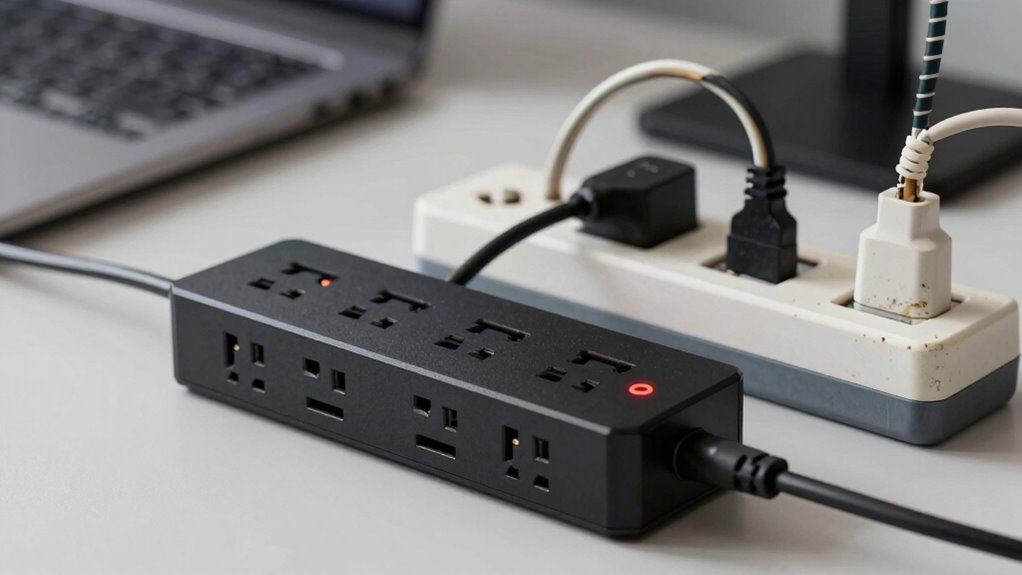

A power strip adds more outlets for your low-power devices like lamps or chargers but doesn’t safeguard against power surges. Surge protectors, on the other hand, guard electronics from voltage spikes by diverting excess energy and often include indicators to show when they need replacing. Choosing between them depends on whether you need extra outlets or protection for sensitive devices. Keep exploring to understand which option best suits your needs and ensures safety.
Key Takeaways
- Power strips extend outlets but do not protect against voltage surges, while surge protectors guard electronics from power spikes.
- Surge protectors contain MOVs and safety indicators to divert excess voltage and signal worn-out protection.
- Power strips are suitable for low-power devices, but surge protectors are essential for sensitive electronics like computers.
- Proper joule ratings in surge protectors determine their ability to absorb energy during surges or storms.
- Using a surge protector instead of a power strip enhances electrical safety and device longevity during electrical events.
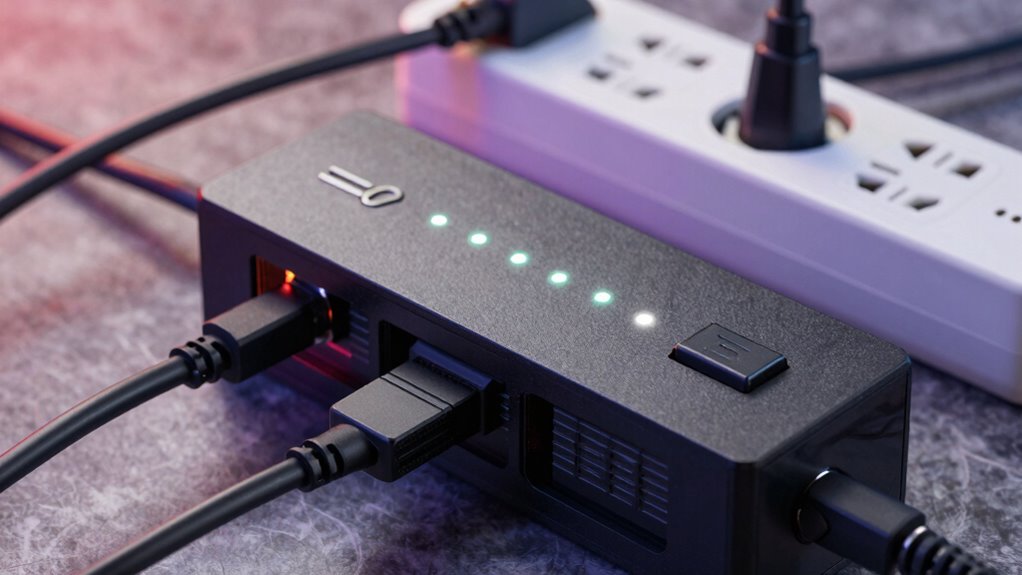
When choosing between a surge protector and a power strip, it’s important to understand their differences, as they serve distinct purposes. Knowing which one suits your needs can help you defend your devices effectively and ensure electrical safety. A power strip simply extends the number of outlets available, allowing you to plug in multiple devices at once. It doesn’t offer any protection against power surges, so if sudden voltage spikes occur—like during a lightning storm—your devices are vulnerable to damage. Surge protectors, on the other hand, are designed to guard your electronics from these unpredictable power surges. They contain components such as metal-oxide varistors (MOVs) that divert excess voltage away from connected devices, reducing the risk of damage. This makes surge protectors especially important for sensitive electronics like computers, gaming consoles, and home theater equipment.
Device compatibility is a key factor when selecting between the two. Power strips are generally compatible with most low-power devices—lamps, chargers, or small appliances—without any issues. However, not all power strips are built to handle high wattage loads, so exceeding their capacity can cause overheating or fire hazards. Surge protectors, meanwhile, are rated by their joule ratings, indicating how much energy they can absorb before failing. Choosing a surge protector with an appropriate joule rating ensures it can handle the power surges common in your area or during storms. Additionally, some surge protectors include multiple outlets with built-in safety features like USB ports or network protection, broadening their device compatibility. Moreover, proper electrical safety involves selecting the right device for your specific needs and understanding their protective capabilities.
Electrical safety is another critical aspect. Power strips are often mistaken for surge protectors, but they lack the safety features necessary to protect your devices from voltage spikes. Using a regular power strip in place of a surge protector can leave your electronics exposed to damage, especially during thunderstorms or power fluctuations. Conversely, a surge protector equipped with a fail-safe indicator alerts you when its protective components have worn out, prompting timely replacement. This safety feature helps prevent potential electrical fires or damage caused by compromised protection.
Frequently Asked Questions
Can a Power Strip Ever Protect Against Power Surges?
A power strip can’t protect against power surges because of its limitations, which many people mistakenly believe. Surge protector myths often lead you to think all power strips offer surge protection, but only those with built-in surge protection components do. If you’re concerned about surges, invest in a dedicated surge protector. Relying on a regular power strip leaves your devices vulnerable during voltage spikes, so don’t assume it provides that safety.
Are All Surge Protectors Compatible With International Voltage Standards?
Not all surge protectors are compatible with international voltage standards. You need to check the voltage compatibility before purchasing, ensuring it matches the standards of your country or region. Look for surge protectors explicitly marked for international use or with a wide voltage range, typically 100-240V. Using an incompatible surge protector can lead to ineffective protection or damage to your devices. Always verify this to keep your electronics safe.
How Long Does a Typical Surge Protector Last Before Replacement?
A typical surge protector lasts about 3 to 5 years before you should consider replacement. Your surge protector’s lifespan depends on how often it experiences power surges and its overall usage. Keep an eye on the replacement timeline, especially if it’s been hit by a surge or shows signs of wear, like frayed cords or defective outlets. Replacing it guarantees continued protection for your devices and safety.
Can Using Multiple Power Strips Increase Electrical Fire Risk?
Using multiple power strips can indeed increase your risk of electrical overloads, which heighten fire safety concerns. When you daisy-chain or overload power strips, you may exceed the circuit’s capacity, causing overheating. This not only damages your devices but also raises the chance of an electrical fire. To stay safe, avoid connecting multiple strips and always follow manufacturer guidelines for load limits, prioritizing proper electrical safety practices.
Are There Specific Certifications to Look for in Surge Protectors?
When choosing a surge protector, you should look for UL Certification to guarantee it meets safety standards. Also, check the Joules Rating; higher ratings mean better protection against power surges. These certifications and ratings help you identify reliable devices that safeguard your electronics effectively. Always verify both before making a purchase, so you know you’re getting a quality surge protector that provides the best protection for your devices.
Conclusion
So, now that you know the key difference, will you take the safer route or risk it all? A simple choice could save your devices—and your peace of mind—when the unexpected strikes. Don’t wait until it’s too late; your valuable electronics deserve more than just a regular power strip. The question is, are you ready to make the smarter decision today? The next moment could change everything—are you prepared?