Watt-hours measure the total energy a portable power station can store, showing how long it can power your devices before needing a recharge. A higher watt-hour rating means more energy and longer runtime, while a lower one indicates less capacity. It helps you match the station to your device’s power demands, preventing unexpected power losses. Keep exploring to understand how different capacities impact your power needs and get the most out of your station.

Get oils, diffusers and self-care delivered free — and shop member deals
- Fast, free delivery on millions of items
- Access to Prime Big Deal Days deals on October 6–7
- Prime Video, Amazon Music and more included
Key Takeaways
- Watt-hours measure the total energy capacity of a portable power station’s battery.
- Higher watt-hours indicate more stored energy, enabling longer device operation.
- Watt-hours help compare different power stations’ ability to supply power over time.
- They relate to how long a device can run before the power station needs recharging.
- Matching watt-hours to device energy needs ensures sufficient runtime and prevents power loss.
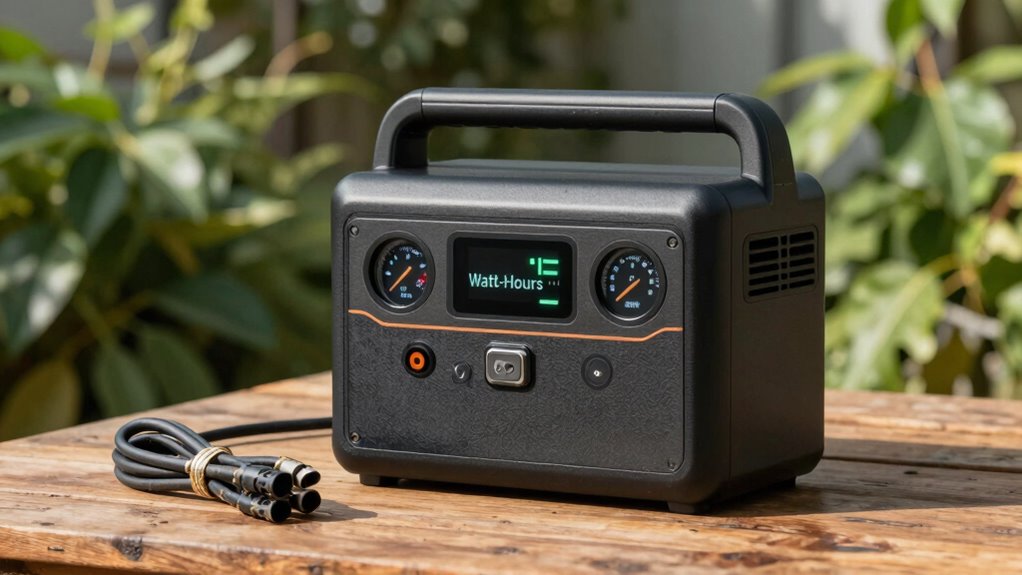
Ever wondered how to keep your devices charged during outdoor adventures or power outages? That’s where portable power stations come in. These compact devices store electrical energy, allowing you to power up your gadgets when traditional outlets aren’t available. But understanding what ‘watt-hours’ really mean can be confusing, especially when comparing different models. Essentially, watt-hours measure the total amount of energy a power station can hold—think of it as the size of its battery capacity. The higher the watt-hours, the more energy it can store, which translates to longer periods of power for your devices. When selecting a portable power station, you’ll want to think about how much battery capacity you need to meet your power demands. For example, if you’re planning to run a small refrigerator or multiple devices, a station with a higher watt-hour rating will serve you better.
Another vital aspect is charging times. The time it takes to recharge your power station depends on its size and the method you choose. Larger capacity units naturally take longer to recharge, especially if you’re using standard AC outlets. However, many models support fast charging options, which can considerably reduce the wait. Some portable power stations can be recharged via solar panels, car chargers, or wall outlets, giving you flexibility when you’re off-grid. Keep in mind that charging times vary across models and are influenced by the input power source. If you’re in a hurry, look for stations with higher input wattage or those that support rapid charging features.
It’s also helpful to remember that the efficiency of the power station impacts how well it converts stored energy into usable power. Even with a large battery capacity, some energy gets lost during conversion, meaning you might get slightly less run time than the watt-hour rating suggests. To maximize your device’s runtime, consider the power consumption of your gadgets and match them with a power station that offers a suitable battery capacity. This way, you’ll avoid running out of juice unexpectedly. Additionally, understanding the contrast ratio of a projector can help you choose the right device for clear and vibrant images in various lighting conditions.
portable power station 500 watt-hours
As an affiliate, we earn on qualifying purchases.
As an affiliate, we earn on qualifying purchases.
Frequently Asked Questions
How Does Watt-Hour Capacity Affect Charging Time?
A higher watt-hour capacity usually means it takes longer to charge your power station because there’s more energy to fill. Battery efficiency also plays a role, as more efficient batteries can charge faster even with larger capacities. So, if your station has a big capacity, expect a longer charging time, but good battery efficiency can help speed things up, making the overall charging process quicker.
Can Watt-Hours Indicate How Many Devices a Station Can Run Simultaneously?
Watt-hours help you estimate how many devices a power station can run simultaneously by considering its battery capacity and device compatibility. A higher watt-hour rating means more energy to power multiple devices at once. However, you must check each device’s power draw to guarantee it’s within the station’s capacity. This way, you can determine if the station will meet your needs for running several devices simultaneously without overloading.
What’s the Difference Between Watt-Hours and Wattage?
Watt-hours measure the total energy capacity of your portable power station, indicating how long it can power devices. Wattage, on the other hand, refers to the power output at a specific moment. Your battery efficiency and power management determine how well the station converts and uses this energy. Understanding the difference helps you optimize device usage, ensuring you don’t overtax the system or run out of power unexpectedly.
Do Higher Watt-Hours Mean Longer-Lasting Power?
Think of watt-hours as the fuel tank of your power station; the bigger the tank, the longer you can run your devices. Higher watt-hours mean better battery longevity, giving you more power over time. It also indicates a higher power density, so your station can store more energy in a compact size. So, yes, more watt-hours generally translate to longer-lasting power, making your portable station more dependable on the go.
Are Watt-Hours the Only Factor to Consider When Choosing a Power Station?
Watt-hours aren’t the only factor to take into account when choosing a power station. You should also think about battery life, which affects how long it can power your devices, and portability considerations, like size and weight, especially if you plan to carry it around. A higher watt-hour rating helps with longer use, but balancing it with portability ensures you pick a station that fits your needs comfortably.
Conclusion
Now that you understand what watt-hours really mean, you can choose your portable power station with confidence. You’ll consider capacity, compare runtimes, and evaluate energy needs more effectively. You’ll decide what’s right for camping, emergencies, or outdoor adventures. You’ll power your devices, charge your gear, and stay connected. Ultimately, you’ll harness the power of knowledge, harness the power of technology, and harness the power to keep going, no matter where life takes you.
Halloween Picks
halloween
As an affiliate, we earn on qualifying purchases.