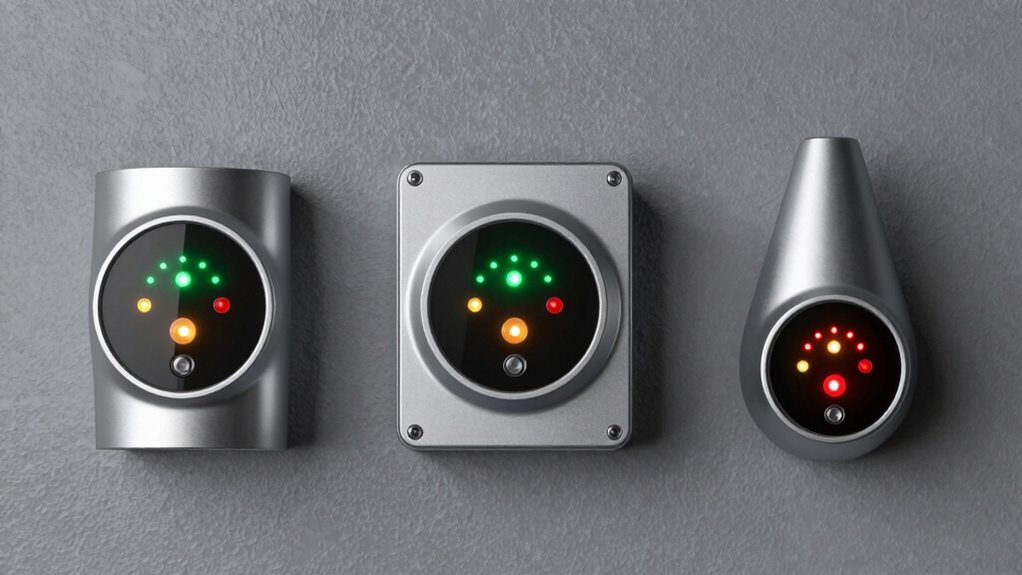

Gas leak detectors are designed to identify specific gases like natural gas, propane, and other combustible vapors. Natural gas, mainly methane, is lighter than air and needs to be detected higher up, while propane is heavier and sinks, so it’s best near the ground. For combustible gases, sensors depend on the type of gas and detector placement. Want to learn how proper calibration and alarm types enhance safety? Keep exploring for more details.
Key Takeaways
- Natural gas detectors are typically placed higher since natural gas is lighter than air and rises.
- Propane detectors should be positioned lower because propane is heavier than air and sinks.
- Combustible gas detectors often detect multiple gases, including natural gas and propane, for comprehensive safety.
- Proper calibration for specific gases ensures accurate detection and reduces false alarms.
- Regular maintenance and correct placement are vital for effective detection of natural gas, propane, and other combustible gases.

Have you ever wondered how to protect your home and loved ones from dangerous gas leaks? It starts with understanding how gas leak detectors work and the importance of proper sensor calibration. When you install a gas detector, it’s essential to ensure the sensors are calibrated correctly so they can detect even the smallest traces of gas accurately. Sensor calibration involves adjusting the detector’s sensors so that they respond reliably to known concentrations of gas, preventing false alarms or, worse, missed detections. Regular calibration checks are vital, especially if your detector is exposed to harsh conditions or if it’s been a long time since the last calibration. This process guarantees that your alarm system functions as intended, giving you peace of mind.
Proper sensor calibration ensures accurate detection and reliable safety alarms in your gas leak detector.
Speaking of alarms, it’s crucial to understand the different alarm types your detector might have. Audible alarms are common, alerting you with loud sounds that can wake you or get your attention immediately. Some detectors also feature visual alerts, such as flashing lights, which are helpful if you’re hearing-impaired or if noise levels are high. There are even combination alarms that use both sound and light to ensure you notice the danger. Knowing which alarm types your detector offers helps you choose the right device for your needs and ensures you’re prepared to respond swiftly in an emergency.
Now, when it comes to the types of gases your detector can sense, it’s important to know the differences between natural gas, propane, and other combustible gases. Natural gas, primarily composed of methane, is lighter than air and tends to rise, so detectors should be placed accordingly. Propane, on the other hand, is heavier than air, meaning it sinks and accumulates near the ground, requiring detectors positioned lower. The term “combustible gases” covers a broad range, including both natural gas and propane, but also other fuels like butane or gasoline vapors. Proper placement and calibration tailored to the specific gas types ensure maximum safety. Some detectors are designed to detect multiple gases, making them versatile for various applications, while others focus on a specific type. Additionally, understanding the role of sensor technology in detecting different gases can help you choose the most effective detector for your home. Regular maintenance and calibration checks keep your detector functioning optimally, so you can react quickly if a leak occurs. Protecting your home from gas leaks isn’t just about installing a device; it’s about understanding how it works and ensuring it’s always ready to alert you to danger. That way, you can safeguard your loved ones and your property, giving you confidence in your safety measures.
Frequently Asked Questions
How Often Should Gas Leak Detectors Be Calibrated?
You should calibrate your gas leak detector at least once a year to guarantee optimal sensor sensitivity. Regular calibration maintains accuracy and helps detect leaks early. If you use the detector frequently or in harsh conditions, consider calibrating more often, such as every 6 months. Always follow the manufacturer’s recommendations for calibration frequency, and test the device regularly to confirm it’s functioning properly and maintaining reliable detection.
Can Gas Leak Detectors Detect Multiple Gas Types Simultaneously?
Modern gas leak detectors are powerhouse devices capable of multi gas detection, meaning they can sense multiple gases at once. Thanks to advanced sensor compatibility, you don’t need separate detectors for natural gas, propane, or other combustibles. This makes them incredibly efficient, saving you time and money. So, if you want thorough safety, look for detectors with multi gas detection features—they’ll keep you protected against a variety of gas leaks simultaneously.
Are There Portable Gas Leak Detectors for Outdoor Use?
Yes, there are portable gas leak detectors designed for outdoor safety. These devices are lightweight, easy to carry, and can detect various gases like natural gas, propane, and combustible fumes. You can use them during outdoor activities or around your property to quickly identify leaks and prevent dangerous buildup. Portable detection offers flexibility and peace of mind, ensuring you can respond promptly to potential hazards in outdoor environments.
Do Gas Leak Detectors Require Regular Maintenance?
Did you know that regular maintenance can reduce false alarms by up to 50%? Gas leak detectors do require periodic checks to ensure their detector sensitivity stays ideal. You should test your detector monthly and replace batteries as needed. Cleaning the sensor area and inspecting for damage help prevent false alarms and ensure it functions properly during an emergency. Proper maintenance keeps you safe and ensures reliable detection.
What Is the Typical Lifespan of a Gas Leak Detector?
You can expect a gas leak detector to last about 5 to 10 years, depending on sensor calibration and detector durability. Regularly check and calibrate the sensors to verify accurate detection over time. Proper maintenance extends its lifespan, but eventually, sensors may wear out and need replacement. Keep an eye on performance and replace the unit when it no longer responds reliably to gas leaks.
Conclusion
Now that you know the differences between natural gas, propane, and combustible gas detectors, you’re better equipped to stay safe. Did you know that according to the CDC, household gas leaks cause over 4,000 injuries annually? Installing the right detector can markedly reduce your risk. Remember, staying alert and having the proper device in place could be the difference between a minor scare and a dangerous disaster. Stay vigilant—your safety depends on it.