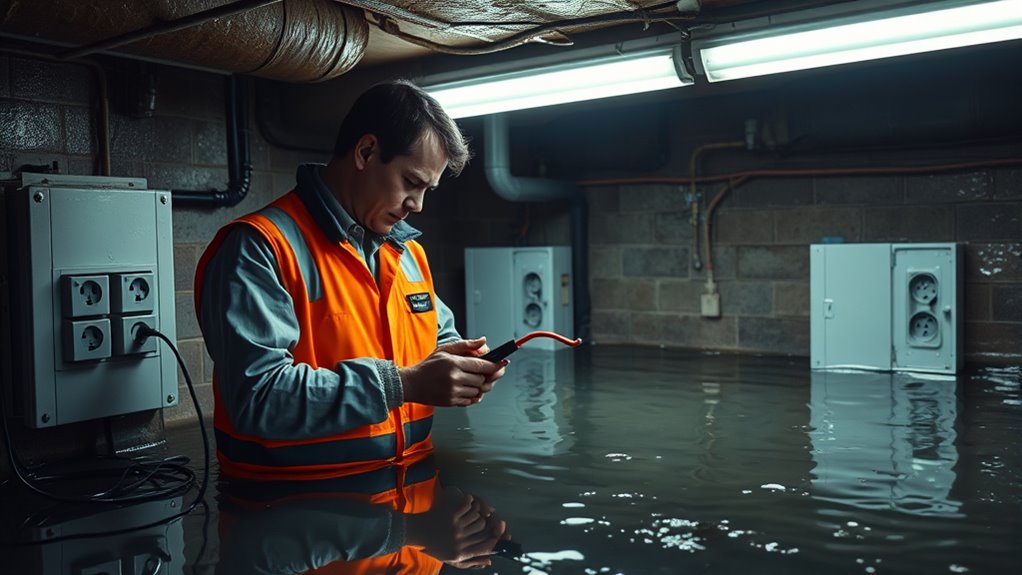
If your outlets or panels are flooded, avoid touching them and turn off the main power at your circuit breaker from outside if possible. Never attempt to dry or repair water-damaged electrical parts yourself. Instead, contact a licensed electrician immediately to evaluate and safely fix the damage. Remember, water and electricity are a dangerous mix, so prioritizing safety is key. Keep yourself safe while learning more about proper steps to handle this situation effectively.
Key Takeaways
- Immediately shut off power at the main circuit breaker before touching flooded outlets or panels.
- Never attempt to dry or repair water-damaged electrical components yourself; contact a professional electrician.
- Avoid using or plugging in devices connected to flooded outlets until they are inspected and deemed safe.
- Identify and stop ongoing water intrusion sources to prevent further electrical hazards.
- Have a qualified electrician thoroughly inspect, test, and dry the electrical system before restoring power.

Have you ever wondered what to do when your outlets or electrical panels get flooded? Water damage in electrical systems is serious and can pose significant safety risks. When water seeps into outlets or panels, it increases the chance of electrical shock, short circuits, or even fires. Knowing how to respond quickly and safely is essential to protect yourself and your home. First and foremost, never attempt to turn on or unplug any electrical devices connected to flooded outlets until the power is completely shut off. Electricity and water don’t mix, and trying to handle the situation while the system is energized can be deadly. To guarantee electrical safety, the initial step is to cut off power at the main circuit breaker or fuse box, ideally from a safe location outside the flooded area. This prevents any residual current from causing harm.
Once the power is off, avoid touching any wet outlets or panels directly. Water conducts electricity, and even if it looks harmless, it can be hiding dangerous currents. If you can reach the electrical panel safely, turn off the main switch to eliminate the risk of electrical shock. If the flooding is severe or you’re unsure about the extent of water damage, it’s best to contact a professional electrician immediately. They are trained to evaluate and repair water-damaged electrical systems properly and safely. Remember, never attempt to dry out or repair water-damaged outlets or panels yourself—drying out electrical components without proper tools and knowledge can lead to further damage or hazards.
Additionally, understanding the importance of electrical safety protocols can help prevent accidents and ensure proper handling of water-damaged systems. After turning off the power, focus on preventing further water intrusion. If the flooding is ongoing, locate and stop the source of water, if possible. This might involve shutting off water valves or addressing leaks around your home. Once the water has receded and the affected area is dry, an electrician can inspect the damage, test the outlets and panels, and determine if repairs are needed. It’s vital to understand that even after the water is gone, residual moisture can cause corrosion and compromise electrical safety if not properly handled.
Frequently Asked Questions
Can I Reuse Outlets After Flooding?
You shouldn’t reuse outlets after flooding. Water can cause internal damage that isn’t visible. I recommend testing the outlet with a water-resistant outlet tester to check for electrical issues, but it’s safer to replace it entirely. Flooding compromises the insulation and safety features, increasing the risk of shocks or fire. Always prioritize safety and consult a professional electrician before reusing or installing any outlet after flooding.
How Long Should I Wait Before Turning off Power?
You should wait at least 24 hours before turning off the power after water damage to outlets or panels. This allows any residual moisture to evaporate and reduces the risk of electrical shock. It’s vital for electrical safety to make sure everything is completely dry and inspected by a professional before restoring power. Never rush this process—water damage can compromise wiring, so patience is key to preventing accidents.
Are There Specific Tools for Flooded Outlet Repair?
Think of fixing a flooded outlet like patching a leaky boat; you need the right tools to keep things dry. I recommend using insulated screwdrivers, voltage testers, and moisture meters for safe outlet replacement. Waterproofing techniques, like sealing covers or adding GFCI outlets, help prevent future issues. Always turn off power first, then carefully assess and repair with these tools to make certain of safety and proper repair.
What Signs Indicate Electrical Damage From Flooding?
If you notice water damage around outlets or panels, it’s a sign of possible electrical damage from flooding. Look for signs like corrosion, discoloration, or a burning smell, which can indicate electrical hazards. Don’t ignore these warning signs, as water damage can compromise wiring and increase the risk of shocks or fires. Always turn off power and call a professional to assess and repair the damage safely.
Is Professional Help Necessary for Flood-Damaged Panels?
Did you know that nearly 70% of electrical fires start due to flood damage? I strongly believe professional help is necessary for flood-damaged panels. Electrical safety is vital, and a thorough flood damage assessment by a qualified electrician ensures your home’s safety. Don’t risk DIY repairs; only experts can properly evaluate and fix the damage, preventing potential hazards and ensuring peace of mind for you and your family.
Conclusion
When faced with flooded outlets or panels, safety should always come first. Remember to turn off the power at the breaker before doing anything else—it’s better to be safe than sorry. Do you really want to risk electric shock or fire just to save a bit of time? Stay cautious, act promptly, and don’t hesitate to call a professional if you’re unsure. Your safety is worth it—every single time.