To stay safe with your portable generator, I always emphasize proper placement away from homes to prevent carbon monoxide buildup. Using a transfer switch is essential because it prevents dangerous backfeed into utility lines, protecting both you and utility workers. I also recommend regularly checking that your generator is well-ventilated and operated outdoors. Staying aware of CO risks and correct transfer switch installation can keep you safe, and you’ll find more helpful tips if you continue exploring further.
Key Takeaways
- Always operate portable generators outdoors in well-ventilated areas to prevent dangerous carbon monoxide buildup.
- Use a properly installed transfer switch to safely connect the generator to your home and prevent backfeeding.
- Regularly test and maintain the generator and transfer switch to ensure they function correctly during power outages.
- Keep fuel stored safely away from the generator and heat sources to reduce fire risk and fumes.
- Install carbon monoxide detectors inside your home to alert you to dangerous CO levels when using a generator outdoors.
Portable generators are incredibly useful during power outages or outdoor activities, but they can pose serious safety risks if not used properly. One of the most important aspects to consider is how you handle fuel storage. I always emphasize to anyone using a generator to store fuel safely—never keep it near the generator or inside your home, as fumes can ignite unexpectedly. I keep my fuel in approved containers, away from heat sources, and make sure they’re tightly sealed. Proper fuel storage not only prevents fire hazards but also reduces the risk of harmful fumes accumulating around the generator. It’s essential to check and follow local regulations on fuel storage, especially if you’re planning to keep a stockpile for emergencies.
Grounding techniques are equally necessary for safe generator operation. I’ve learned that properly grounding your generator prevents electrical shocks and protects both you and your equipment. When I set up my generator, I always make certain it’s grounded according to the manufacturer’s instructions and local electrical codes. This usually involves connecting a grounding wire to a grounding rod driven into the earth. It’s a simple step, but it can make a huge difference in safety. Failing to ground the generator can cause stray voltage, which might lead to electrical shocks or damage to sensitive electronics. I also make sure to inspect grounding connections regularly, especially if I move the generator or notice any wear and tear.
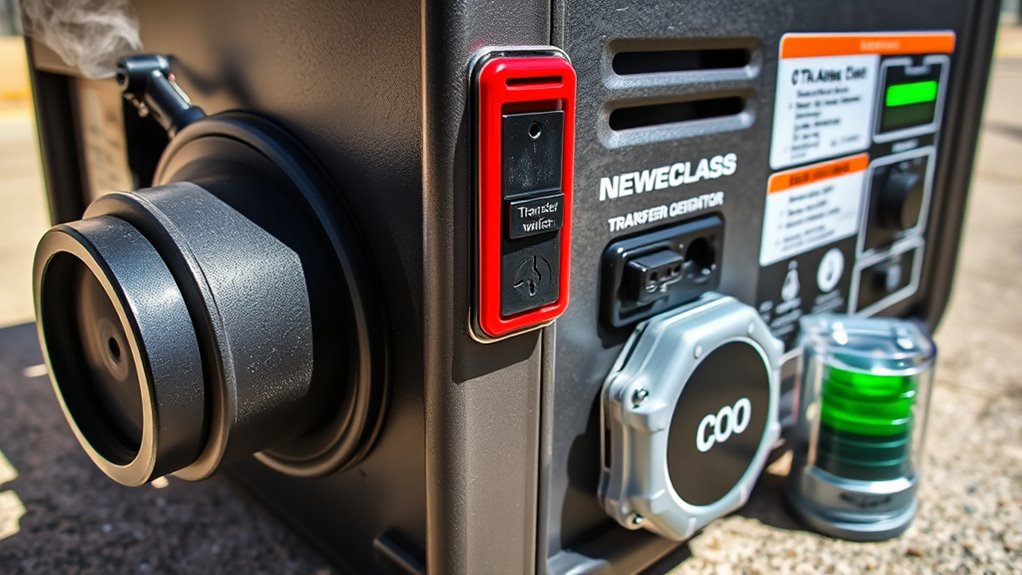
Another safety tip I follow is to use transfer switches whenever possible. Transfer switches are designed to isolate your home’s wiring from the utility lines, preventing dangerous backfeed that can harm utility workers or damage your equipment. I’ve seen firsthand how a properly installed transfer switch provides peace of mind during outages, ensuring my generator powers only what’s necessary. It’s indispensable to have a qualified electrician install it, rather than trying to do it yourself. This way, you avoid the risk of incorrect wiring or creating dangerous conditions.
Additionally, understanding the importance of wiring techniques and proper connections can further enhance safety during generator use. When operating a portable generator, I always prioritize safety by staying aware of these key points: secure fuel storage, proper grounding techniques, and the use of transfer switches. These steps help minimize risks like fire, electrical shocks, and carbon monoxide poisoning. Remember, a generator is a valuable tool, but only when used responsibly. Taking the time to learn and apply these safety measures guarantees you and your loved ones stay safe during emergencies or outdoor adventures.
portable generator transfer switch
As an affiliate, we earn on qualifying purchases.
As an affiliate, we earn on qualifying purchases.
Frequently Asked Questions
How Often Should I Test My Transfer Switch?
I recommend testing your transfer switch at least once a year to ensure proper operation. Regular transfer switch maintenance is vital for safety and reliability, especially before storm seasons or power outages. During generator testing frequency checks, make sure the switch engages correctly and switches power sources smoothly. If you notice any issues, don’t hesitate to schedule a professional inspection. Staying proactive helps prevent dangerous situations and keeps your generator system running smoothly.
Can I Connect Multiple Portable Generators to the Same Transfer Switch?
Think of your transfer switch as a busy traffic conductor; connecting multiple portable generators isn’t as simple as a toggle switch. I wouldn’t recommend a multiple generator setup unless your transfer switch explicitly states compatibility with that setup. Most switches are designed for one generator at a time, ensuring safe, smooth operation. Always check your transfer switch’s specifications and consult a professional to avoid electrical grid chaos.
What Are Signs of Carbon Monoxide Poisoning From Generators?
If you suspect carbon monoxide poisoning from a generator, look for symptoms like headache, dizziness, weakness, nausea, or confusion. I always emphasize proper generator placement—keep it outdoors and away from windows or vents—and install a CO detector in your home. These steps help alert you early. If anyone shows symptoms, get to fresh air immediately and seek medical help. Safety first!
Is It Safe to Run a Generator Indoors Temporarily?
Did you know that over 100 Americans die each year from carbon monoxide poisoning? Running a generator indoors isn’t safe, even temporarily. Always guarantee proper indoor ventilation and never place a generator inside a garage or enclosed space. If you must use it near your home, keep it outdoors, away from windows and vents, to prevent dangerous CO buildup. Your safety depends on proper generator placement and ventilation.
How Do I Dispose of Generator Fuel Safely?
To dispose of generator fuel safely, I always store it properly in approved containers, keeping it away from heat sources. I make sure to prevent leaks by sealing containers tightly and inspecting them regularly. When it’s time to dispose of old or excess fuel, I take it to a local recycling center or hazardous waste facility. Never pour fuel down drains or onto the ground, as that’s dangerous and harmful to the environment.
Conclusion
If you ignore generator safety, you’re risking more than just a spark—you’re risking your life! The dangers of carbon monoxide and improper wiring can turn a simple power outage into a tragedy in seconds. Always use transfer switches and never run your generator indoors. Think of safety as your superhero shield—without it, you’re vulnerable to disaster. Stay vigilant, stay safe, and keep your loved ones protected from the silent, deadly threat of CO.