If you notice household chemical odors like rotten eggs, musty smells, sharp chemical fumes, sweet fragrances, or persistent chemical scents, they could signal danger. Rotten egg smells often indicate gas leaks, while moldy odors suggest hidden mold growth. Sharp fumes from bleach or ammonia point to toxic vapors, and sweet scents may mean chemical contamination or incomplete combustion. Ignoring these signs can risk health and safety; learn more to understand how to protect yourself and your home.

Get oils, diffusers and self-care delivered free with Prime
- Fast, free delivery on millions of items
- Prime Video, Amazon Music and more included
- Member-only deals all year
Key Takeaways
- Rotten egg odors indicate hydrogen sulfide leaks, signaling potential gas hazards requiring immediate ventilation and emergency contact.
- Musty or moldy smells point to hidden mold growth, which can impact indoor air quality and health.
- Sharp chemical or pungent odors from substances like bleach or ammonia suggest toxic fumes needing prompt ventilation.
- Sweet or fruity scents may indicate chemical contamination or incomplete combustion, posing health risks.
- Persistent chemical odors that linger signal possible leaks or appliance malfunctions, requiring urgent evacuation and professional assessment.
As an affiliate, we earn on qualifying purchases.
The Smell of Rotten Eggs: Hydrogen Sulfide and Gas Leaks
You might immediately recognize the sharp, rotten egg smell as a warning sign of hydrogen sulfide or a gas leak. This odor is caused by hydrogen sulfide (H₂S), a colorless, flammable gas produced by decomposing organic material. Gas leaks, whether from household appliances or pipelines, often emit this smell, signaling danger. Don’t ignore it—H₂S can cause health issues like headaches, dizziness, or even loss of consciousness in high concentrations. If you notice this smell, ventilate the area immediately and leave the premises. Avoid lighting any flames or turning on electrical switches, as the gas is flammable. Contact your gas company or emergency services right away to handle the situation safely. Acting quickly can prevent potential explosions or poisoning. Recognizing gas detection signs promptly is crucial for safety.
Musty or Moldy Odors: Signs of Mold Growth and Indoor Air Quality Issues
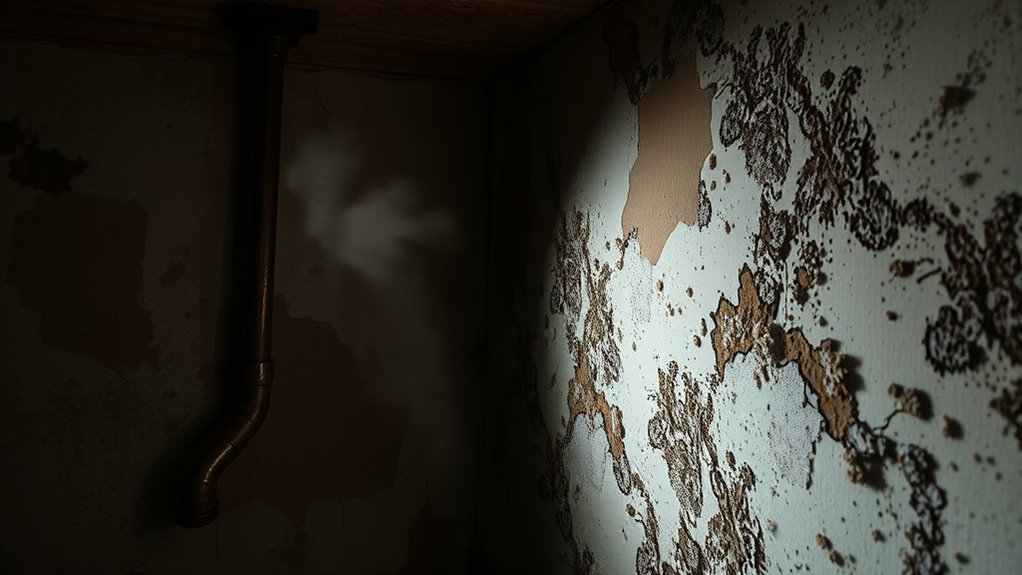
Have you noticed a persistent musty or moldy smell lingering in your home? This odor often signals mold growth somewhere out of sight, like behind walls, under floors, or in hidden corners. Mold thrives in damp, humid environments, and its spores can affect your indoor air quality, causing allergies or respiratory issues. If the smell persists despite cleaning, it’s a clear sign you need to investigate further. Look for visible signs of mold, such as discoloration or water stains. Addressing the source of moisture is essential, as mold won’t disappear on its own. Improving ventilation and reducing humidity can help prevent future growth. Additionally, understanding indoor air quality issues can guide you in creating a healthier living space. Don’t ignore the smell—it’s your home’s warning sign of hidden mold and potential health risks.
Persistent chemical or pungent odors in your home often indicate the presence of toxic fumes or overexposure to harmful substances. If you notice a strong, acrid smell similar to bleach, ammonia, or vinegar lingering unexpectedly, it could signal dangerous emissions from cleaning products, paints, or solvents. These fumes can irritate your respiratory system, cause headaches, or even lead to more severe health issues with prolonged exposure. Always ventilate the area immediately and identify the source. Avoid inhaling the fumes directly, and if the smell persists or worsens, evacuate and seek professional help. Don’t ignore sharp, burning odors—your safety depends on promptly addressing these chemical signals and removing the hazard. Being aware of home safety guidelines can help you respond effectively to such hazards.
Sweet or Fruity Fragrance: Potential Signs of Chemical Contamination or Combustion

A sweet or fruity fragrance lingering unexpectedly in your home may indicate chemical contamination or incomplete combustion of certain materials. This unusual scent can stem from volatile organic compounds (VOCs) released by burning plastics, synthetic fabrics, or household chemicals. When these substances don’t fully burn, they emit odors that resemble fruity or sweet aromas. While it might seem pleasant initially, such smells can signal the presence of hazardous fumes. Prolonged exposure may cause headaches, dizziness, or respiratory issues. If you notice this scent, ventilate your space immediately by opening windows and doors. Avoid lingering near the source and consider inspecting appliances, heaters, or areas where chemicals or fuels are stored. Recognizing this odor early helps prevent potential health hazards associated with chemical contamination or improper combustion. Understanding dream symbolism related to odors can also help interpret underlying emotional or subconscious concerns.
Persistent Chemical Odors: When to Be Concerned and Seek Immediate Help

When you notice chemical odors that linger in your home over an extended period, it’s a sign that something may be seriously wrong. Persistent fumes could indicate a leak, a malfunctioning appliance, or exposure to toxic substances. If the smell is strong, chemical in nature, and doesn’t dissipate after ventilating, you need to act immediately. Leave the area and call emergency services if you experience dizziness, headaches, difficulty breathing, or chest tightness. Do not try to locate the source yourself if you suspect a hazardous chemical. Your safety is the priority. Promptly evacuate, get fresh air, and seek professional help. Ignoring persistent odors can lead to serious health risks, so don’t delay in responding to warning signs. Using proper detection methods and ventilation techniques can help identify and mitigate chemical hazards more effectively.
Frequently Asked Questions
How Can I Identify the Source of a Chemical Odor in My Home?
To find the source of a chemical odor in your home, start by noting where the smell is strongest. Check common sources like cleaning supplies, paints, or new furniture. Ventilate the area and turn off appliances that might emit fumes. Use your senses carefully—look for leaks or spills—and consider using a detector if you suspect dangerous gases. Identifying the source quickly helps prevent potential health risks.
Are There Safe Ways to Ventilate Chemical Odors Quickly?
To ventilate chemical odors quickly and safely, open windows and doors to create cross-ventilation. Turn on exhaust fans in the kitchen and bathroom to help remove fumes. If possible, use a portable fan to direct air outside. Wear a mask if fumes are strong, and avoid re-entering until the smell diminishes. Always prioritize safety and make certain the area is well-ventilated before spending extended time inside.
What Household Products Commonly Release Dangerous Chemical Fumes?
You should be aware that many common household products release dangerous chemical fumes. Items like bleach, ammonia, air fresheners, and certain cleaning agents emit fumes that can irritate your eyes, lungs, and skin. Always use these products in well-ventilated areas, follow the instructions carefully, and wear protective gear if necessary. If you notice strong or unusual odors, ventilate immediately and avoid prolonged exposure to protect your health.
Can Long-Term Exposure to Household Odors Cause Health Problems?
It’s ironic that the very scents meant to freshen your space could harm your health over time. Long-term exposure to household odors from cleaning agents or air fresheners can cause respiratory issues, allergies, or even more severe problems. You might think you’re just enjoying a clean home, but these fumes silently impact your well-being. Always ventilate well and choose safer, natural options to protect yourself from hidden dangers.
When Should I Contact Emergency Services for Chemical Odors?
You should contact emergency services immediately if you notice strong or unusual chemical odors that persist despite ventilation. If you experience symptoms like difficulty breathing, dizziness, headache, or chest pain, don’t hesitate to seek help. These signs indicate your exposure could be hazardous. Trust your instincts—if you feel unwell or the smell worsens, call emergency services right away to ensure your safety and get professional assistance.
Conclusion
Think of your home’s odors as a weather forecast—when strange smells appear, they’re warning signs from the atmosphere inside. Ignoring these signals is like sailing into a storm blindfolded. Stay alert to chemical odors that signal danger, and don’t hesitate to seek help when needed. Your nose is your first line of defense—trust it to warn you before a small leak turns into a full-blown hazard.
Halloween Picks
halloween
As an affiliate, we earn on qualifying purchases.