
TL;DR

Get oils, diffusers and self-care delivered free with Prime
- Fast, free delivery on millions of items
- Prime Video, Amazon Music and more included
- Member-only deals all year
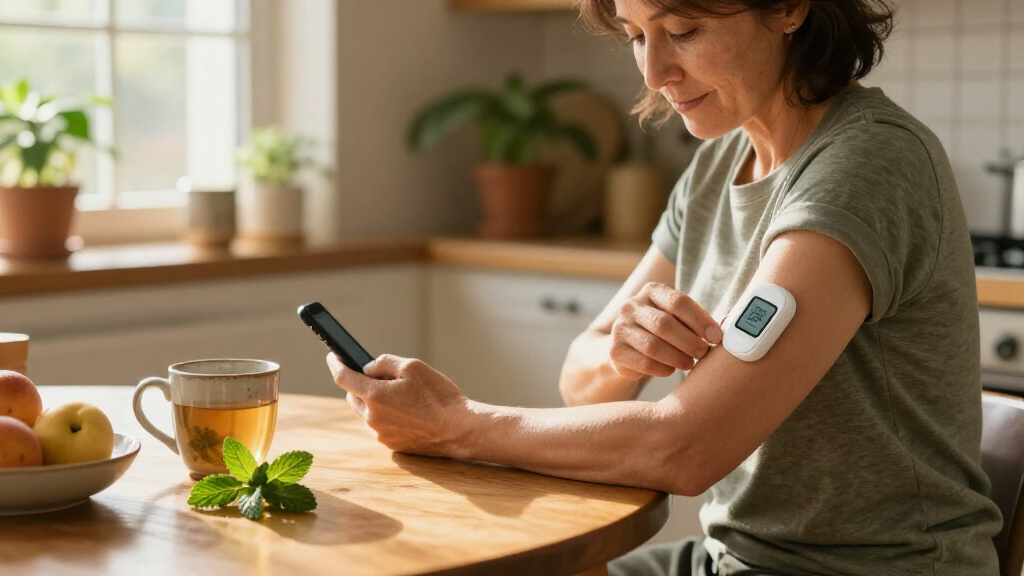
In the randomized CONNECT trial, adults with type 2 diabetes who were not using insulin and wore continuous glucose monitors had lower HbA1c and more time in target glucose range after 26 weeks than those receiving routine care. The results add trial evidence for CGM in this group, but long-term effects and real-world adherence remain uncertain.
A 26-week randomized trial found that continuous glucose monitoring (CGM) improved blood sugar measures among adults with type 2 diabetes not treated with insulin, compared with routine care. In the CONNECT trial, CGM users had a greater reduction in HbA1c and spent about five additional hours per day in the target glucose range, adding evidence for a group in which prior research has been more limited.
The trial included 283 adults at 22 U.S. primary care practices. Participants had type 2 diabetes for at least six months and a baseline HbA1c of 7.5% or higher. They had not used insulin in the prior 12 months or real-time CGM in the prior six months. At week 26, mean HbA1c fell from 8.8% to 7.2% in the CGM group, compared with a drop from 8.7% to 8.0% in the routine-care group. The adjusted difference between groups was 0.9 percentage points in favor of CGM, with a 95% confidence interval of 0.6 to 1.1 percentage points and P<0.001.
Participants using CGM spent 21 percentage points more time in the target range of 70 to 180 mg/dL than those receiving routine care, equivalent to roughly five extra hours a day. Time spent above 250 mg/dL was also 15 percentage points lower in the CGM group. The researchers reported small reductions in time below 70 mg/dL and below 54 mg/dL. No severe hypoglycemia or serious adverse events related to hyperglycemia were observed during the trial.
Median CGM use was 97% of the time during the study. There were 33 adverse events in the CGM group and 24 in routine care; three events in the CGM group were sensor-related, including two reports of bleeding at the insertion site and one during sensor removal. The study authors, led by Roy W. Beck, MD, PhD, of the Jaeb Center for Health Research, reported their findings in the New England Journal of Medicine, according to MedPage Today.
Evidence for CGM Beyond Insulin Use
The results address an evidence gap for people with type 2 diabetes who are not taking insulin. CGM use is already supported by stronger evidence for people with type 1 diabetes and insulin-treated type 2 diabetes, while guidance cited by the researchers has assigned weaker evidence to CGM use in non-insulin-treated diabetes. The trial’s findings may inform clinical discussions and future guidance, but the study alone does not establish that every patient in this group should use a monitor.
The observed changes matter because glucose readings can show patterns over the day, while HbA1c summarizes average blood sugar over a longer period. The authors said medication changes alone were unlikely to explain the CGM group’s improvement: glucose-lowering or insulin medications were added for 31% of participants in that group and 17% in routine care. They suggested that CGM may have supported behavior changes affecting glucose levels. That is an interpretation, not a directly proven explanation for the trial results.
Products Worth Considering

Withings BPM Vision Blood Pressure Monitor with Wi-Fi and Bluetooth

Withings BeamO Contactless Smart Thermometer, ECG Monitor, and Stethoscope

Withings BPM Connect Blood Pressure Monitor with Wi-Fi and Bluetooth
As an affiliate, we earn on qualifying purchases.
How CONNECT Tested CGM
CONNECT was conducted in primary care practices, where most people with type 2 diabetes receive care, with the aim of making the study relevant to routine clinical settings. Participants were 21 to 84 years old, with a mean age of about 59 to 60. Their diabetes medications had been stable for at least a month before enrollment. At baseline, 40% used a GLP-1 receptor agonist, 37% used an SGLT2 inhibitor and 18% used both drug classes.
The report notes that these medication classes, among other treatments, have helped people with type 2 diabetes reach an HbA1c target below 7%. The question tested here was whether CGM could also help people with elevated HbA1c who were not using insulin. The American Diabetes Association’s 2026 Standards of Care, as described by the trial authors, cited level A evidence for CGM in people receiving insulin and level C evidence for those not receiving insulin.
“Results for glycated hemoglobin and time-in-range outcomes were similar across a wide range of participant characteristics.”
— Roy W. Beck and colleagues, as quoted in the trial report
Long-Term Use Still Under Study
The trial lasted 26 weeks, so it does not establish whether the improvements persist over longer periods or affect diabetes complications. The researchers also cautioned that participants received sensors and had study visits; those supports may have helped produce the 97% median use rate. It is not yet clear whether adherence or the measured glucose benefits would be as high in routine use.
The report describes a randomized comparison of CGM and routine care, but it does not establish which specific behavior changes contributed to the difference. Medication additions were more common in the CGM group, even though the authors said they could not account for the full improvement. The findings also apply to the enrolled adults, who had elevated baseline HbA1c and met the study’s eligibility criteria; benefits for people outside that group remain uncertain.
Extension Will Track Durability
A 26-week extension phase is underway to examine whether participants continue using CGM and whether its effects on glucose measures endure. Those results could help clarify the gap between short-term trial performance and longer-term use. Until then, the reported findings support further evaluation of CGM for non-insulin-treated type 2 diabetes but do not settle questions about lasting benefit, routine adherence or which patients are most likely to benefit.
Key Questions
What did the CONNECT trial find?
After 26 weeks, adults with non-insulin-treated type 2 diabetes using CGM had a greater average HbA1c reduction and spent 21 percentage points more time in the 70-to-180 mg/dL target range than participants receiving routine care.
How many more hours were participants in the target range?
The difference in time-in-range was equivalent to about five additional hours per day in the CGM group, compared with routine care.
Were serious safety problems reported?
The report said there were no cases of severe hypoglycemia or serious adverse events related to hyperglycemia. Three sensor-related adverse events were reported in the CGM group: two involving insertion-site bleeding and one during sensor removal.
Does the study show that CGM works for everyone with type 2 diabetes?
No. The trial studied adults with elevated baseline HbA1c who met specific eligibility criteria and were not using insulin. It does not establish that every person with type 2 diabetes will benefit or that the results apply equally to people outside the study group.
What remains to be learned?
A 26-week extension is underway to assess continued CGM use and durability of the effects. Researchers have also cautioned that device adherence and benefits could be lower in routine care than in a trial setting.
Source: rss