
I know that hearing aids work by capturing sounds through tiny microphones, which are very sensitive and pick up a wide range of noises. These sounds are quickly converted into electrical signals and sent to the amplifier, which makes quiet sounds louder. Then, digital processors analyze and filter the sounds to improve speech clarity while reducing background noise. Keep exploring, and you’ll discover how each component plays an essential role in helping you hear better.
Key Takeaways
- Microphones in hearing aids capture ambient sounds across various frequencies.
- The captured sounds are converted into electrical signals immediately.
- Amplifiers boost these electrical signals to make soft sounds audible.
- Digital processors analyze and filter sounds, reducing background noise for clearer speech.
- Processed signals are sent to the ear, improving hearing based on individual needs.

Have you ever wondered how hearing aids manage to amplify sounds so effectively? It’s pretty fascinating when you think about the tiny yet powerful components working together inside these devices. At the core, hearing aids consist of microphones, amplifiers, and digital processors that work seamlessly to improve your hearing experience. But understanding how they function can really help you appreciate the technology behind them.
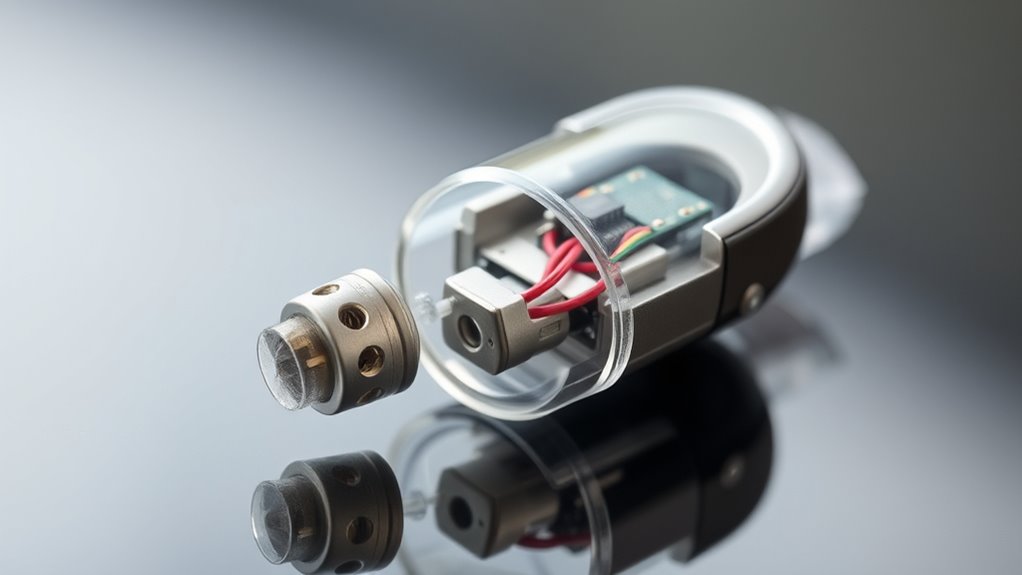
The process begins with the microphone, which captures the sounds around you. These tiny microphones are highly sensitive, capable of picking up a wide range of frequencies, from soft whispers to loud noises. Once the sound waves are collected, they’re converted into electrical signals. From there, the signals travel to the amplifier, which increases the strength of these signals. The amplification is vital because it makes quiet sounds audible without making loud sounds uncomfortable or overwhelming. Different hearing aid styles—like behind-the-ear, in-the-ear, or receiver-in-canal—may have varying microphone placements and designs, but they all serve the same fundamental purpose: capturing sound efficiently.
Next, the processed signals reach the digital processor. This is the brain of the hearing aid, where the real magic happens. Modern devices use sophisticated algorithms to analyze the sounds, filtering out background noise and emphasizing speech. This guarantees you don’t just hear more sound, but hear it more clearly. The processor also customizes the amplification based on your specific hearing loss profile, which is why audiologists often recommend particular hearing aid styles and settings tailored to your needs.
You might wonder how cochlear implants fit into this picture. Unlike traditional hearing aids, cochlear implants bypass damaged parts of your ear entirely. They directly stimulate the auditory nerve with electrical signals, offering an entirely different approach for those with severe hearing loss. While hearing aids mainly amplify sounds, cochlear implants convert sound into electrical signals that your brain interprets as sound, providing a different but effective solution for certain types of hearing impairment.
Understanding how hearing aids work highlights the impressive advances in hearing technology. Whether you’re considering a basic model or a high-tech device, knowing about microphones, amplifiers, and processors helps you see the intricate engineering involved. It also emphasizes that choosing the right hearing aid style depends on your specific needs, lifestyle, and the kind of hearing loss you have. No matter the style, these devices are designed to bring the world of sound back into focus, making everyday interactions richer and more meaningful.
Frequently Asked Questions
How Do Hearing Aids Adapt to Different Environments Automatically?
Hearing aids automatically adapt to different environments using environmental sensors that detect changes in sound. I love how they make automatic adjustments, so I don’t have to manually change settings. Whether I’m in a quiet room or noisy street, the sensors pick up the background noise, and the device fine-tunes the amplification for clear sound. This seamless adaptation helps me hear comfortably in any situation without hassle.
Can Hearing Aids Improve Understanding of Speech in Noisy Places?
Did you know that hearing aids can improve speech understanding in noisy environments by up to 50%? They achieve this through advanced noise suppression technology, which filters out background sounds, making speech perception clearer. I’ve found that modern hearing aids markedly boost my ability to follow conversations in busy places, helping me stay connected. If you struggle in noisy settings, upgrading your hearing aid with noise suppression features can make a real difference.
What Is the Lifespan of a Typical Hearing Aid Battery?
A typical hearing aid battery lasts about 3 to 10 days, depending on usage and battery size. I find that good power management, like turning off my hearing aids when not in use, can prolong battery life. Smaller batteries tend to drain faster, so I always carry spares. Proper maintenance and choosing the right battery type help guarantee consistent performance and maximize the lifespan of my hearing aid batteries.
Are There Hearing Aids That Connect Wirelessly to Phones or TVS?
Ever wonder if your hearing aids can connect directly to your phone or TV? Yes, many modern hearing aids feature wireless connectivity and smartphone integration, allowing you to stream audio directly without extra devices. This seamless connection improves your listening experience, making conversations and entertainment clearer and more natural. Imagine enjoying your favorite shows or calls effortlessly – isn’t that the freedom we all deserve?
How Do Hearing Aids Handle Background Noise Reduction?
Hearing aids handle background noise with noise filtering and directional microphones. I love how these features work together to focus on what I want to hear. The directional microphones pick up sounds from specific directions, like someone talking in front of me, while noise filtering reduces unwanted background sounds. This combo makes conversations clearer and helps me stay engaged, even in noisy places.
Conclusion
Just like Siren’s call lures sailors to safety, hearing aids guide me back to the world of sound. They’re more than just tiny devices; they’re my bridge to conversations, laughter, and life’s subtle whispers. With microphones, amplifiers, and processors working in harmony, I’m reminded that technology isn’t just about gadgets—it’s about reconnecting us to what truly matters. So, whenever I hear that familiar hum, I know I’m listening to hope, restored.