
Bone-conduction and air-conduction are two ways our ears transmit sound. Air-conduction is the usual method, where sound travels through the air into the outer ear, then to the middle ear and inner ear. Bone-conduction bypasses the outer and middle ear, sending vibrations directly to the inner ear via skull bones. Knowing how each works can help you understand your hearing needs better—if you stick around, you’ll discover more about which method might suit you best.

Get oils, diffusers and self-care delivered free with Prime
- Fast, free delivery on millions of items
- Prime Video, Amazon Music and more included
- Member-only deals all year
Key Takeaways
- Air-conduction transmits sound via air through the outer and middle ear, while bone-conduction sends vibrations directly to the inner ear through skull bones.
- Air-conduction requires healthy outer and middle ear structures; bone-conduction bypasses these, ideal for middle ear damage.
- Traditional hearing aids amplify sound for air-conduction; bone-conduction devices transmit vibrations directly to the inner ear.
- Bone-conduction is effective for conductive hearing loss, ear infections, or damage, whereas air-conduction is suitable when ear structures are healthy.
- Understanding these pathways helps determine the most appropriate hearing solution based on ear health and specific hearing needs.

When it comes to hearing, understanding the differences between bone-conduction and air-conduction methods can help you make better choices about your hearing health. I’ve learned that these two pathways work quite differently, especially when it comes to how sound reaches your inner ear. With air-conduction, sound waves travel through the air and enter your ear canal, causing your eardrum and the tiny bones in your middle ear to vibrate. These vibrations then reach your inner ear, where your auditory nerves process the sound. This is the route most traditional hearing aids use, amplifying sound so it travels this way effectively. But if your middle ear isn’t functioning properly—say, due to damage or infection—air-conduction might not deliver sound efficiently, which can limit how well hearing aids work for you.
That’s where bone-conduction comes in. Instead of traveling through the air and middle ear, sound vibrations are sent directly to the inner ear via your skull bones. When a bone-conduction device is placed against your skull, it vibrates in response to sound, bypassing the outer and middle ear entirely. These vibrations are picked up by your inner ear, bypassing any damage or blockages that would normally hinder hearing. I find this especially useful for people with conductive hearing loss or issues with their outer or middle ear. For example, someone with chronic ear infections or a damaged eardrum might benefit from bone-conduction hearing devices because they don’t rely on the middle ear to transmit sound. Additionally, understanding the different pathways of sound conduction can help you better understand your hearing health and the options available to you.
Bone-conduction bypasses the middle ear, sending vibrations directly to the inner ear for clearer hearing.
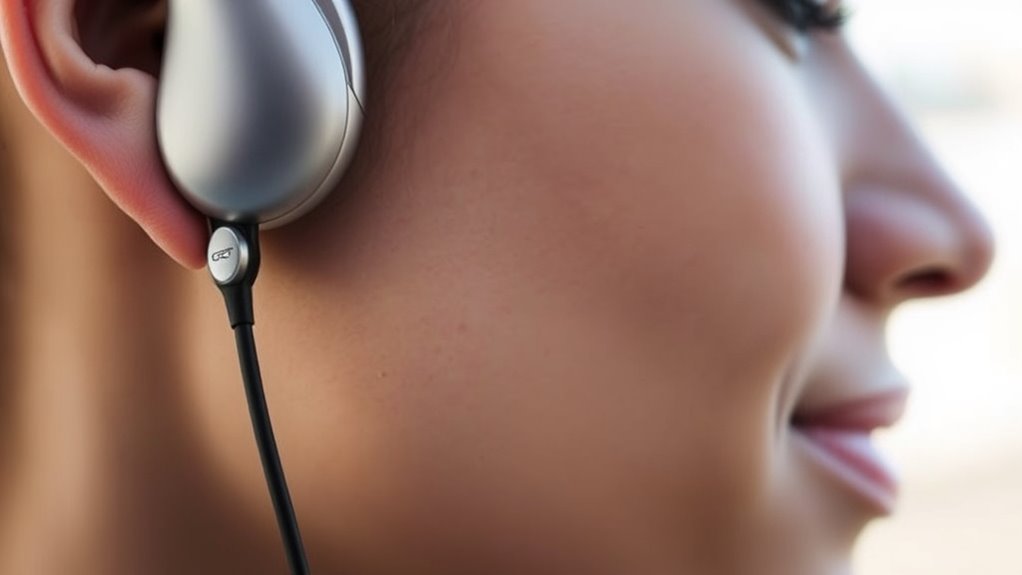
In terms of hearing aids, traditional models are designed to enhance the air-conduction pathway, making sounds louder so they reach your inner ear more clearly. But for those with middle ear problems, bone-conduction hearing aids can be a game changer. They often come in the form of headbands or implants, which transmit vibrations directly to the skull bones to stimulate the inner ear. This approach can provide clearer sound with less distortion when air-conduction isn’t an option.
Understanding these pathways allows you to better assess your hearing needs and explore suitable options. If your inner ear is healthy but your outer or middle ear has issues, bone-conduction devices might be a better fit. Conversely, if your ear structures are intact, traditional hearing aids that use air-conduction could be enough. Ultimately, knowing the difference helps you have informed conversations with audiologists and choose the most effective hearing solutions for your situation.
As an affiliate, we earn on qualifying purchases.
Frequently Asked Questions
Can Bone Conduction Help With Certain Types of Hearing Loss?
Yes, bone conduction can help with certain types of hearing loss, especially conductive hearing loss where sound transmission is blocked. I find that bone-conduction devices offer wireless connectivity, making it easier to connect to phones and other devices. Plus, they come with cosmetic options that look discreet and stylish. If you have specific hearing challenges, it’s worth exploring if bone conduction technology suits your needs.
Are Bone-Conduction Devices Suitable for Children?
I’ve investigated the theory that bone-conduction devices are unsuitable for children, but actually, they’re quite suitable. Pediatric compatibility is high because these devices are designed to be safe and effective for young users. Plus, child comfort is a priority, with many models offering a secure fit and gentle sensation. I believe bone-conduction devices can be a practical solution for kids with specific hearing needs, combining safety and comfort seamlessly.
How Long Do Bone-Conduction Hearing Devices Last?
Bone-conduction hearing devices typically last around 5 to 10 years, depending on device durability and how well you handle maintenance. Regular cleaning and prompt repairs can extend their lifespan. I recommend checking with your audiologist about specific models, as some are built to last longer with proper care. Remember, proper maintenance reduces wear and tear, ensuring you get the most out of your device for years to come.
Is There Any Discomfort Using Bone-Conduction Hearing Aids?
Honestly, I was worried about discomfort when I first tried a bone-conduction hearing aid. At first, fitting challenges made me nervous, but I found that most users, including myself, experience minimal discomfort over time. The device sits comfortably on your skull, and since it bypasses the ear canal, there’s less irritation. With proper adjustment, I barely notice it, and it’s become a seamless part of my daily routine.
Can Bone Conduction Improve Hearing in Noisy Environments?
Yes, bone conduction can improve hearing in noisy environments. I’ve found that it offers better noise reduction and enhances signal clarity because it bypasses outer and middle ear issues. By directly transmitting vibrations to the inner ear, it minimizes background noise, making speech clearer even in busy settings. This technology really helps me focus better, especially when the ambient noise makes traditional hearing aids less effective.
Conclusion
So, whether it’s bone conduction or air conduction, knowing how each works helps you understand your hearing better. Both methods have their strengths, their roles, and their places in hearing health. Recognizing the differences empowers you to make informed choices, seek the right solutions, and improve your quality of life. Ultimately, understanding these methods isn’t just about hearing; it’s about connecting, communicating, and truly listening to the world around you.
Fall Picks
fall essentials
As an affiliate, we earn on qualifying purchases.