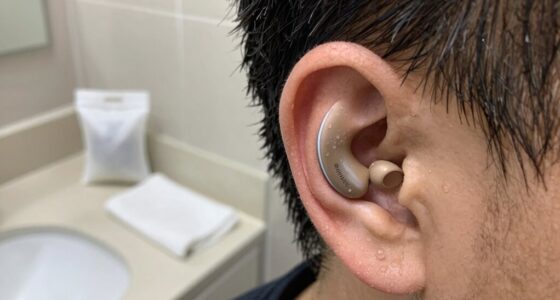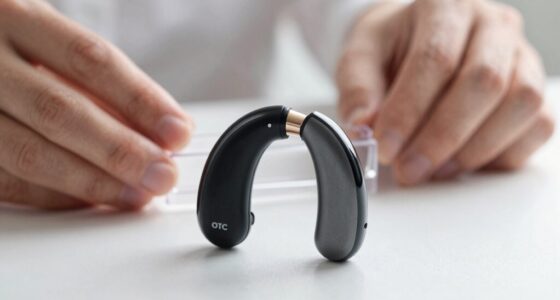
Wearing earbuds frequently can quietly change your listening habits in harmful ways. They make it easier to listen on the go, often leading to longer, more habitual use. The snug fit blocks ambient noise, encouraging you to listen at higher volumes, which can damage your hearing over time. Plus, overuse reduces your awareness of surroundings, affecting safety and social interactions. Keep exploring to discover how these habits can impact you more than you might expect.

Get oils, diffusers and self-care delivered free with Prime
- Fast, free delivery on millions of items
- Prime Video, Amazon Music and more included
- Member-only deals all year
Key Takeaways
- Earbuds promote frequent, long listening sessions due to their convenience, leading to habitual usage.
- Noise isolation encourages higher volume levels, increasing the risk of unnoticed hearing damage.
- Reduced environmental awareness from earbuds can cause safety hazards during activities like walking or driving.
- Overreliance on earbuds diminishes attention to social cues, harming face-to-face interactions.
- Continuous listening habits with earbuds may impair focus, attention span, and overall social engagement over time.

In today’s world, earbuds have become an essential part of how you experience music, podcasts, and calls. Their wireless convenience makes it easy to listen on the go without the hassle of cords tangling or dangling. With just a tap or a swipe, you can switch tracks, answer a call, or activate voice commands—streamlining your listening experience. This ease of use encourages you to take earbuds everywhere, which can seem like a positive shift but might subtly impact your listening habits over time.
One of the main advantages of earbuds is their noise isolation. They fit snugly in your ears, blocking out much of the ambient noise around you. While this can enhance your listening experience, it also means you’re less aware of your surroundings. This noise isolation might encourage you to crank up the volume to compensate for external sounds, especially in noisy environments. Over time, consistently high volume levels can harm your hearing, often without you realizing it. The quiet environment created by noise isolation can trick you into thinking the sound is softer than it actually is, leading to potential danger.
Noise isolation can lead to higher volume levels, risking your hearing without you realizing it.
Because earbuds are so portable and easy to use, you might find yourself listening more frequently and for longer periods. The convenience makes it tempting to tune out the world and immerse yourself in your audio content, but this can lead to a disconnection from your environment. You may become less attentive to what’s happening around you, such as traffic, conversations, or warnings, which could pose safety risks. It also reduces your awareness of social cues and can diminish the quality of face-to-face interactions, subtly changing your social habits.
Another risk is that the ease of access might foster a habit of constant listening, even during activities where focus is essential—like walking, working, or driving. This constant distraction can impair your ability to be present and attentive in real life. Over time, you might find yourself relying on earbuds not just for entertainment but as a barrier to reality, making it harder to enjoy quiet moments or engage fully with your surroundings. Additionally, the widespread use of earbuds can contribute to a decline in environmental awareness, impacting both personal safety and social interactions. This diminished awareness can also lead to a reduced attention span, affecting your ability to concentrate on tasks or conversations.
Products Worth Considering

BowFlex Results Series 552 SelectTech Adjustable Dumbbell

Bowflex SelectTech 840 Adjustable Kettlebell

Levoit Eleva 300X Air Purifier with Fully Sealed HEPA Filtration and Smart Control
As an affiliate, we earn on qualifying purchases.
Frequently Asked Questions
How Do Earbuds Affect Hearing Health Long-Term?
Using earbuds long-term can harm your hearing health by reducing sound isolation, making you push volume levels higher to hear clearly. This excessive volume can damage your hearing sensitivity gradually, increasing the risk of hearing loss. You might not notice the damage early, but over time, loud sounds through earbuds can cause irreversible harm. To protect yourself, keep volume levels moderate and take breaks to preserve your hearing health.
Can Earbuds Cause Ear Infections?
Yes, earbuds can cause ear infections if you’re not careful. They tend to trap moisture and earwax buildup, creating a breeding ground for bacteria. Additionally, their noise isolation features can lead you to increase volume levels, which can damage your hearing. To prevent infections, remove your earbuds regularly, clean them properly, and avoid sharing. Keeping your ears dry and maintaining good hygiene helps reduce the risk of infections.
What Are Signs of Listening Fatigue From Earbuds?
Listening fatigue from earbuds shows itself with signs like sore ears, ringing, and reduced focus. When you engage in personal listening, noise isolation can strain your senses, causing discomfort and dullness. You might notice dullness or dizziness after long sessions, feeling fatigued or overwhelmed. These symptoms signal that your ears are overworked, and it’s time to give them a break. Protect your hearing by monitoring these signs and practicing mindful listening habits.
How Do Earbuds Influence Social Interactions?
Earbuds can influence your social interactions by creating communication barriers, making it harder to engage with others. When you’re immersed in music or podcasts, you might become socially isolated, missing out on casual conversations or emotional cues. This habit can lead to decreased social skills over time, as you prioritize personal listening over meaningful interactions. Be mindful of how often you use earbuds, especially in social settings, to maintain healthy connections.
Are There Safer Alternatives to Traditional Earbuds?
They say, “Better safe than sorry,” and that’s true for audio choices. Safer alternatives like over-ear headphones or bone conduction devices offer better noise isolation and reduce ear damage. Wireless options provide convenience without the risks of tangled cords. These alternatives protect your hearing, let you stay aware of your surroundings, and still deliver quality sound. So, consider these safer choices instead of traditional earbuds for healthier listening habits.
Conclusion
While earbuds offer convenience and immersion, they quietly reshape your listening habits in ways you might not notice. You trade shared experiences and ambient awareness for isolated worlds and potential hearing damage. The silence you crave becomes a barrier to connection, and the convenience may come at a costly emotional toll. Ultimately, what feels like control can quietly lead to loneliness, reminding you that sometimes, the loudest lessons come from what you choose to ignore.