When OTC hearing aids became easier to buy, you gained quicker access and more convenience, as you can now purchase them directly from stores or online without needing appointments or prescriptions. This reduces traditional barriers, making hearing help more approachable and affordable with potential insurance support. Technological advancements guarantee these devices are personalized and high quality, narrowing the gap with professional fittings. Keep exploring to discover how these changes can best serve your hearing needs.

Get oils, diffusers and self-care delivered free — and shop member deals
- Fast, free delivery on millions of items
- Access to Prime Big Deal Days deals on October 6–7
- Prime Video, Amazon Music and more included
Key Takeaways
- OTC hearing aids can now be purchased directly from stores or online, eliminating the need for specialist appointments.
- Simplified fitting and user-friendly guides make setup accessible without professional intervention.
- Regulatory changes increase market competition, innovation, and device quality, making OTC options more reliable.
- Broader insurance coverage and flexible payment options help reduce costs for consumers.
- Greater public awareness and technological advances have reduced stigma and improved device performance.
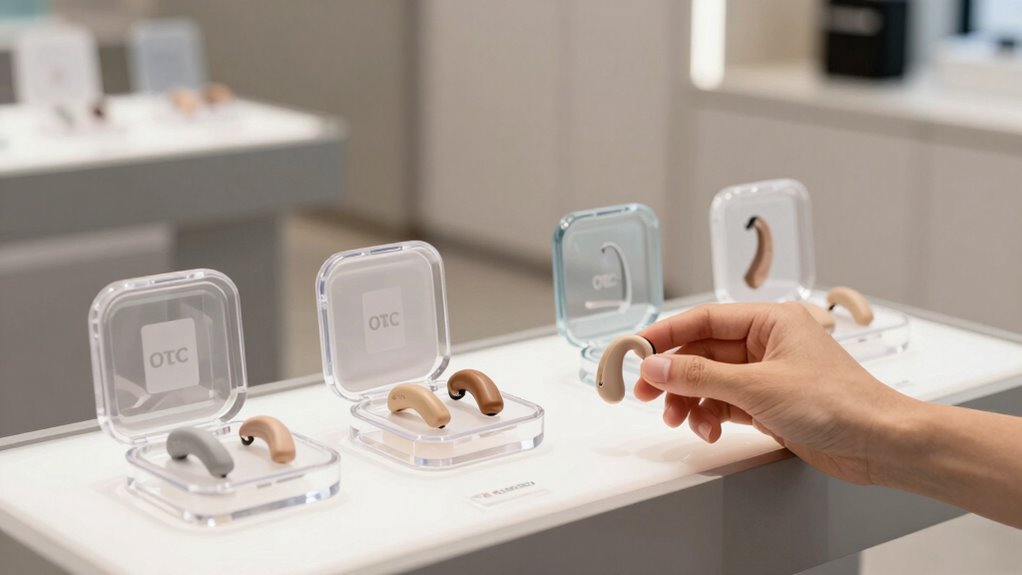
Are OTC hearing aids a game-changer for those with mild to moderate hearing loss? Until recently, buying a hearing aid meant scheduling a visit with an audiologist, undergoing costly tests, and paying hefty fees. Now, with over-the-counter options available, you can purchase hearing aids directly from stores or online, making access quicker and more convenient. This shift has lowered barriers, allowing more people to address their hearing needs without the traditional hurdles.
OTC hearing aids make hearing health more accessible and convenient, removing traditional barriers and delays.
One of the biggest advantages is the ease of purchase. You no longer need a formal appointment or a prescription from a specialist. Many OTC hearing aids are designed to be straightforward, with simple instructions for fitting and use. Still, some brands now offer personalized fitting options that help guarantee the device suits your specific hearing profile. These features often include user-friendly apps or guides that help you customize the sound settings, making the hearing aid more effective for your unique needs. While professional fitting was once essential, many OTC devices now incorporate these personalized adjustments to enhance comfort and performance.
Insurance coverage for OTC hearing aids is another significant change. Historically, coverage for traditional hearing aids was limited, leaving many to cover the full cost out-of-pocket. Recently, some insurers and health plans have begun to recognize OTC hearing aids as a more affordable, accessible option, and coverage policies are slowly evolving. This means you might find that your insurance, or flexible health savings accounts, can help offset the expense of these devices. Although coverage varies, it’s worth checking with your provider to see if OTC hearing aids are eligible for reimbursement or discounts, which can substantially reduce the financial burden. Additionally, the regulatory changes have helped legitimize OTC hearing aids, encouraging more manufacturers to enter the market with approved, safe options. These changes also promote market competition, which can lead to better prices and innovation. Furthermore, increased public awareness about OTC options can help reduce stigma and encourage more individuals to seek solutions for their hearing health. As the market grows, we may also see improved quality standards that ensure safety and reliability for consumers. Moreover, ongoing advancements in technology are making OTC devices more sophisticated, narrowing the gap between over-the-counter and professionally fitted hearing aids.
OTC hearing aids for mild hearing loss
As an affiliate, we earn on qualifying purchases.
As an affiliate, we earn on qualifying purchases.
Frequently Asked Questions
Are OTC Hearing Aids Suitable for Severe Hearing Loss?
OTC hearing aids aren’t suitable for severe hearing loss because hearing aid technology for OTC devices is designed mainly for mild to moderate hearing loss. If your hearing loss severity is severe, you should see a hearing professional for custom solutions. OTC devices work best when your hearing loss is less complex, but for more serious cases, specialized hearing aids provide the necessary power and clarity.
How Do OTC Hearing Aids Differ From Prescription Ones?
You’ll find OTC hearing aids differ from prescription ones mainly in customization and technology. About 80% of users report satisfaction with OTC devices. Thanks to regulatory changes, OTC hearing aids now feature simpler hearing aid technology, making them more accessible and affordable. Prescription hearing aids, however, often offer tailored adjustments and professional support. So, if you need a quick, budget-friendly solution, OTC options are a good start, but prescriptions suit more complex needs.
Can OTC Hearing Aids Be Customized for Individual Needs?
OTC hearing aids usually don’t offer extensive customization for individual needs. However, some models include basic personalization options like volume control or simple sound adjustments. Fit adjustments are often limited, so you might need to try different sizes or models for comfort. While they provide convenience, if you require precise personalization and fit adjustments, consulting a professional for prescription hearing aids might be the better choice.
What Is the Cost Range for OTC Hearing Aids?
Cost-wise, OTC hearing aids generally range from $200 to $1,000 per device, making them more affordable than traditional options. You’ll find a variety of hearing aid technology and accessibility options within this price range. Keep in mind, “you get what you pay for,” so consider how features match your needs. Shopping smart helps you balance budget and quality, ensuring you get the most out of your investment.
Are OTC Hearing Aids Covered by Insurance?
Insurance coverage for OTC hearing aids varies; most plans don’t include them yet. However, as accessibility options expand, some insurers might start offering coverage in the future. Currently, you typically pay out-of-pocket, but check with your provider for any updates or potential discounts. Staying informed helps you make smarter decisions about your hearing health and guarantees you explore all available options for affordable, accessible hearing solutions.
Conclusion
With OTC hearing aids now easier to buy, it feels like a natural step forward—like the world finally catching up with your needs. You might find yourself suddenly hearing things clearer, more often, as if the universe aligned just right. It’s no coincidence that these changes open doors you didn’t realize were closed. Now, you can embrace better hearing without the hassle, making life’s small moments richer and more connected—just as they should be.
Fall Picks
fall essentials
As an affiliate, we earn on qualifying purchases.