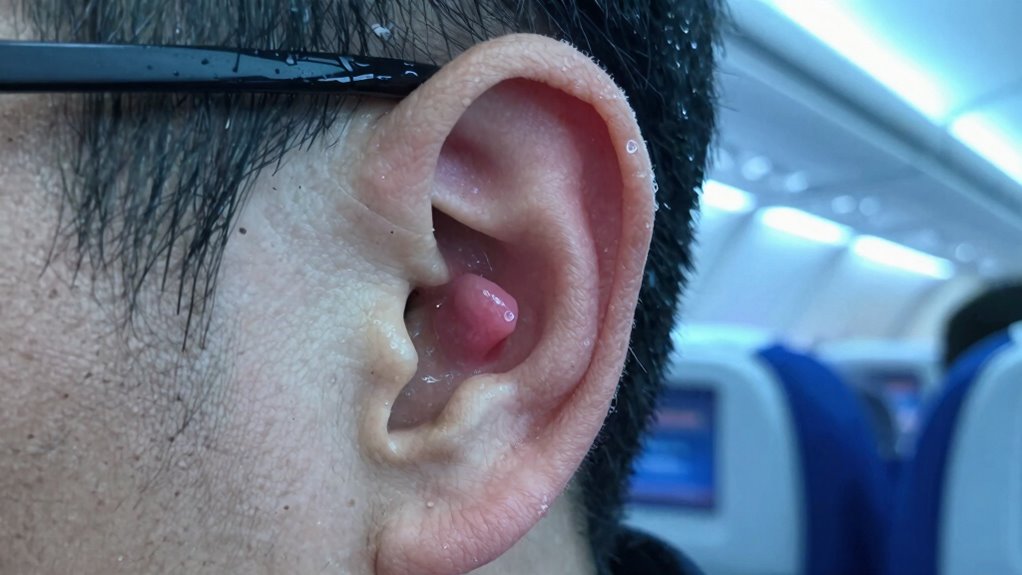

During air travel, your ears can become miserable because rapid altitude changes shift air pressure around you. Your Eustachian tubes are supposed to open and balance this pressure, but if they’re swollen or blocked—due to allergies, colds, or sinus infections—they can’t do their job. This causes a feeling of fullness, pain, or dizziness. Understanding how pressure builds up and how to ease it can help prevent discomfort if you keep exploring this topic.

Get oils, diffusers and self-care delivered free with Prime
- Fast, free delivery on millions of items
- Prime Video, Amazon Music and more included
- Member-only deals all year
Key Takeaways
- Rapid altitude changes cause pressure differences that the Eustachian tube struggles to equalize.
- Eustachian tube dysfunction impairs pressure regulation, leading to ear fullness and discomfort during flights.
- Inflammation from allergies or infections can block the Eustachian tube, worsening ear pain and fullness.
- Swallowing, yawning, or using pressure equalization techniques can help alleviate discomfort.
- Pre-existing issues like sinus infections increase the likelihood of experiencing miserable ear symptoms during air travel.

Flying can be uncomfortable for some people because of the way their ears respond to changes in altitude. When a plane climbs or descends, the air pressure around you shifts rapidly. If your ears don’t equalize this pressure properly, you might experience that familiar blocked or clogged sensation. This discomfort often happens because your ears are trying to balance the pressure between the middle ear and the environment outside. The primary structure responsible for this adjustment is the Eustachian tube, a small passage connecting your middle ear to the back of your throat. Normally, swallowing or yawning opens this tube, allowing air to flow in or out and equalize pressure. However, if your Eustachian tube isn’t functioning well, this process becomes difficult, leading to what’s called Eustachian tube dysfunction.
When altitude changes happen quickly, your Eustachian tube needs to work harder to maintain equal pressure. If it’s blocked or swollen, it can’t open fully, trapping air and creating a pressure imbalance. This results in that uncomfortable feeling of fullness or pain in your ears. Factors like allergies, colds, sinus infections, or even a cold climate can cause inflammation or swelling in the Eustachian tube, making it less responsive. If your tube isn’t functioning properly, you might find it harder to clear your ears after a descent, which can be quite painful and even lead to temporary hearing issues. Understanding Eustachian tube dysfunction can help you better manage these symptoms and take steps to prevent discomfort during travel.
You might notice that during flights, especially during descent, your ears feel plugged or pop with each change in altitude. This sensation is your body’s way of trying to equalize pressure, but if the Eustachian tube is dysfunctional, the pressure difference remains unresolved. In some cases, the imbalance can cause pain, dizziness, or a feeling of fullness that persists even after the plane lands. For frequent flyers or those with underlying health issues, this problem can become a recurring frustration. Understanding Eustachian tube dysfunction can help you better manage these symptoms and take steps to prevent discomfort during travel. Additionally, being aware of air pressure changes and how they affect your ears can help you anticipate and respond to symptoms more effectively. For example, practicing pressure equalization techniques before and during your flight can make a significant difference. You might also consider consulting a healthcare professional if you experience persistent issues, as they can recommend specific treatments or therapies.
Products Worth Considering

Levoit Core 600S-P Smart Air Purifier for Large Rooms

Oura Ring 4 Smart Ring, Silver, Size 8

Oura Ring 5 Smart Ring, Gold, Size 8
As an affiliate, we earn on qualifying purchases.
Frequently Asked Questions
Can Ear Pain From Flying Cause Long-Term Damage?
Ear pain from flying typically doesn’t cause long-term damage if you manage it properly. The pain results from pressure changes affecting your Eustachian tube and middle ear. If pain persists or worsens, it might lead to issues like infections or pressure buildup. To prevent long-term damage, try swallowing, yawning, or using decongestants during flights. If pain continues after flying, consult a healthcare professional to check for any underlying problems.
Are Children More Prone to Ear Discomfort During Flights?
Yes, children are more prone to ear discomfort during flights because of their higher child ear sensitivity and a tendency for pediatric ear infections. Their Eustachian tubes are smaller and more easily blocked, making it harder to equalize pressure. This can lead to pain and discomfort during takeoff and landing. Ensuring they swallow, yawn, or use earplugs can help, but their vulnerability to ear issues remains higher than adults.
Does Altitude Affect Ear Pressure Beyond Cabin Altitude?
Altitude does affect ear pressure beyond cabin altitude because barometric pressure changes as you ascend or descend. These fluctuations impact the Eustachian tube, which equalizes ear pressure. When the external pressure drops, your Eustachian tube struggles to balance the pressure inside your ear, causing discomfort. You can help by swallowing, yawning, or using the Valsalva maneuver to open the Eustachian tube and ease the pressure difference.
Can Certain Medications Prevent Airplane Ear?
Certain medications, like decongestants and antihistamines, can improve medication efficacy for preventing airplane ear by aiding ear pressure regulation. Taking these drugs before your flight helps reduce the buildup of ear pressure caused by altitude changes. However, you should consult your doctor first, especially if you have underlying health issues. Proper use of these medications can make your flying experience more comfortable by minimizing ear discomfort.
How Quickly Do Ear Symptoms Typically Resolve After Flying?
Your ear symptoms usually resolve within a few hours to a day after flying. Think of it like a balloon slowly deflating—barotrauma recovery and ear pressure normalization happen as your ears adjust. If you’re lucky, symptoms like fullness and pain fade quickly, but in some cases, it can take a couple of days. Staying hydrated and avoiding further pressure changes helps speed up the process.
Conclusion
Next time you fly, remember that your ears are like delicate radios tuning in to changing signals. When the cabin pressure shifts, your ears struggle to keep up, causing that miserable feeling. Think of it like trying to listen to a favorite song with a fuzzy signal—you just want clarity. Knowing how your ears respond can help you prepare, so your next flight feels less like a static-filled broadcast and more like smooth sailing.