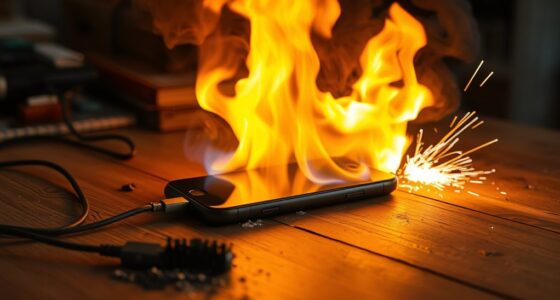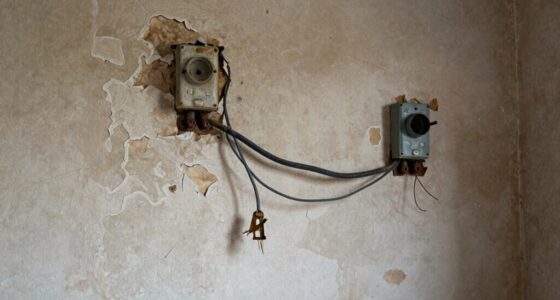

Moisture and electricity are a dangerous mix because water conducts electrical current easily, increasing the risk of shocks, fires, and system failures. Water can seep into outlets, switches, and wiring, creating unintended pathways for electricity that can short circuit or corrode components. Over time, moisture weakens metal parts, making systems unreliable and costly to repair. If you’d like to understand the full dangers and how to protect yourself, there’s more to uncover below.

Get oils, diffusers and self-care delivered free with Prime
- Fast, free delivery on millions of items
- Prime Video, Amazon Music and more included
- Member-only deals all year
Key Takeaways
- Moisture enhances water’s conductivity, increasing the risk of unintended electrical current flow and short circuits.
- Water causes corrosion of electrical components, weakening connections and leading to system failures.
- Moisture around electrical systems can cause sparks, overheating, and potential fires.
- Water infiltration can damage insulation, exposing live wires and risking electrical shocks.
- Persistent moisture accelerates deterioration, reducing system reliability and increasing maintenance costs.
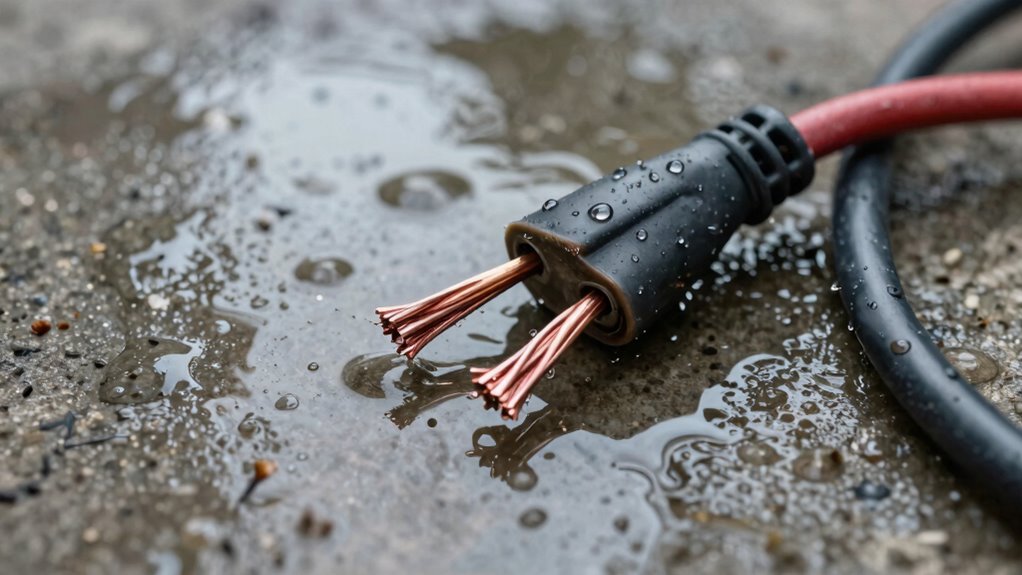
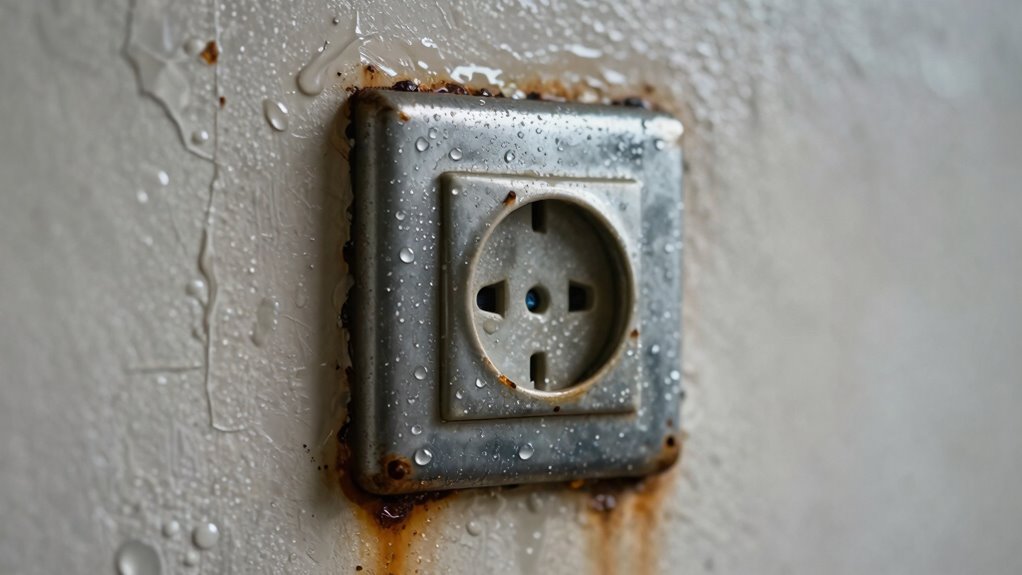
Moisture and electricity are a dangerous combination because water is an excellent conductor of electrical current. When humidity is present around electrical devices or wiring, the risk of damage and injury skyrockets. Water can seep into outlets, switches, or exposed wiring, creating pathways for electrical flow where it shouldn’t be. This often leads to corrosion risks that weaken metal components over time, making electrical systems less reliable and more prone to failure. Corrosion not only damages the integrity of wiring but also increases the chances of malfunction, which can be costly to repair and dangerous to ignore.
Moisture causes corrosion and damage, making electrical systems unreliable and increasing safety risks.
One of the most immediate dangers of moisture around electrical systems is short circuiting. When water bridges the gap between electrical contacts, it allows current to bypass its intended path. This can cause sparks, overheating, or even fires. Short circuiting happens quickly and unpredictably, often catching you off guard. It can damage appliances, trip circuit breakers, or worse, cause electrical shocks that threaten your safety. The presence of moisture essentially creates an unintended electrical connection, which can overload circuits and lead to catastrophic failures. Additionally, moisture can cause insulation breakdown, further increasing the risk of electrical hazards. Properly sealing electrical enclosures is essential to prevent water ingress and mitigate these risks. Using moisture-resistant and weatherproof electrical components can also provide added protection in vulnerable areas.
Beyond the risk of short circuits, moisture accelerates corrosion, especially on metal parts like connectors, terminals, and wiring. Corrosion eats away at these components, weakening their structure and compromising their electrical conductivity. Over time, corroded connections can become loose or break entirely, resulting in intermittent power delivery or complete failure of electrical devices. This process is insidious because it often occurs slowly, giving you a false sense of security until a critical failure happens unexpectedly. The importance of proper ventilation and sealing in preventing water intrusion cannot be overstated, as these measures help reduce moisture buildup around electrical systems. Regular maintenance and inspection are also vital in identifying early signs of deterioration caused by moisture. Implementing waterproofing measures in vulnerable areas is a proactive step to protect your electrical infrastructure from moisture-related damage.
waterproof electrical outlet covers
As an affiliate, we earn on qualifying purchases.
As an affiliate, we earn on qualifying purchases.
Frequently Asked Questions
How Does Moisture Cause Short Circuits in Electrical Systems?
Moisture causes short circuits by creating conductive paths in electrical systems. When water enters, it can lead to insulation degradation, making wires more vulnerable. Additionally, moisture promotes corrosion buildup on metal parts, which can disrupt connections and cause malfunctions. As a result, electrical current flows where it shouldn’t, risking short circuits, equipment damage, and potential hazards. Keeping systems dry and well-maintained helps prevent these dangerous issues.
What Are Common Household Sources of Moisture Affecting Electrical Safety?
You should watch out for household sources like humidity buildup, especially in bathrooms and basements, which can cause moisture issues over time. Leaky pipes also contribute considerably by introducing water into electrical areas, increasing the risk of short circuits and shocks. Regularly inspect these areas, fix leaks promptly, and control humidity with dehumidifiers to keep electrical systems safe and reduce moisture-related hazards.
Can Moisture Damage Electrical Components Over Time Without Visible Signs?
Sure, moisture in damp environments secretly plots to sabotage your electrical systems. Over time, it sneaks in, causing corrosion effects that you can’t see, slowly degrading components. This silent invasion weakens connections, increases risks of shorts, and can lead to costly failures. So, don’t underestimate the power of invisible damage—your electrical setup’s health depends on regular inspections and moisture control, or else it might just give up when you least expect it.
What Safety Precautions Should Be Taken Around Wet Electrical Appliances?
You should always turn off electrical appliances before touching them when wet and avoid using them in damp areas. Wear protective gear like insulated gloves and footwear to prevent electrical shocks. Make sure the appliances have proper electrical insulation and are rated for wet conditions. Keep water away from outlets and cords, and regularly inspect for damage. Taking these precautions minimizes risks, keeping you safe from potential electrical hazards caused by moisture.
How Can Moisture-Related Electrical Hazards Be Effectively Prevented?
Think of your electrical system as a delicate dance partner, needing balance and care. To effectively prevent moisture hazards, you should control humidity levels in your environment and use proper insulation techniques. Keep areas dry, ventilate well, and seal electrical connections tightly. These steps create a barrier against moisture, ensuring your electrical system stays safe and dry, much like a well-choreographed dance partner avoids tripping over each other.
Conclusion
Think of moisture and electricity like fire and water—each powerful alone, but together, they create chaos. When moisture meets electricity, it’s like a delicate dance turning into a fiery storm, risking sparks and surprises at every step. You’re the guardian of this dance floor—keep the moisture away, and you’ll prevent the chaos from igniting. Remember, in this dance, safety is your rhythm, and moisture is the silent partner you don’t want to invite.
Halloween Picks
halloween
As an affiliate, we earn on qualifying purchases.