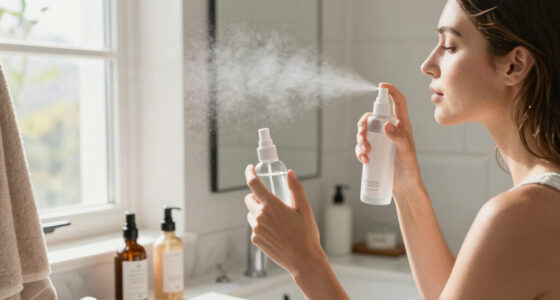

Deodorizing sprays often disappoint because they only mask odors temporarily instead of eliminating the source. They rely on artificial fragrances that fade quickly and require frequent reapplications. Many sprays use chemicals that can worsen odor problems over time and harm indoor air quality. Natural alternatives like baking soda or essential oils can neutralize odors at their source more effectively and safely. Keep exploring to discover more ways to achieve lasting freshness and better odor control.
Key Takeaways
- They mask odors temporarily instead of eliminating the source, leading to quick reappearance of smells.
- Rely on artificial fragrances that fade quickly, requiring frequent reapplications.
- Contain chemicals that may worsen odor problems over time by covering up underlying issues.
- Contribute to indoor air pollution and environmental harm with repeated chemical use.
- Fail to address root causes like bacteria or mold, resulting in short-lived freshness.
Many deodorizing sprays promise to instantly eliminate odors, but in reality, they often fall short of expectations. You might spray them in your home or on your clothes, hoping to banish stubborn smells quickly. However, these products usually mask odors temporarily rather than eliminate their source. You end up applying spray again and again, chasing a fresh scent that fades far too fast. This cycle can be frustrating, especially when you’re seeking a long-lasting solution.
Deodorizing sprays often mask odors temporarily, requiring frequent reapplications and failing to address the root problem.
One reason deodorizing sprays often disappoint is because they rely heavily on artificial fragrances and chemicals. While these ingredients may give you a quick burst of freshness, they do little to address the root cause of odors. Instead, they simply cover up the smell temporarily, which can make the problem worse over time. Many people don’t realize that constant masking can lead to a false sense of cleanliness, and the underlying issues—like bacteria buildup or mold—remain untreated. This approach can be especially problematic for those with allergies or sensitivities to synthetic chemicals. Additionally, using chemical-laden products can contribute to indoor air pollution and environmental harm, emphasizing the need for more sustainable options.
If you’re looking for more effective, sustainable options, natural alternatives might be worth exploring. These include baking soda, essential oils, or vinegar solutions, which can neutralize odors at their source rather than just covering them up. Natural alternatives tend to be gentler on your skin, fabrics, and the environment. Plus, they often lack the harsh chemicals found in many commercial sprays, reducing potential health risks over time. Using natural products can also be more economical since they’re usually simple ingredients you already have at home. Moreover, these alternatives are often biodegradable and pose less risk of contributing to indoor air pollution, making them a more environmentally responsible choice.
However, it’s important to contemplate the long term effects of your deodorizing choices. Many commercial sprays contain chemicals that can accumulate in the environment or contribute to indoor air pollution. Over time, repeated use of these sprays may also cause skin irritation or respiratory issues for sensitive individuals. Natural alternatives, on the other hand, tend to be safer for long-term use and less likely to cause adverse health effects. They may require a bit more effort or knowledge to use effectively, but the benefits often outweigh the inconvenience.
Ultimately, relying solely on deodorizing sprays may not be the best strategy. They might give you an immediate sense of freshness, but they don’t address underlying problems and may have negative long-term effects. Instead, consider incorporating natural alternatives into your routine for a healthier, more sustainable approach to odor control. This way, you’ll not only improve your immediate environment but also protect your health and the planet in the long run. Recognizing the importance of biodiversity and sustainable practices can help guide you toward eco-friendly choices that benefit both your health and the environment.

Muse Apothecary Home Ritual Active Odor Eliminator Spray – Furniture Deodorizer Spray & Bathroom Odor Eliminator for Home – Essential Oil Air Freshener – 4oz, Fresh Linen
- Aromatherapeutic Odor Neutralizer: Infused with essential oils for relaxation
- Versatile Household Use: Suitable for furniture, fabrics, and surfaces
- Effective Odor Neutralization: Uses proprietary Muse Clear technology
As an affiliate, we earn on qualifying purchases.
As an affiliate, we earn on qualifying purchases.
Frequently Asked Questions
Are All Deodorizing Sprays Equally Ineffective?
Not all deodorizing sprays are equally ineffective. Their effectiveness depends on chemical composition and scent longevity. Some sprays contain strong odor-neutralizing ingredients, offering longer-lasting freshness, while others rely on overpowering scents that fade quickly. You should check the ingredients and choose products with proven odor-neutralizing compounds for better results. Remember, a spray with a balanced chemical composition and longer scent longevity will keep you feeling fresh much longer.
Can Deodorizing Sprays Cause Allergic Reactions?
Yes, deodorizing sprays can cause allergic reactions. If you have allergy triggers or skin sensitivities, the chemicals and fragrances in these sprays might irritate your skin or trigger symptoms like sneezing, itching, or redness. Always check the ingredient list and test a small area first. If you notice any reactions, stop using the spray and consult a healthcare professional to find alternatives that are gentle on your skin.
How Long Do Deodorizing Sprays Typically Last?
Deodorizing sprays typically last anywhere from a few hours to several hours, depending on the scent’s longevity and spray durability. You might notice that fresher, stronger scents tend to linger longer, while lighter sprays fade faster. To maximize their effectiveness, apply generously and reapply as needed throughout the day. Keep in mind that environmental factors like airflow and humidity can also influence how long the scent remains noticeable.
Do Natural Deodorizing Sprays Work Better?
You’ll find that natural deodorizing sprays can work better for some people, especially since 65% of users prefer plant-based ingredients. These sprays often focus on scent longevity and use ingredients like essential oils, which can neutralize odors effectively. However, their success depends on your body chemistry and the ingredients’ concentration. While they might not last as long as synthetic options, they’re gentler and often more sustainable.
Are There Eco-Friendly Deodorizing Spray Options?
Yes, eco-friendly deodorizing spray options exist. You can find products made with sustainable ingredients that effectively neutralize odors without harsh chemicals. Look for brands that prioritize eco-conscious packaging, such as recyclable or biodegradable containers. These sprays not only help you stay fresh but also reduce your environmental impact. By choosing such options, you support a healthier planet while enjoying a pleasant, fresh scent throughout your day.
Conclusion
So, next time you reach for that spray, remember it’s just a fleeting illusion—a mirage in a desert of odors. Like trying to paint over a crack in a dam, deodorizing sprays often hide rather than solve the real problem. Instead, tackle the source head-on. Because true freshness isn’t a quick puff of scent; it’s a lasting bloom that starts from within. Don’t settle for smoke and mirrors—seek the genuine scent of cleanliness.