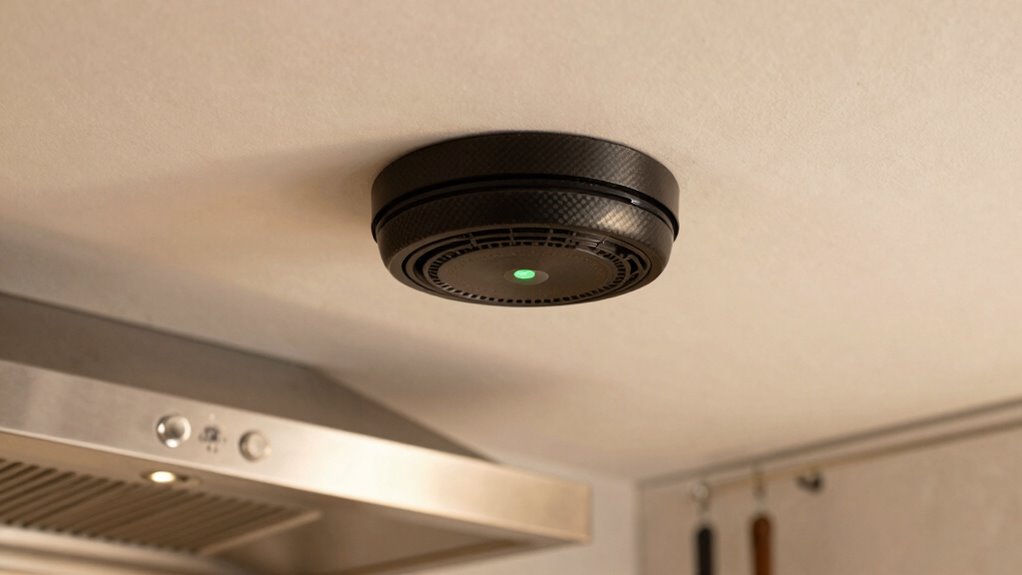

Proper placement of carbon monoxide detectors is vital because it guarantees they identify leaks early and keep you safe, especially near sleeping areas and fuel-burning appliances. Placing detectors at the right height and distance from sources prevents false alarms and missed detections. Installing them on every level and away from drafts or vents enhances their reliability. When you pay attention to placement, your detectors work better. Keep going to discover even more tips for safeguarding your home.
Key Takeaways
- Proper placement ensures early detection and reliable operation during emergencies.
- Positioning near sleeping areas provides critical warnings when occupants are unaware.
- Avoiding humid, drafty, or vented areas prevents false alarms and detection issues.
- Mounting detectors at recommended heights optimizes sensor performance and airflow.
- Following installation guidelines maximizes detector lifespan and overall home safety.

Have you ever wondered how to protect your home from a silent, deadly threat? Carbon monoxide (CO) is that invisible danger lurking in your living space, and the key to safety lies in proper placement of detectors. The placement of your carbon monoxide detectors isn’t just a matter of convenience; it’s crucial to ensure they work effectively when it matters most. Modern detectors use advanced sensor technology to identify CO leaks early, but even the most sophisticated units can’t do their job if they’re installed improperly. That’s why understanding installation guidelines is vital for maximizing safety.
Sensor technology has advanced considerably, allowing detectors to identify even small amounts of carbon monoxide. But these sensors need to be positioned correctly to detect CO before it reaches dangerous levels. If you place a detector in the wrong spot, it might not recognize a leak in time, putting you and your family at risk. For example, CO is slightly lighter than air but can also disperse at different levels depending on the source. This means placing detectors too high or too low could reduce their effectiveness. To get the most out of your sensors, install detectors on every level of your home, especially near sleeping areas, because that’s where you need early warning. Additionally, understanding the sensor technology behind these detectors can help you choose the most reliable units for your safety.
Proper placement of CO detectors is vital for early warning, especially near sleeping areas and on every home level.
When it comes to installation guidelines, it’s important to follow the manufacturer’s instructions carefully. Typically, detectors should be mounted at least 15 feet away from fuel-burning appliances to prevent false alarms caused by normal emissions. Avoid placing them in humid areas like bathrooms or near vents, as moisture can interfere with sensor accuracy. Wall mounting is usually recommended, about 12 to 24 inches above the floor, since CO tends to mix evenly with air at that level. Keep detectors away from drafts, windows, or doors that could hinder proper airflow. Additionally, proper detector placement ensures optimal performance, as even the best sensors can’t compensate for poor positioning. Regular testing and battery replacement are also part of good installation guidelines—these steps ensure your detector remains operational when you need it most. Proper installation practices not only maximize safety but also extend the lifespan of your detectors.
carbon monoxide detector wall mount
As an affiliate, we earn on qualifying purchases.
As an affiliate, we earn on qualifying purchases.
Frequently Asked Questions
How Often Should I Test My Carbon Monoxide Detector?
You should test your carbon monoxide detector at least once a month to guarantee proper detection sensitivity. Regular testing helps confirm the alarm is functioning correctly and will alert you in case of danger. Remember, alarm placement impacts its effectiveness, so keep it in the right spot for maximum performance. Never skip testing, especially if you’ve moved it or noticed any change in sound or response.
Can I Install a CO Detector Outside My Home?
Yes, you can install a CO detector outside your home, but it’s not recommended for outdoor safety. CO detectors work best indoors where they can monitor air quality effectively. For outdoor safety, make sure your detectors are protected from weather and debris, and remember to regularly check and maintain them. Proper detector maintenance and strategic placement inside your home help prevent CO poisoning, highlighting that outside installation isn’t the best solution.
What Is the Ideal Height for Placing a CO Detector?
Did you know that carbon monoxide is deadly in just minutes? The ideal height for placing a CO detector is on the wall about 5 feet above the floor or on the ceiling. This placement guarantees accurate detection of CO gas, as it tends to rise. Follow safety precautions by avoiding placement near vents or windows. Proper detector placement is vital for early warnings and keeping your home safe.
Do Different Rooms Require Different Types of CO Detectors?
Yes, different rooms require different types of CO detectors. Room-specific placement considers factors like potential gas sources and ventilation. For example, near sleeping areas, you should use combination smoke and CO detectors, while in garages or laundry rooms, specialized detectors with sensor variations are better. This guarantees maximum safety, as detector type variations and strategic placement address specific risks, providing reliable early warning regardless of room function.
How Long Do Carbon Monoxide Detectors Typically Last?
You should expect your carbon monoxide detector to last around 5 to 7 years. To guarantee it works correctly, regularly replace the batteries and calibrate the detector as recommended by the manufacturer. Keep an eye on the device for any warning signals, like beeping or dim lights, which indicate it’s time for a replacement. Proper maintenance helps keep you safe and ensures your detector functions effectively.
Conclusion
Remember, the placement of your carbon monoxide detector isn’t just a detail—it’s the difference between safety and tragedy. Think of it as the silent sentinel guarding your home, where each strategic position acts like a finely tuned instrument in an orchestra. When you prioritize proper placement, you’re not just complying with safety standards—you’re actively safeguarding your loved ones. So, take the time to position your detector correctly; it’s the quiet hero your home deserves.