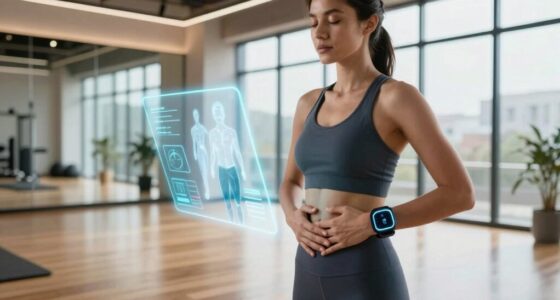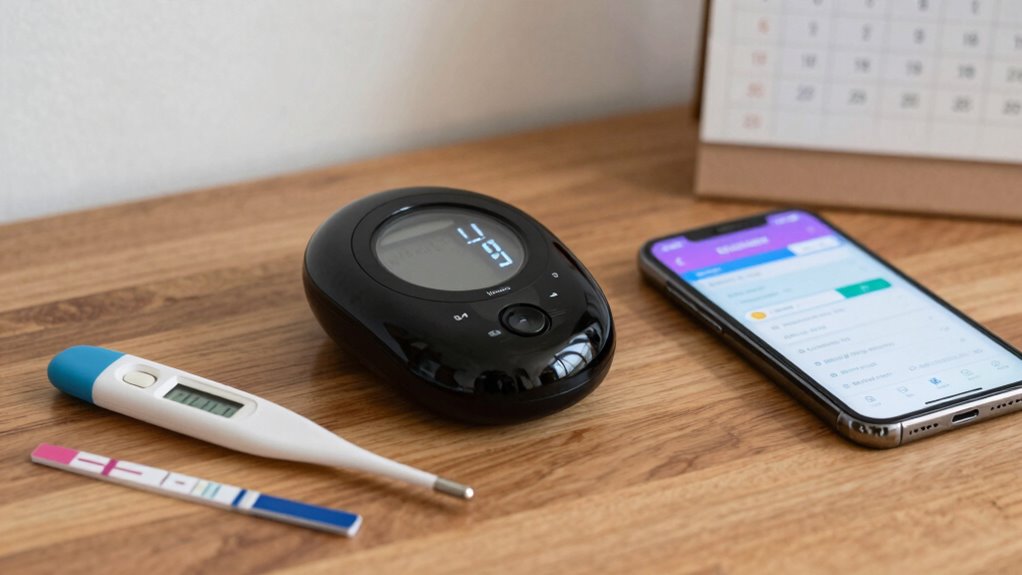

Fertility monitors help you find your most fertile days by tracking key biological signals like LH surges and basal body temperature, often with the help of an app. You’ll notice a spike in LH just before ovulation, signaling your peak fertility window, while temperature shifts confirm when ovulation has occurred. Combining these data points with app tracking gives you a clearer picture of your cycle, so keep going to discover more about how these tools work together.

Get oils, diffusers and self-care delivered free — and shop member deals
- Fast, free delivery on millions of items
- Access to Prime Big Deal Days deals on October 6–7
- Prime Video, Amazon Music and more included
Key Takeaways
- Fertility monitors detect LH surges to pinpoint fertile days and predict ovulation accurately.
- Basal body temperature tracking confirms ovulation by observing a slight temperature rise after egg release.
- App integration allows for symptom logging and comprehensive cycle analysis, enhancing fertility predictions.
- Combining hormonal signals with app data improves understanding of individual cycle patterns for better conception timing.
- Using both LH detection and temperature tracking offers a more reliable, holistic approach to identifying fertile windows.
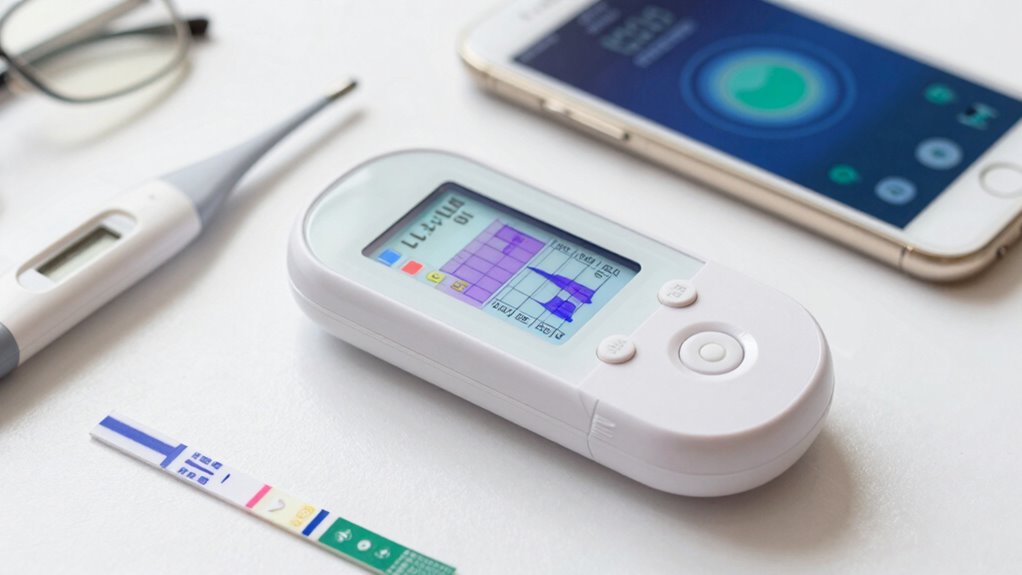
Fertility monitors are innovative devices designed to help you identify your most fertile days by tracking hormonal changes and other biological markers. When you’re trying to conceive, understanding your cycle is essential, and these monitors simplify that process by providing accurate ovulation prediction. By analyzing fluctuations in hormones like LH and estrogen, they pinpoint your most fertile window, making conception attempts more targeted and efficient. With hormonal tracking built into many devices, you get real-time insights that tell you exactly when you’re ovulating, so you can time intimacy for the best chance of pregnancy.
Most fertility monitors work by detecting the surge in luteinizing hormone (LH) that occurs just before ovulation. This hormonal spike signals your body is releasing an egg, and catching this moment is key for ovulation prediction. When you use a monitor that tracks LH levels, it gives you a clear indicator of your fertile days, often through a simple digital readout, color code, or app notification. This way, you don’t have to guess or rely solely on calendar methods. Instead, you get precise data based on your body’s hormonal signals.
Most fertility monitors detect LH surges to identify your fertile days accurately.
Temperature tracking is another essential aspect of many fertility monitors. By taking your basal body temperature (BBT) daily, usually with a special thermometer, you can observe subtle shifts that happen after ovulation. Typically, your temperature rises slightly after the egg is released, and this change confirms that ovulation has occurred. When paired with LH tracking, temperature data helps you verify your fertile window and understand your cycle more thoroughly. Over time, this constellation of data creates a detailed picture of your cycle patterns, increasing your chances of pinpointing the exact days you’re most fertile.
Many modern fertility monitors also integrate app tracking, allowing you to log symptoms, moods, and other biological markers. These apps analyze your data to predict future cycles and ovulation days, providing a comprehensive overview of your fertility health. The convenience of app tracking means you can access your cycle information anytime and get personalized insights based on your unique hormonal fluctuations. Some apps even send reminders to test or take your temperature, making the process less cumbersome.
fertility monitor LH surge detection
As an affiliate, we earn on qualifying purchases.
As an affiliate, we earn on qualifying purchases.
Frequently Asked Questions
How Accurate Are Fertility Monitors Compared to Doctor Tests?
Fertility monitors are quite accurate for tracking hormonal fluctuations, often matching or surpassing doctor tests in detecting ovulation. They provide real-time insights, helping you understand your cycle better. However, they can sometimes be affected by user error or external factors. Keep in mind, your privacy is important—choose devices with secure data protection. While not a substitute for medical advice, these monitors offer reliable support for family planning.
Can Fertility Monitors Predict Ovulation Days Months in Advance?
Like a crystal ball revealing future secrets, fertility monitors can’t predict ovulation days months in advance. They track hormonal fluctuations and provide short-term predictions, but long-term predictions are unreliable because hormonal levels change constantly. You can use these monitors to pinpoint your fertile window each cycle, but relying on them for months or years ahead isn’t realistic. Stay flexible and combine methods for better planning.
Are Fertility Monitors Safe for Women With Hormonal Imbalances?
Fertility monitors can be safe for women with hormonal fluctuations if you carefully consider monitor reliability. These devices are designed to track hormonal changes, but hormonal imbalances may affect their accuracy. It’s crucial to consult your healthcare provider before use, especially if you have conditions impacting hormones. Regularly monitoring and understanding your body’s signals will help you determine if a fertility monitor suits your needs and ensures safe, effective tracking.
How Do External Factors Affect Temperature Readings?
External factors are like gusts of wind that can sway your temperature readings. Environmental influences such as sleep quality, room temperature, and hydration levels, along with lifestyle impacts like stress or alcohol consumption, can cause fluctuations. These factors might make your fertility monitor readings less reliable, so it’s important to track consistent conditions and interpret your data within the context of these external influences for more accurate insights.
Do Fertility Apps Collect and Share Personal Data?
Yes, fertility apps do collect and share personal data, which raises privacy concerns. You should be aware that some apps share your information with third parties or use it for targeted advertising. Always review the app’s privacy policy to understand how your data is used and consider adjusting your privacy settings. Being informed helps you protect your personal information while using fertility tracking apps.
Conclusion
Now that you know how LH, temperature, and app tracking work together, you’re armed with the tools to understand your body’s signals. Think of these monitors as your personal fertility compass, guiding you through the often-mysterious landscape of your cycle. Embrace this knowledge, and you’ll navigate fertility with confidence and clarity—turning what once felt like a puzzle into a map you’ll confidently follow. Your journey to conception begins with awareness; now, take the first step.
Halloween Picks
halloween
As an affiliate, we earn on qualifying purchases.