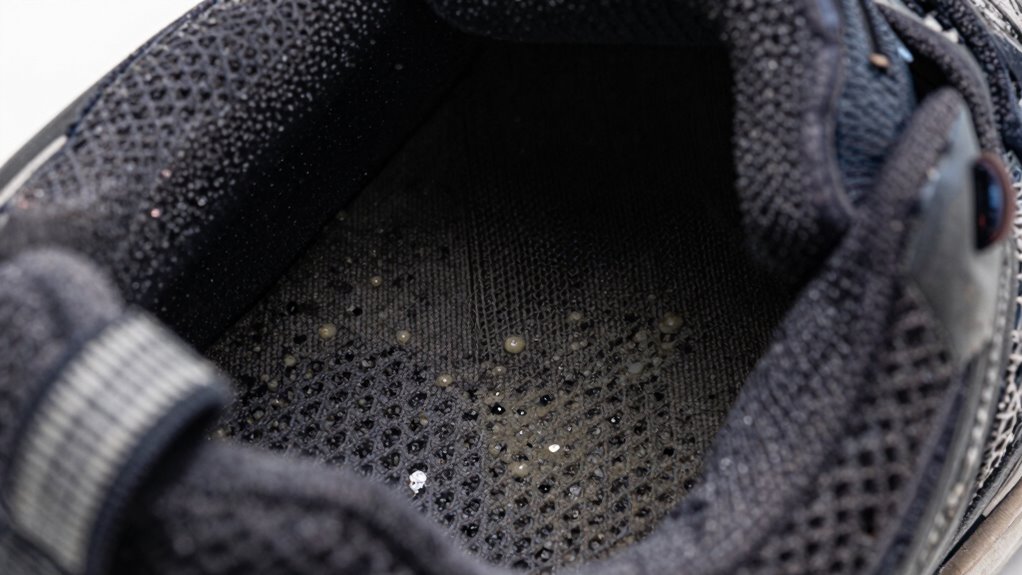
Shoe odor mainly comes from sweat that creates moisture inside your shoes, which bacteria love to feed on. When bacteria break down sweat, they produce foul smells, especially if shoes stay damp for too long. To keep odors at bay, you can use moisture-absorbing materials like wool or silica gel, and antibacterial products. Understanding how moisture, bacteria, and materials interact helps prevent smelly shoes—stay with us to discover effective solutions.
Key Takeaways
- Moisture from sweat creates damp environments inside shoes, promoting bacterial growth responsible for odors.
- Bacteria feed on sweat’s organic compounds, producing foul-smelling byproducts that cause persistent shoe odor.
- Materials like wool absorb sweat and moisture, reducing bacterial proliferation and odor formation.
- Odor-neutralizing agents such as activated charcoal trap scent molecules without masking them.
- Proper hygiene, including cleaning and airing shoes, minimizes moisture and bacterial buildup, preventing odor development.
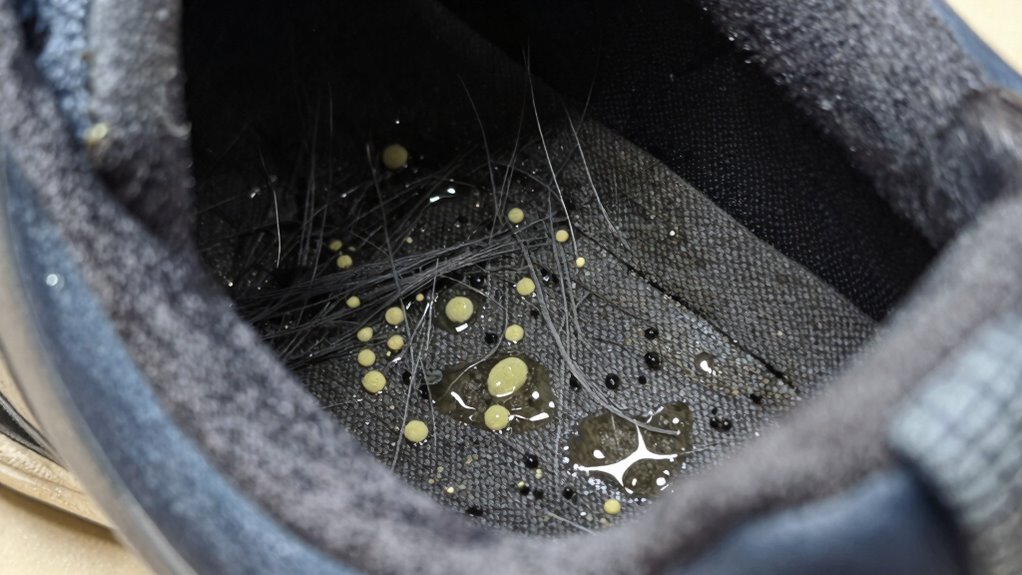
Have you ever wondered why shoes develop that stubborn, foul smell? It’s a common problem, and understanding what’s happening inside your shoes can help you combat it effectively. When you wear shoes, your feet naturally produce sweat, which accumulates inside—the process known as sweat absorption. This moisture creates a perfect environment for bacteria to thrive. Bacteria feed on the organic compounds in sweat, breaking them down and releasing unpleasant odors in the process. This is why your shoes start to smell worse over time, especially if you wear them daily without giving them a chance to dry out.
Shoes smell due to sweat, bacteria feeding on organic compounds, and moisture buildup creating odor-causing environments.
The key to managing shoe odor lies in controlling the moisture and bacteria inside your footwear. You need materials that excel at sweat absorption to keep your shoes dry and less hospitable to bacteria. For instance, shoes with moisture-wicking insoles or natural fibers like wool can draw sweat away from your skin, reducing the dampness that bacteria love. When shoes stay dry, bacteria have less opportunity to grow, which directly impacts odor formation. In addition, some materials naturally contribute to odor neutralization. Activated charcoal or odor-absorbing gels are often incorporated into insoles or sprays to trap and neutralize odor molecules before they reach your nose. These solutions work by capturing the scent particles, effectively reducing the smell rather than just masking it.
Proper shoe hygiene also plays a role in odor neutralization. Regular cleaning and airing out your shoes prevent sweat from lingering and bacteria from multiplying. If your shoes are washable, a thorough wash with antibacterial soap can remove bacteria and residual sweat. For non-washable shoes, using sprays that contain antibacterial agents or odor neutralizers can make a significant difference. Additionally, inserting moisture-absorbing sachets or silica gel packs inside your shoes when you’re not wearing them can help absorb excess moisture, further hindering bacterial growth. Incorporating antibacterial treatments into your shoe maintenance routine can significantly reduce odor-causing bacteria and prolong freshness.
Choosing the right materials for your shoes is vital if you want to minimize odor. Natural fibers like wool or certain synthetic fabrics are better at sweat absorption and odor control than synthetic leathers or plastics. Some shoe manufacturers now incorporate antimicrobial treatments directly into the materials to inhibit bacterial growth from the start. By focusing on sweat absorption and odor neutralization, you can keep your shoes fresher longer and avoid that embarrassing, persistent smell that seems to cling no matter how much you wash. Remember, less moisture and bacteria mean less odor—simple but effective principles to follow for cleaner, more pleasant shoes.

Dr Scholl’s Go Sockless! Cushioning Insoles for Women Men Unisex, 3 Pairs, Trim to Fit – Absorbs Moisture to Keep Feet Dry, Shoe Inserts for Women Men with Plush Terry Cloth Layer for Added Comfort
SUPER-SOFT TERRY CLOTH LAYER: Dr. Scholl’s Go Sockless! Insoles are equipped with a plush Terry cloth top layer…
As an affiliate, we earn on qualifying purchases.
As an affiliate, we earn on qualifying purchases.
Frequently Asked Questions
Can Certain Shoe Materials Naturally Prevent Odor?
Certain shoe materials can naturally prevent odor thanks to their natural antifungal properties and moisture-wicking fabrics. For example, leather and wool have inherent antifungal qualities that help inhibit bacteria growth, reducing odor. Additionally, moisture-wicking fabrics draw sweat away from your skin, keeping your feet dry and less prone to bacteria buildup. Choosing shoes made from these materials can help you stay fresh longer without relying solely on sprays or powders.
How Does Humidity Influence Bacterial Growth in Shoes?
When humidity rises, bacteria in your shoes thrive, increasing odor. Imagine a hiker who leaves sweaty boots in a humid closet; bacteria proliferate rapidly. To combat this, humidity control is essential. Using moisture-absorbing insoles or dehumidifiers can reduce bacterial proliferation, keeping your shoes fresher longer. Lower humidity levels inhibit bacterial growth, minimizing odor and extending shoe life. Take steps now to manage humidity and keep your shoes smelling clean.
Are There Eco-Friendly Ways to Eliminate Shoe Odor?
Yes, you can use sustainable deodorizer options like natural sprays or homemade solutions to eliminate shoe odor. Biodegradable shoe fresheners, such as cedarwood sachets or activated charcoal inserts, absorb moisture and bacteria without harming the environment. These eco-friendly methods are safe, effective, and reduce chemical use, helping you keep your shoes fresh while supporting sustainability. Just place them inside your shoes overnight for best results.
What Are the Long-Term Effects of Frequent Deodorizer Use?
Frequent deodorizer use might seem like a quick fix, but over time, it can lead to deodorizer buildup inside your shoes, potentially affecting their natural materials. You could notice the scent masking effects fading, making odors harder to manage. Continued use may also alter the shoe’s breathability and comfort. To keep your shoes fresh long-term, consider natural odor control methods instead of relying solely on deodorizers.
How Do Different Shoe Styles Affect Moisture Retention?
Different shoe styles impact moisture retention based on their shoe insulation and ventilation design. High-insulation shoes trap more heat and moisture, increasing the risk of odor and bacteria buildup. Conversely, shoes with better ventilation design allow airflow, helping moisture escape and keeping your feet dry. Low-cut or breathable materials reduce moisture retention, making them ideal for warmer weather or active use. Choosing the right style helps manage moisture effectively.

Innmily Activated Charcoal Odor Absorber, Odor Eliminator for Strong Odor,Bamboo Charcoal Air Purifying Bags for Shoe Home Car Closet Pet, Sneaker Deodorizer, Smoke Room Deodorizer(6 x 50g)
UNLEASH THE PURIFYING POWER OF 28°N LATITUDE – Cultivated in bamboo forests bathed in sunlight at 28°N latitude,…
As an affiliate, we earn on qualifying purchases.
As an affiliate, we earn on qualifying purchases.
Conclusion
By understanding moisture, bacteria, and materials, you can combat shoe odor effectively. You control the environment, control the smell, and control your confidence. You dry, you clean, you choose wisely. With knowledge and action, you prevent odor from taking hold, maintain freshness, and keep your shoes smelling great. Ultimately, you take charge, you stay fresh, and you enjoy every step you take.

MICROBAN Sanitizing Spray, 15 oz., 2 Pack, Fresh Scent, Disinfects, Sanitizes, Eliminates Odors, and Keeps Killing 99.9% of Bacteria on Hard, Non-Porous Surfaces in Home for up to 24 Hours
KILLS 99.9% OF BACTERIA FOR 24 HOURS ON TREATED SURFACES: Don't Just Disinfect – Protect surfaces for up…
As an affiliate, we earn on qualifying purchases.
As an affiliate, we earn on qualifying purchases.

55 Pcs 5 Gram Silica Gel Packs, Transparent Desiccant, Desiccant Packets for Storage, Moisture Packs for Spices Jewelry Shoes Boxes Electronics Storage
GOOD ADSORPTION CAPACITY: Silica gel desiccant is a highly active adsorption material, has good thermal properties and chemical…
As an affiliate, we earn on qualifying purchases.
As an affiliate, we earn on qualifying purchases.