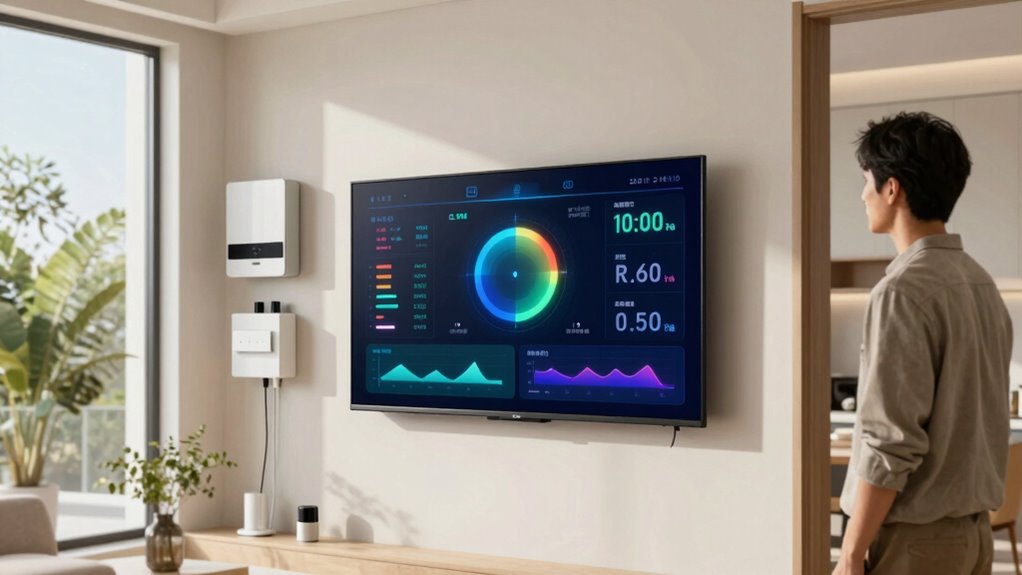

Finding the right whole home energy monitor system can significantly improve your understanding of energy consumption and reduce costs. The Eyedro Smart Home Energy Monitor 200A stands out as the best overall pick for its reliable WiFi and Ethernet options, enabling comprehensive monitoring. The Emporia Vue 3 offers impressive real-time data and smart home integration, making it ideal for those seeking automation. Meanwhile, systems like the Refoss Smart Home Energy Monitor appeal to DIY enthusiasts with open API access and no cloud dependency. Readers face tradeoffs between cost, complexity, and features, so continue reading for a detailed breakdown to find the best fit for your home.

Get oils, diffusers and self-care delivered free with Prime
- Fast, free delivery on millions of items
- Prime Video, Amazon Music and more included
- Member-only deals all year
Key Takeaways
- The top monitors combine real-time data with smart home integration, offering both detailed insight and automation capabilities.
- Many systems differ mainly in sensor count, installation complexity, and whether they support solar or circuit-specific monitoring.
- Open API and local control features are favored by DIY users, but may require more setup effort and technical knowledge.
- Price varies widely, with premium models offering extensive sensor networks and integration, while budget options provide essential functionality.
- Choosing a system tailored to your home’s size, existing smart ecosystem, and specific monitoring needs results in better value and performance.
| Eyedro Smart Home Energy Monitor 200A WiFi/Ethernet |  | Best Overall for Comprehensive Whole-Home and Solar Monitoring | Current Rating: 200A | Connectivity: WiFi 2.4 GHz, Ethernet | Sensors Included: Two 200A sensors | VIEW ON AMAZON | See Our Full Breakdown |
| WiFi Home Energy Monitor with 3 80A CT Clamps |  | Best for Multi-Circuit Monitoring and Smart Home Integration | Panel-Level Monitoring: Yes | Supports Circuits: Up to 3 circuits with 3 CT clamps | Input Voltage: AC 100–240V | VIEW ON AMAZON | See Our Full Breakdown |
| Leviton LWHEM-2R Whole Home Energy Monitor with CTs |  | Best for Leviton Ecosystem Integration and App Control | Model: LWHEM-2R | Connectivity: Wi-Fi | Inputs: Up to 3 pairs of LSMMA CTs | VIEW ON AMAZON | See Our Full Breakdown |
| Emporia Vue 3 Home Energy Monitor – Smart Home Automation Module and Real-Time Electricity Usage Monitor |  | Best for Safety-Certified Whole-Home Monitoring with Automation | Part Number: EMV3A-2P-8 | Item Weight: 3.36 pounds | Product Dimensions: 10 x 5 x 5 inches | VIEW ON AMAZON | See Our Full Breakdown |
| Emporia Energy Monitor with 16 Sensors and 4 Smart Plugs Bundle |  | Best for Detailed Whole-Home and Device-Level Automation | Sensors: 16 sensors | Smart Plugs: 4 Wi-Fi smart plugs | Compatibility: iOS, Android, Alexa | VIEW ON AMAZON | See Our Full Breakdown |
| Refoss Smart Home Energy Monitor with Open API, Home Assistant Integration, No Cloud |  | Best for Privacy and Local Control | Model: EM16P | Weight: 4.24 pounds | Dimensions: 4.5 x 3.5 x 1.1 inches | VIEW ON AMAZON | See Our Full Breakdown |
| Emporia Vue 3 Home Energy Monitor – Real-Time Electricity Usage and Power Consumption Meter |  | Best for Ease of Use and Appliance Monitoring | Certification: UL Listed | Supported Systems: Single phase, 3-phase, Wye systems | Connectivity: 2.4 GHz Wi-Fi | VIEW ON AMAZON | See Our Full Breakdown |
| SIEMENS Inhab Smart Home Energy Monitor with Circuit Sensors |  | Best for Circuit-Level Precision and Alerts | Circuit Level Sensors: 16-50 Amp | Main Sensors: 2-200 Amp | Compatibility: USA and Canada | VIEW ON AMAZON | See Our Full Breakdown |
| Emporia Vue 3 Home Energy Monitor – Real-Time Electricity Usage and Solar Monitoring |  | Best for Solar and Net Metering Integration | Certification: UL Listed | System Support: Single phase, 3-phase, Wye systems | Sensors: Sixteen 50A branch sensors | VIEW ON AMAZON | See Our Full Breakdown |
| Refoss Smart Home Energy Monitor with 16 60A Circuit Sensors |  | Best for High-Precision Circuit Monitoring | Number of sensors: 16 | Sensor capacity: 60A per sensor | Supported systems: Single-phase, split-phase, 3-phase 4-wire Wye | VIEW ON AMAZON | See Our Full Breakdown |
| Square D WISEREMPV Energy Monitor System |  | Best Overall for Smart Home Integration | Color: White | Compatibility: Amazon Alexa, Google Home, Phillips Hue, TP-Link, WeMo | Features: Real-time energy tracking, customizable alerts, mobile app control | VIEW ON AMAZON | See Our Full Breakdown |
| Meross Smart Home Energy Monitor |  | Best Value with Detailed Reports and Privacy Focus | Certification: ETL, UL 61010 | System Compatibility: single-phase 2-wire, single-split phase 3-wire, 3-phase 4-wire Wye | Maximum Current: 200A main circuits, 60A branch circuits | VIEW ON AMAZON | See Our Full Breakdown |
| Smart Home Energy Monitor with 16 50A Circuit Sensors |  | Best for Multi-Circuit Monitoring and Local Control | Sensor Count: 16 | Sensor Current: 50A | Supported Voltages: up to 415Y/240VAC | VIEW ON AMAZON | See Our Full Breakdown |
| whole home energy monitor system | Connectivity |
|---|---|
| Eyedro Smart Home Energy Monit | WiFi 2.4 GHz, Ethernet |
| WiFi Home Energy Monitor with | WiFi 2.4GHz |
| Leviton LWHEM-2R Whole Home En | Wi-Fi |
| Emporia Vue 3 Home Energy Moni | — |
| Emporia Energy Monitor with 16 | — |
| Refoss Smart Home Energy Monit | Built-in Web UI, Open API, MQTT |
| Emporia Vue 3 Home Energy Moni | 2.4 GHz Wi-Fi |
| SIEMENS Inhab Smart Home Energ | — |
| Emporia Vue 3 Home Energy Moni | 2.4 GHz Wi-Fi |
| Refoss Smart Home Energy Monit | — |
| Square D WISEREMPV Energy Moni | — |
| Meross Smart Home Energy Monit | Home Assistant, Open API, Web Control |
| Smart Home Energy Monitor with | 2.4GHz WiFi |
More Details on Our Top Picks
Eyedro Smart Home Energy Monitor 200A WiFi/Ethernet
The Eyedro Smart Home Energy Monitor 200A stands out for its support of both WiFi and Ethernet connections, offering flexible setup options that cater to various home configurations. It excels in providing real-time data on both consumption and production, making it ideal for users with solar systems or net metering needs. Compared to the Emporia Vue 3, it offers more detailed monitoring for solar and grid integration, but with a tradeoff: the setup can be more complex, especially for those unfamiliar with electrical systems. Its compatibility with North American standards narrows its appeal outside the U.S. and Canada. The device’s cloud access without subscription fees adds convenience, but the need for two sensors for net metering can be an obstacle for some. Overall, this pick is best suited for homeowners seeking detailed, reliable monitoring with flexible connectivity options.Pros:- Supports both WiFi and Ethernet for flexible installation
- Provides detailed real-time consumption and production data
- Compatible with solar and net metering systems
- No subscription fees for cloud access
Cons:- Requires two sensors for net metering setup, increasing complexity
- Limited to North American safety standards, restricting international use
- Setup may be challenging for users unfamiliar with electrical wiring
Best for: Homeowners with solar panels or net metering systems who want detailed, reliable energy data.
Not ideal for: Users outside North America or those seeking a simple plug-and-play solution without electrical wiring.
- Current Rating:200A
- Connectivity:WiFi 2.4 GHz, Ethernet
- Sensors Included:Two 200A sensors
- Compatibility:Solar, grid, net metering
- Standards:North American safety standards
- Includes:Ethernet cable, power adapter, access to MyEyedro cloud
Our verdict“This is an excellent choice for tech-savvy homeowners seeking comprehensive, flexible whole-home and solar energy monitoring.”
WiFi Home Energy Monitor with 3 80A CT Clamps
This WiFi-enabled monitor with three 80A CT clamps makes a strong case for tracking multiple high-power circuits like HVAC, water heater, and solar feeds simultaneously. It offers real-time data and historical insights via the app, with added features like temperature alerts and remote relay control. Compared to the Emporia Vue 3, it specializes in circuit-level monitoring rather than whole-home aggregation, which can be a plus or a limitation depending on your needs. Its installation requires electrical wiring and professional help, which may deter DIYers. The app compatibility with Smart Life and Tuya broadens smart home integration but can sometimes be less seamless than dedicated systems. This product is ideal for users who want detailed circuit-specific data and control over key appliances but are comfortable with electrical wiring.Pros:- Supports monitoring of up to 3 circuits simultaneously
- Provides real-time and historical energy data via app
- Includes temperature alerts and remote relay control
- Easily integrates with popular smart home systems
Cons:- Installation requires electrical wiring and professional help
- Monitoring limited to 3 circuits, not whole home
Best for: Homeowners who want detailed, circuit-by-circuit energy data and smart control capabilities.
Not ideal for: Homeowners seeking a simple, whole-house overview or those uncomfortable with electrical wiring and professional installation.
- Panel-Level Monitoring:Yes
- Supports Circuits:Up to 3 circuits with 3 CT clamps
- Input Voltage:AC 100–240V
- Connectivity:WiFi 2.4GHz
- App Compatibility:Smart Life, Tuya
- Temperature Alert:Yes, exceeds 50°C
Our verdict“This monitor is best suited for users needing detailed circuit-level insights and smart control, willing to handle professional installation.”
Leviton LWHEM-2R Whole Home Energy Monitor with CTs
The Leviton LWHEM-2R is tailored for users already invested in Leviton smart devices, offering real-time energy data for the entire home through Wi-Fi. Its strength lies in remote control and scheduling of compatible Leviton smart circuit breakers, making it ideal for those seeking integrated management within a familiar ecosystem. Compared to the Emporia Vue 3, it offers more direct control over breakers but requires Leviton-specific equipment, limiting flexibility. Setup can be complex for non-technical users, especially without prior experience with smart home systems. Its compatibility with Automatic Transfer Switches (ATS) is a plus for backup power setups but details are sparse. This monitor is best for Leviton users who want seamless integration and remote control of their smart breakers.Pros:- Real-time monitoring of entire home energy use
- Remote control and scheduling of Leviton smart breakers
- Integrates with Leviton app and ecosystem
Cons:- Requires compatible Leviton smart circuit breakers
- Setup may be complicated for non-technical users
- Limited info on backup power compatibility
Best for: Leviton smart home users who want integrated control and energy management of their entire system.
Not ideal for: Homeowners not using Leviton circuit breakers or those seeking a more open, versatile system.
- Model:LWHEM-2R
- Connectivity:Wi-Fi
- Inputs:Up to 3 pairs of LSMMA CTs
- Control:Remotely control and schedule smart circuit breakers
- Integration:Compatible with Automatic Transfer Switch (ATS)
- App:Leviton My Leviton app
Our verdict“This monitor is ideal for Leviton ecosystem enthusiasts seeking integrated control but less suitable for those with diverse smart systems.”
Emporia Vue 3 Home Energy Monitor – Smart Home Automation Module and Real-Time Electricity Usage Monitor
The Emporia Vue 3 provides a balanced solution for those prioritizing safety and automation, with UL and CE certifications backing its reliability. It supports real-time power monitoring and is compatible with solar and net metering, making it suitable for eco-conscious users. While installation is straightforward for those familiar with circuit panels, the need for additional sensors for three-phase systems can be a limitation. Its automation features via the app help reduce electricity costs by managing loads intelligently. Compared with other options like the Eyedro, it emphasizes safety and ease of use, though data retention can be limited without active app use. This model is best for users who want safety-certified equipment combined with automation features for smarter energy management.Pros:- UL and CE safety certifications ensure reliability
- Supports real-time data and automation
- Compatible with solar and net metering
- Easy to install in circuit panels
Cons:- Requires 2.4 GHz Wi-Fi connection
- Additional sensors needed for 3-phase systems
- Data retention limited when app is inactive
Best for: Homeowners looking for a reliable, safety-certified system with automation capabilities.
Not ideal for: Users needing detailed circuit-level data beyond whole-home monitoring or those with complex three-phase systems without extra sensors.
- Part Number:EMV3A-2P-8
- Item Weight:3.36 pounds
- Product Dimensions:10 x 5 x 5 inches
- Certification:CE, UL
- Style:Whole home monitor with 8 circuit sensors
- Material:Gen 3
Our verdict“This system suits safety-conscious homeowners wanting reliable monitoring and automation features with straightforward installation.”
Emporia Energy Monitor with 16 Sensors and 4 Smart Plugs Bundle
This bundle from Emporia combines extensive home energy monitoring with smart plug automation, making it the most comprehensive option in this roundup. With 16 sensors, it captures detailed data across multiple circuits, while the four Wi-Fi smart plugs allow for remote control of individual devices. This setup excels for users wanting granular insights and control, especially with solar and net metering support. Compared to the simpler WiFi monitor with 3 CT clamps, this system provides far more data and automation potential. The main tradeoff is the complexity: setup can be challenging, and stable Wi-Fi is essential for consistent operation. Long-term durability remains unclear from reviews. This product makes sense for tech-savvy homeowners eager to optimize every aspect of their power consumption.Pros:- Includes 16 sensors for detailed circuit-level tracking
- Supports remote control and automation via smart plugs
- Compatible with solar net metering and popular smart home platforms
- Provides comprehensive power insights for the entire home
Cons:- Setup can be complex and intimidating for novices
- Requires consistent Wi-Fi for reliable operation
- Limited data on long-term durability from customer reviews
Best for: Energetic homeowners seeking detailed monitoring and automation of multiple circuits and devices.
Not ideal for: Less technical users or those with limited Wi-Fi stability who prefer plug-and-play solutions.
- Sensors:16 sensors
- Smart Plugs:4 Wi-Fi smart plugs
- Compatibility:iOS, Android, Alexa
- Supports:Solar net metering
- Control:Remote control and automation
Our verdict“This bundle is best for homeowners who want maximum data granularity and device automation, accepting a more involved setup process.”
Refoss Smart Home Energy Monitor with Open API, Home Assistant Integration, No Cloud
The Refoss EM16P stands out for homeowners who prioritize data privacy and local management, offering real-time energy data without relying on cloud services. Its seamless integration with Home Assistant and OpenClaw AI makes it ideal for those wanting to automate energy savings while maintaining control over their data. Compared with the Emporia Vue 3, it provides more granular circuit-level insights directly in your local network, though installation may be more complex for non-technical users. The device’s accuracy and historical data storage support solar optimization, but it can be challenging to install if you’re unfamiliar with electrical work. This pick makes the most sense for homeowners who want detailed, private energy monitoring without cloud dependence, especially those integrating with existing smart home platforms.Pros:- Local control and data privacy with no reliance on cloud services
- Seamless integration with Home Assistant and OpenClaw AI for automation
- Accurate real-time energy monitoring with extensive historical data
Cons:- Installation may require technical knowledge and electrical skills
- Limited to circuits within specified current ranges
Best for: Homeowners seeking maximum data privacy and local control, with some technical skill for installation.
Not ideal for: Renters or those uncomfortable with electrical wiring, as installation can be complex.
- Model:EM16P
- Weight:4.24 pounds
- Dimensions:4.5 x 3.5 x 1.1 inches
- Current Sensors:2 main circuits (2–200A each), 16 branch circuits (1–60A each)
- Connectivity:Built-in Web UI, Open API, MQTT
- Accuracy:±1% at 200A, ±2% at low current
Our verdict“This is an excellent choice for advanced users who want private, precise home energy data integrated with smart home systems.”
Emporia Vue 3 Home Energy Monitor – Real-Time Electricity Usage and Power Consumption Meter
The Emporia Vue 3 offers a user-friendly approach to real-time energy tracking, making it suitable for homeowners who want straightforward insights into their electricity use. Its compatibility with solar and net metering adds value for those with renewable setups, and the app interface simplifies monitoring multiple appliances—especially with optional sensors. Compared to the SIEMENS Inhab, the Vue 3 is easier to install and configure, though it may require additional sensors for comprehensive coverage, which can add to the cost. Wi-Fi reliance and the need to purchase extra sensors might be inconvenient for some, but its safety certification and clear data presentation make it a strong choice for most average homeowners. This monitor makes sense for users seeking a balance of simplicity and expandability in their energy management system.Pros:- UL certified for safety and reliability
- Simple app interface for real-time data and appliance monitoring
- Supports solar and net metering integration
Cons:- Requires Wi-Fi connection for real-time updates
- Additional sensors are sold separately, increasing total cost
Best for: Homeowners who want an easy-to-use, expandable energy monitor for daily appliance management.
Not ideal for: Users seeking detailed circuit-level data or professional-grade installation, as additional sensors are sold separately.
- Certification:UL Listed
- Supported Systems:Single phase, 3-phase, Wye systems
- Connectivity:2.4 GHz Wi-Fi
- Data Retention:7 days for 1-minute data
- Sensor Capacity:Up to 16 branch sensors (sold separately)
Our verdict“Ideal for everyday homeowners wanting straightforward, expandable energy tracking with minimal setup complexity.”
SIEMENS Inhab Smart Home Energy Monitor with Circuit Sensors
The SIEMENS Inhab excels at providing detailed, real-time energy data directly at the circuit level, making it ideal for users interested in precise energy management and custom alerts. Its ability to notify users of abnormal activity or peak loads offers a proactive approach to energy savings. Compared with the Emporia Vue 3, the Inhab includes advanced features like load shedding and personalized notifications, but its installation is more complex and tailored to US and Canadian markets. This device is best suited for homeowners who want detailed circuit insights and are comfortable with professional installation, as it may require expert help. It’s less suitable for those who prefer plug-and-play solutions or are outside North America.Pros:- Provides accurate, real-time circuit-level energy data
- Supports personalized alerts for abnormal activity
- Compatible with mobile app for remote control
Cons:- Installation may require professional help
- Limited to US and Canadian markets
Best for: Homeowners wanting detailed circuit monitoring with proactive alerts and who are comfortable with installation.
Not ideal for: Renters or users outside North America, due to regional restrictions and installation complexity.
- Circuit Level Sensors:16-50 Amp
- Main Sensors:2-200 Amp
- Compatibility:USA and Canada
- Features:Real-time monitoring, alerts, energy management
Our verdict“Ideal for performance-oriented homeowners seeking detailed circuit data and advanced energy management features.”
Emporia Vue 3 Home Energy Monitor – Real-Time Electricity Usage and Solar Monitoring
This version of the Emporia Vue 3 focuses on comprehensive energy management, including solar and net metering support, making it well-suited for homeowners with renewable energy systems. Its UL certification adds reliability, and the detailed app reporting helps track consumption patterns effectively. Compared to the B0C7B1LKDW, it emphasizes solar data, which is critical for those with solar panels. Installation remains straightforward, but additional sensors are needed for three-phase systems, which could increase setup complexity. Wi-Fi dependency and sensor costs are potential downsides, but overall, it offers reliable, real-time insights at a reasonable price point.Pros:- UL certified for safety and reliability
- Supports solar and net metering data tracking
- Real-time detailed reporting via app
Cons:- Wi-Fi connection needed for real-time updates
- Additional sensors sold separately for 3-phase systems
Best for: Homeowners with solar systems seeking detailed consumption and production data in a simple-to-install package.
Not ideal for: Users with three-phase systems without additional sensors, as the system requires extra components for full coverage.
- Certification:UL Listed
- System Support:Single phase, 3-phase, Wye systems
- Sensors:Sixteen 50A branch sensors
- Connectivity:2.4 GHz Wi-Fi
- Data Retention:7 days (1-minute), indefinite (1-hour)
Our verdict“Great for solar owners wanting reliable, real-time energy and solar monitoring with straightforward installation.”
Refoss Smart Home Energy Monitor with 16 60A Circuit Sensors
The Refoss B0FQ9ZNKBL offers high-precision energy tracking across 18 circuits, making it ideal for homeowners who want detailed insight into their electrical use at a granular level. Its local control and privacy focus distinguish it from cloud-dependent monitors like the Emporia Vue 3, and support for solar energy optimization adds extra value. The device’s design, with flip sensors and a high-gain antenna, simplifies setup, but installation in the breaker box could prove complex for those unfamiliar with electrical work. Its limited compatibility with only certain electrical systems means it’s best for specific configurations, and the lack of remote access outside the local network could be a drawback for some.Pros:- High-precision monitoring of multiple circuits
- Local control with no reliance on cloud data
- Supports solar energy optimization and smart alerts
Cons:- Installation in breaker box may be challenging for novices
- No mention of remote access outside local network
Best for: Homeowners wanting detailed, high-accuracy circuit data within compatible electrical systems.
Not ideal for: Users seeking remote access or those with incompatible electrical setups, as installation could be complex.
- Number of sensors:16
- Sensor capacity:60A per sensor
- Supported systems:Single-phase, split-phase, 3-phase 4-wire Wye
- Data storage:5 years
- Warranty:2 years
Our verdict“Best suited for users who need detailed circuit-level insights and prioritize privacy over remote connectivity.”
Square D WISEREMPV Energy Monitor System
The Square D WISEREMPV Energy Monitor System stands out for its deep compatibility with popular smart home platforms like Alexa, Google Home, Phillips Hue, and WeMo, making it ideal for homeowners seeking seamless integration. Unlike simpler monitors, it offers real-time energy tracking combined with customizable alerts, empowering users to manage appliance activity efficiently. Its ability to connect with existing smart devices makes it a versatile choice, though setup can be complex, especially for those unfamiliar with smart home ecosystems. Compared with more standalone models, this system’s strength lies in its integration, but that also means it’s less straightforward to install for tech novices. If your goal is to have a smart, connected home energy system, this pick will satisfy, provided you’re comfortable with a more involved setup process.
Pros:- Integrates with major smart home ecosystems for automation
- Provides real-time energy data and customizable notifications
- Supports appliance activity tracking for detailed insights
Cons:- Requires compatible smart devices for full functionality
- Setup process can be complex for beginners
Best for: Homeowners who want advanced smart home integration and real-time energy alerts.
Not ideal for: Users seeking a simple, plug-and-play energy monitor without smart device compatibility.
- Color:White
- Compatibility:Amazon Alexa, Google Home, Phillips Hue, TP-Link, WeMo
- Features:Real-time energy tracking, customizable alerts, mobile app control
Our verdict“This system is best suited for tech-savvy homeowners who want a fully integrated smart energy management solution.”
Meross Smart Home Energy Monitor
The Meross Smart Home Energy Monitor offers accurate real-time energy and cost data, with support for solar integration, making it a strong alternative to the more complex Square D WISEREMPV. Unlike the latter’s emphasis on smart home integration, Meross focuses on detailed energy insights and privacy through local data storage, appealing to users who prefer data sovereignty. Its easy clamp-on installation simplifies setup, but it’s limited to U.S. electrical standards and requires compatible systems to operate fully. While it lacks built-in Wi-Fi or cellular connectivity, its support for Open API and local storage keeps ongoing costs low without subscription fees. If you prioritize privacy and detailed energy reports over extensive smart home features, Meross provides a compelling balance of accuracy and simplicity.
Pros:- Accurate energy monitoring with comprehensive reports
- Supports solar energy integration and automation
- Local data storage enhances privacy and avoids subscriptions
Cons:- Limited to U.S. electrical standards
- No built-in Wi-Fi or cellular connection, depends on existing network
Best for: Homeowners seeking detailed energy analysis and solar support without relying on cloud services.
Not ideal for: Users outside the U.S. or with non-standard electrical systems, due to compatibility limits.
- Certification:ETL, UL 61010
- System Compatibility:single-phase 2-wire, single-split phase 3-wire, 3-phase 4-wire Wye
- Maximum Current:200A main circuits, 60A branch circuits
- Data Storage:up to 5 years
- Connectivity:Home Assistant, Open API, Web Control
- Warranty:2 years
Our verdict“Ideal for privacy-conscious users who want detailed energy insights and solar support without complex setup.”
Smart Home Energy Monitor with 16 50A Circuit Sensors
This Energy Monitor with 16 Sensors makes a strong case for large or shared properties, providing real-time power and cost data across multiple circuits via WiFi. Its plug-and-play clamp sensors simplify installation, and it supports a broad range of electrical systems, including up to 415Y/240VAC. Unlike the previous two options, this monitor emphasizes local control and monitoring, working with Home Assistant and MQTT, which appeals to users seeking a robust, no-cloud solution. However, setting up MQTT servers and integrating with Home Assistant can be complex for non-technical users, and it’s limited to specific electrical configurations—no three-phase delta support. If managing multiple circuits in a rental or shared property is your priority, this monitor offers flexibility but demands a degree of technical proficiency.
Pros:- Easy clamp-on sensors for quick installation
- Supports multiple circuits and shared property setups
- Runs locally without requiring cloud or internet access
Cons:- Requires MQTT and Home Assistant setup, which can be complex
- Limited to specific electrical systems, no three-phase delta support
Best for: Property managers or technically inclined homeowners needing comprehensive, multi-circuit monitoring without reliance on cloud services.
Not ideal for: Less technical users or those with non-standard electrical setups, as configuration complexity can be a barrier.
- Sensor Count:16
- Sensor Current:50A
- Supported Voltages:up to 415Y/240VAC
- Connectivity:2.4GHz WiFi
- Compatibility:Home Assistant, MQTT
- Warranty:1 year
Our verdict“This pick is best for technically skilled users managing large or shared properties who prefer local control over cloud reliance.”