VOCs, or volatile organic compounds, are invisible gases released by common household items like cleaning supplies, paints, and new furniture. They can build up in your home, causing headaches, dizziness, or irritated eyes, especially during renovations or cleaning. Proper ventilation, using low-VOC products, and air purifiers help reduce your exposure. Want to know how to better protect your indoor air and health? Keep exploring to discover simple ways to minimize VOCs in your space.
Key Takeaways
- VOCs are gases released from common household products that can affect indoor air quality.
- They often emit fumes unnoticed, especially during activities like painting or new furniture setup.
- Proper ventilation and air purifiers help reduce VOC levels indoors.
- Using low-VOC or VOC-free products minimizes chemical emissions.
- Monitoring indoor air quality and maintaining good cleaning routines protect health.
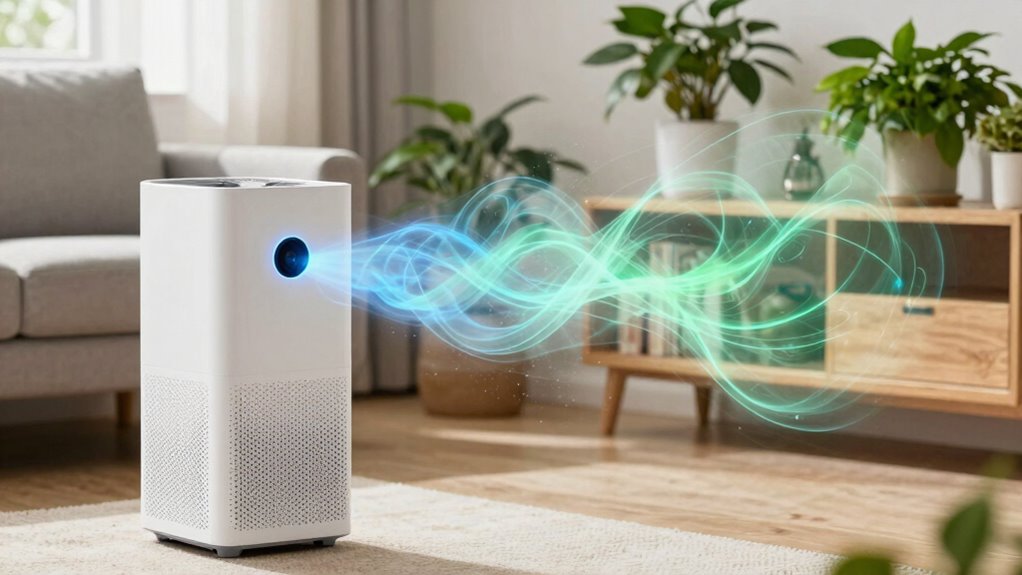
Volatile Organic Compounds (VOCs) are gases emitted from various household products and industrial processes that can affect your health and indoor air quality. When you breathe in these fumes, they can linger in your home’s air, making the environment less safe and comfortable. Poor indoor air quality caused by VOCs isn’t just an annoyance; it can have real health effects, especially if you’re exposed over long periods. You might notice symptoms like headaches, dizziness, or irritation of your eyes, nose, or throat. For some, especially those with allergies or respiratory issues, VOC exposure can worsen existing conditions or trigger new health problems.
VOCs can cause health issues like headaches, dizziness, and respiratory irritation.
Many common household items emit VOCs, including cleaning supplies, air fresheners, paints, varnishes, and even new furniture or carpets. When you use these products, the gases are released into the air, often without you realizing it. That’s why proper ventilation is essential; it helps dilute these chemicals and reduces your overall exposure. It’s also wise to choose low-VOC or VOC-free products whenever possible. These alternatives are designed to emit fewer harmful gases, making your indoor environment healthier.
Understanding how VOCs impact indoor air quality helps you take practical steps to protect yourself. For instance, when you’re painting a room, opening windows and using fans can considerably cut down VOC buildup. If you’re purchasing new furniture, look for products labeled as low-VOC or environmentally friendly. Regularly cleaning and dusting can also reduce the amount of VOCs that settle in your home, as many of these chemicals attach to dust particles. Additionally, maintaining good ventilation by opening windows or using air purifiers with activated carbon filters can help remove VOCs from the air you breathe. Recognizing the sources of VOCs in your home allows you to be more proactive in reducing your exposure. Being aware of the chemical emissions from household products is crucial for maintaining a healthier indoor environment. Knowing how these chemicals attach to dust and other surfaces can further help you implement effective cleaning routines. Furthermore, understanding the role of air quality sensors can assist in monitoring VOC levels and ensuring a safer home environment.
Recognizing the health effects of VOCs encourages you to pay attention to your home environment. While some exposure may be unavoidable, especially during renovations or when using certain products, minimizing your contact makes a difference. Staying informed about VOC sources allows you to make smarter choices that protect your indoor air quality and your health. Remember, small steps like improving ventilation, choosing safer products, and properly storing chemicals can notably reduce VOC levels and help you breathe easier in your own home.

MOOKA Air Purifiers for Home Large Room up to 1076ft², H13 True HEPA Air Filter Cleaner, Odor Eliminator, Remove Smoke Dust Pollen Pet Dander, Night Light, B-D02L White
- Large Coverage Area: Covers up to 1076 ft² with 6 air changes/hour
- Advanced HEPA Filtration: Captures pet dander, smoke, dust, and odors
- Quiet and Energy Efficient: Operates at 20dB, energy-saving design
As an affiliate, we earn on qualifying purchases.
As an affiliate, we earn on qualifying purchases.
Frequently Asked Questions
Are VOCS Only Found Indoors or Outdoors as Well?
VOCs are found both indoors and outdoors. Outdoor pollution from vehicle exhaust, industrial emissions, and other sources releases VOCs into the air. Inside, VOCs come from paints, cleaning products, and furniture. To reduce exposure, you should consider VOC filtration systems indoors. Outdoors, minimizing time near polluted areas helps. Being aware of these sources allows you to better protect yourself from harmful VOCs, whether inside or outside.
How Do VOCS Affect People With Allergies or Asthma?
Imagine you have asthma, and a new paint emits VOCs, triggering your symptoms. VOCs can worsen allergies and asthma by irritating your respiratory system and triggering immune responses. They may cause coughing, wheezing, or difficulty breathing. People with allergies or asthma are more sensitive to VOCs, which can exacerbate their condition. Reducing VOC exposure helps minimize these reactions and supports better respiratory health.
Can VOC Levels Be Measured at Home Easily?
Yes, you can measure VOC levels at home easily using indoor air measurement devices. These portable devices are user-friendly and provide real-time readings, helping you monitor the quality of your indoor air. Simply turn on the device, follow the instructions, and keep it in different rooms to gauge VOC concentrations. Regular use helps you identify sources of pollutants and take steps to improve your indoor air quality.
What Are Common Everyday Sources of VOCS?
You encounter common sources of VOCs daily, like cleaning products, paints, and air fresheners. To reduce VOC exposure, focus on VOC mitigation by choosing low-VOC or VOC-free products. Regular air purification helps clear out these chemicals from your indoor environment, improving air quality. Ventilate your space often and opt for natural alternatives when possible. Taking these steps makes it easier to breathe cleaner, healthier air every day.
Do VOCS Have Any Long-Term Health Effects?
Yes, VOCs can pose long-term health risks. Chronic exposure to VOCs may lead to long-term respiratory risks, such as asthma or other breathing problems. You might also experience persistent headaches, eye irritation, or fatigue. Over time, some VOCs can cause more serious health consequences, including damage to your liver, kidneys, or nervous system. Reducing your exposure is essential to minimize these chronic health effects and protect your overall well-being.
Conclusion
Now that you understand what VOCs are, you might think the battle against indoor air pollution is over. But here’s the twist: many everyday products secretly release these invisible gases, often unnoticed. Will you let VOCs quietly compromise your health, or will you take action? The choice is yours. Stay curious, stay vigilant, and discover the small steps that can make a big difference. The air you breathe might hold surprises—you just need to uncover them.