Ozone generators and ionizers are often marketed as sources of “fresh air,” but they can actually cause more irritation and health risks. Ionizers release charged ions that help settle some particles, but they don’t remove gases or VOCs, leaving harmful substances behind. Ozone, produced by some devices, can irritate your lungs, throat, and worsen respiratory issues. If you want to protect your health, it’s important to understand their limitations and explore safer alternatives. Keep going to learn more about how these devices really affect indoor air quality.
Key Takeaways
- Ionizers release negative ions that can remove some airborne particles but do not eliminate gases or VOCs.
- Ozone generators produce ozone, which can neutralize odors but irritates the respiratory system.
- Breathing ozone can cause coughing, throat irritation, chest discomfort, and decreased lung function.
- Devices marketed as “fresh air” sources may actually worsen air quality and cause health irritation.
- Safer alternatives include HEPA filters and proper ventilation, avoiding reliance on potentially harmful ionizers and ozone generators.
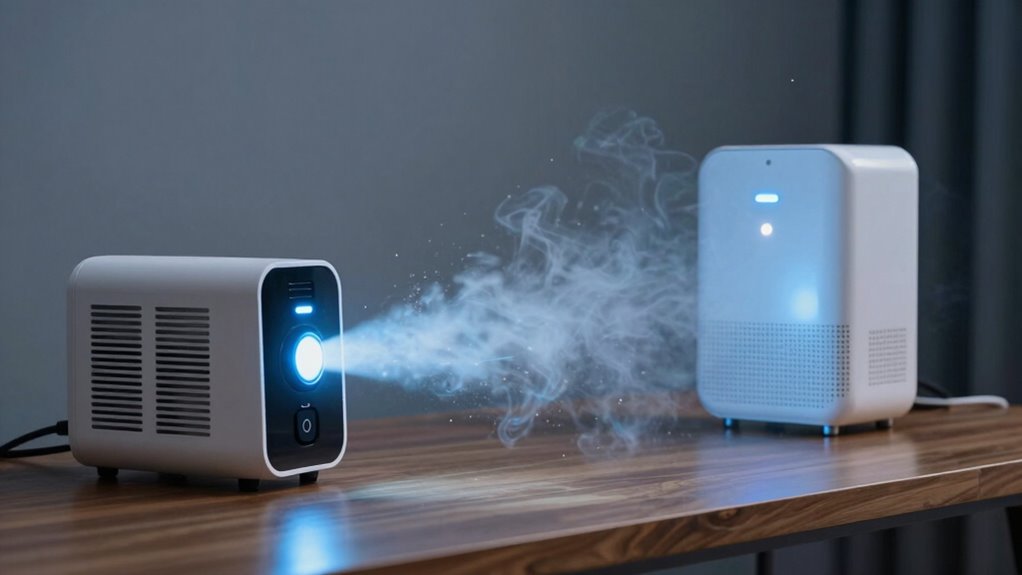
Ozone and ionizers are popular air purification tools that help improve indoor air quality. You might see these devices advertised as ways to make your home feel fresher and healthier, but it’s important to understand what they actually do and how they can affect your health. While they can remove some airborne particles, their impact on air purification isn’t always straightforward, and there are potential health effects you should consider before relying on them.
Ionizers work by releasing negatively charged ions into the air. These ions attach to particles like dust, pollen, or smoke, causing them to become heavy enough to settle on surfaces or be captured by filters. This process can improve your indoor air quality by reducing airborne pollutants. However, ionizers do not eliminate all harmful substances, especially gases or volatile organic compounds (VOCs). If you’re seeking thorough air purification, relying solely on an ionizer might leave some pollutants unaddressed, which could lead to lingering health effects over time.
Ionizers reduce airborne particles but don’t eliminate gases or VOCs, so some pollutants may remain.
Ozone generators, a type of air purifier often marketed for their cleaning power, produce ozone—a reactive form of oxygen. While ozone can neutralize certain odors and kill bacteria, it’s a double-edged sword. Breathing in ozone can irritate your respiratory system, especially if you have asthma or other lung conditions. The health effects of ozone exposure include coughing, throat irritation, chest discomfort, and decreased lung function. Even if an ozone generator claims to produce safe levels, prolonged or high exposure can still pose significant risks, making it a questionable choice for indoor air purification.
It’s tempting to think that “fresh air” from these devices means better health, but in reality, the presence of ozone and high concentrations of charged particles can create more irritation than relief. The misconception that these devices are completely safe and effective can lead you to underestimate the potential health risks. Over time, exposure to ozone and certain ions can contribute to respiratory issues, exacerbate allergies, and cause discomfort. Utilizing proper air filtration methods can provide safer and more effective air quality improvements.
If you’re aiming for truly healthy indoor air, it’s better to focus on proven methods like HEPA filters, proper ventilation, and reducing sources of indoor pollution. These options can improve air quality without risking the health effects associated with ozone and ionizers. Ultimately, understanding how these devices work—and their limitations—helps you make smarter choices about maintaining a healthy indoor environment.
Frequently Asked Questions
Are Ozone Generators Safe for Home Use?
Ozone generators are not safe for home use because they can worsen indoor allergens and irritate your lungs. Instead, focus on effective air filtration methods, like HEPA filters, which remove allergens safely. If you want cleaner air, avoid ozone generators and choose proven, safe air purification options. Your health depends on proper ventilation and filtration, so opt for devices designed to improve indoor air quality without harmful side effects.
How Do Ionizers Improve Indoor Air Quality?
You might think fresh air always helps, but ionizers actually improve indoor air quality through electrostatic attraction, capturing airborne particles. Negative ion benefits include reducing allergens, dust, and mold spores, making your space healthier. While they may seem like a simple solution, they actively clean the air you breathe, creating a fresher environment. Just be aware of potential ozone production, which can cause irritation if not properly managed.
Can Ozone Cause Respiratory Health Issues?
Indoor ozone can indeed cause respiratory irritation, especially if you’re exposed to high levels regularly. Ozone is a reactive gas that irritates your airways, leading to coughing, throat discomfort, and worsened asthma symptoms. To protect your respiratory health, avoid using ozone-generating devices indoors or guarantee proper ventilation. Keeping indoor ozone levels low helps prevent respiratory issues and keeps your air healthier and safer for everyone.
What Are the Signs of Ozone or Ionizer Overuse?
Signs of ozone or ionizer overuse include persistent coughing, chest tightness, and irritated eyes, signaling compromised air quality. You might also notice nasal congestion or sore throats, indicating excessive exposure. To prevent problems, practice proper device maintenance and moderation. Monitoring air quality helps avoid overuse, ensuring your space remains healthy and safe. If symptoms persist, it’s time to turn off the device and seek fresh air.
Are There Alternatives to Ozone and Ionizer Air Purifiers?
Yes, you can opt for alternatives like HEPA filters, activated carbon filters, or UV air purifiers for air purification. These options effectively remove allergens, dust, and bacteria without producing ozone or irritants. Using these methods helps reduce allergic reactions and guarantees cleaner, healthier indoor air. Regularly cleaning your filters and maintaining proper ventilation also improves air quality, creating a safer environment without risking irritation from ozone or ionizers.
Conclusion
So, next time you reach for that air purifier, remember: ozone and ionizers promise freshness, but often deliver irritation. They create false comfort, mask underlying issues, and compromise your health. You deserve clean, safe air—air that truly refreshes without risking your well-being. Choose wisely, stay informed, and prioritize air purifiers that genuinely purify. Because your health isn’t just about breathing; it’s about breathing easy, breathing safe, and breathing well.