If your air purifier still smells, it could be because the filters are saturated or dirty, allowing odors and particles to escape. Activated carbon filters absorb smells but lose effectiveness when full, while mold inside the device or in the environment can intensify musty odors. Regular filter changes and cleaning help prevent this. Keep an eye on how your purifier performs—more tips are on the way to help you clear those lingering smells.
Key Takeaways
- Saturated activated carbon filters lose their ability to absorb odors, causing persistent smells.
- Dirty filters trap particles but may still emit odors if not replaced regularly.
- Mold or moisture buildup inside the purifier can produce musty or stale smells.
- External environmental sources, like cooking or pets, can contribute odors that the purifier may not fully eliminate.
- Proper maintenance, including cleaning and timely filter replacement, is essential to prevent ongoing odors.
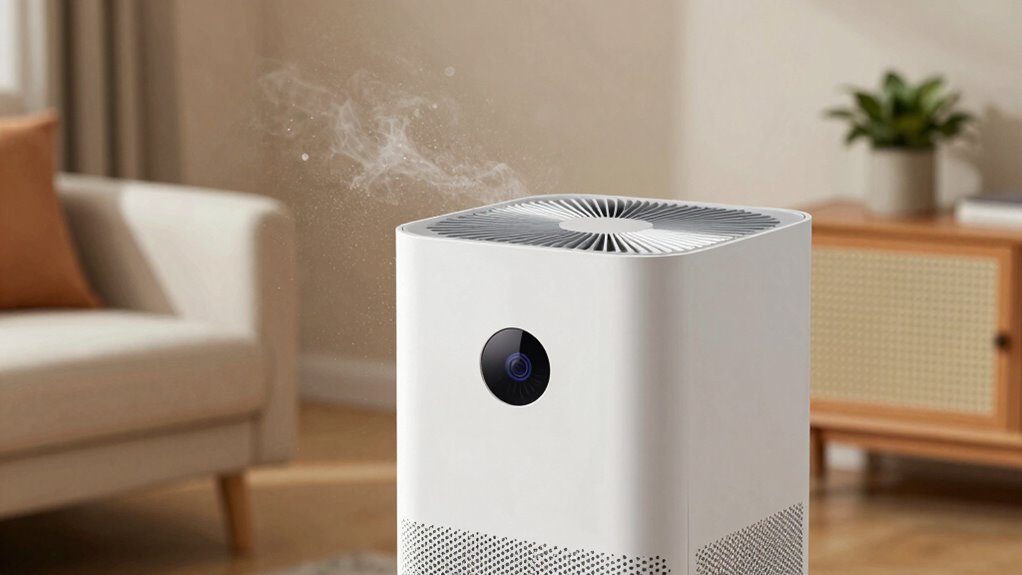
If your air purifier starts emitting strange smells, it can be both frustrating and concerning. You might wonder why the device isn’t doing its job or if it’s somehow making your air worse. Often, the culprit lies in the filter maintenance or the way your purifier handles odor absorption. Many air purifiers rely on filters like HEPA or activated carbon to remove particles and odors from the air. When these filters become dirty or saturated, their effectiveness drops, and unpleasant smells can start to escape back into your room. Regular filter maintenance is essential. Check your user manual to determine how often you should replace or clean filters. Ignoring this step can lead to a buildup of dust, mold, or other particles, which not only hampers air quality but can also cause the purifier to emit musty or stale odors. Additionally, filter saturation can lead to the release of trapped odors, making it seem like the purifier is spreading smells rather than eliminating them.
Odor absorption plays a significant role in how your air purifier performs, especially if it features activated carbon or charcoal filters. These materials are designed to trap smells from cooking, pets, smoke, or pollutants. However, once these filters reach their saturation point, they lose their ability to absorb odors effectively. You might notice the smell persists or worsens, even with the purifier running. To prevent this, ensure you replace these filters as recommended and consider using additional odor absorbers like deodorizer pads if your model supports them. Also, keep in mind that certain sources of bad odors can be persistent. Regularly ventilating your space helps, but relying solely on the purifier without maintaining its filters can be futile.
Sometimes, the smell isn’t just about dirty filters but also about the environment around your purifier. Mold or mildew can develop inside the device if it’s kept in a damp area or if moisture gets trapped in the filters. This can lead to a musty odor emanating from the purifier itself. In such cases, cleaning the device thoroughly and replacing any moldy filters is a must. To keep your air purifier smelling fresh, make it a habit to inspect and replace filters periodically. Maintaining a clean environment around the unit also minimizes the chance of odors developing within the device.
Frequently Asked Questions
Can Air Purifiers Eliminate All Types of Odors?
Air purifiers can’t eliminate all types of odors, but they can reduce many effectively. Your success depends on filter types like activated carbon or charcoal filters, which absorb and neutralize odors through odor absorption. Regularly replacing or maintaining these filters guarantees ideal performance. Keep in mind, some stubborn odors may require additional cleaning or specialized filters, but a good-quality purifier with the right filter types can considerably improve your indoor air quality.
How Often Should I Replace Filters to Prevent Smells?
You should replace your air purifier filters according to the recommended replacement schedule, usually every 3 to 6 months, depending on usage and air quality. Regular filter maintenance is essential to prevent smells, as clogged or dirty filters can trap odors and particles, causing them to linger. Keep an eye on your unit’s indicators and follow the manufacturer’s guidelines to guarantee peak performance and fresh, clean air.
Do Air Purifiers Remove Airborne Allergens Effectively?
Absolutely, air purifiers effectively eliminate airborne allergens. HEPA filters trap tiny particles like pollen, pet dander, and dust mites, providing powerful purification. Ionizers enhance this process by charging allergens, causing them to settle or be captured more easily. With consistent use, these features work together to clear the air, creating a cleaner, healthier environment. So, if you want fresher air, opt for an air purifier equipped with HEPA filters and ionizers.
Can Pets’ Odors Be Completely Eliminated by Air Purifiers?
Pet odors can be considerably reduced by air purifiers, but they might not be completely eliminated. You’ll notice that HEPA filters capture airborne pet dander and some odor particles, yet persistent pet odor may require odor masking or activated carbon filters. For best results, combine your air purifier with regular cleaning and ventilation. While it helps, complete elimination depends on multiple factors, including the severity of pet odors and the type of filter used.
Are Certain Air Purifier Models Better at Odor Removal?
Think of some air purifiers as detective dogs sniffing out odors. Models with activated carbon filters excel at odor absorption, making them better at removing smells. HEPA filters target particles but don’t absorb odors as effectively. To choose the best, look for purifiers that combine both filter types, ensuring they’re equipped to tackle a variety of odors, from pet smells to cooking fumes.
Conclusion
So, next time your air purifier still smells, remember that odors often cling to filters and surfaces, not just particles. It’s a common misconception that filters eliminate all smells, but some odors require deeper cleaning or specialized filters. Don’t assume your purifier is broken—investigate whether you need to replace filters or clean your unit thoroughly. Proper maintenance guarantees your purifier works effectively, keeping your air fresh and odor-free.