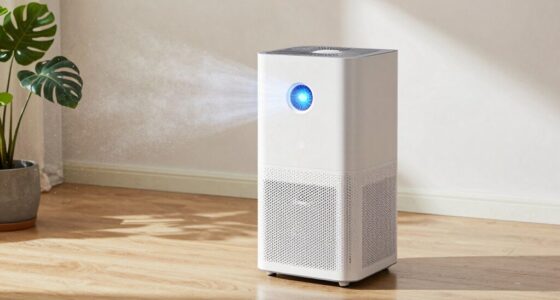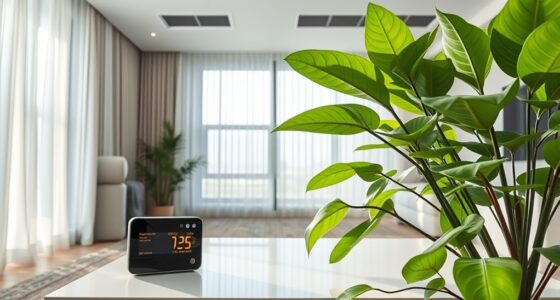
During renovations, negative air machines actively filter airborne dust, mold spores, and odors to create a safer, cleaner environment. They pull contaminated air through high-efficiency filters like HEPA, capturing tiny particles and reducing airborne contaminants. These machines also help control odors from paints and solvents, making the space more comfortable. Proper use guarantees health and safety during projects, and if you keep exploring, you’ll discover how these devices can improve your renovation process even further.
Key Takeaways
- Negative air machines use high-efficiency filters like HEPA to remove dust, mold spores, and other airborne particles during renovations.
- They eliminate odors from paints, adhesives, and solvents, improving air quality throughout the project.
- These machines reduce airborne dust and fumes, creating a safer environment for workers and occupants.
- They can be strategically positioned to optimize airflow and contamination control in various renovation spaces.
- Negative air machines help meet health and safety standards by maintaining cleaner, safer indoor air during construction activities.
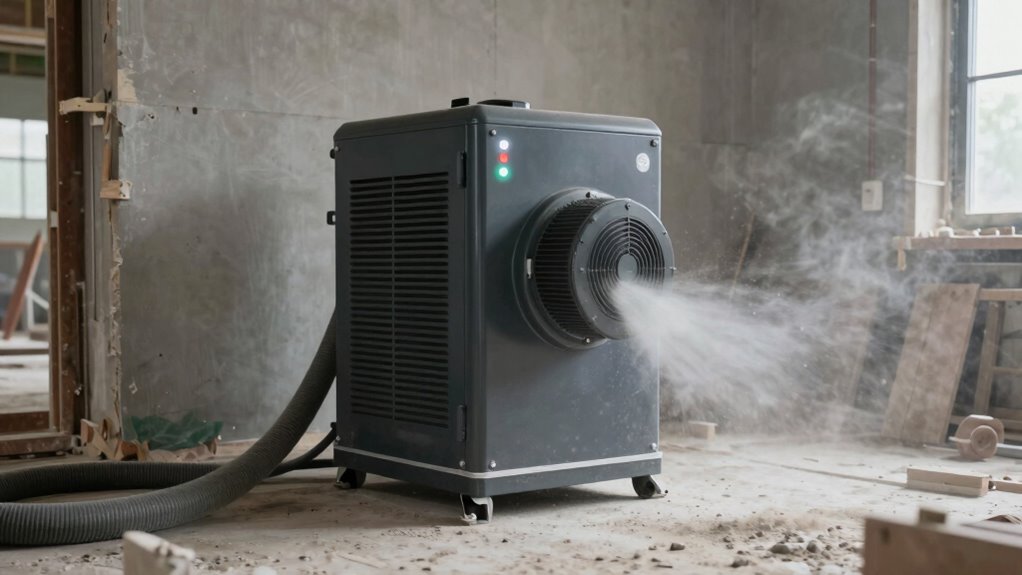
Negative air machines are essential tools for controlling airborne contaminants in various environments. When you’re renovating a space, dust, debris, and fumes can quickly become overwhelming, making it difficult to breathe comfortably or maintain a clean environment. That’s where these machines come in—they help you manage the air quality by actively filtering out harmful particles and controlling odors that often accompany construction or remodeling.
Negative air machines effectively filter airborne contaminants and control odors during renovations.
At the core of their function is air filtration. Negative air machines use high-efficiency filters, such as HEPA filters, to capture microscopic particles like dust, mold spores, pollen, and other airborne pollutants. This process guarantees that the air being circulated back into the environment is considerably cleaner than the raw air drawn into the machine. As you work, you notice a marked difference in the amount of dust settling on surfaces and floating in the air, which reduces cleanup time and keeps the workspace healthier for everyone involved.
Odor control is another vital feature of these machines. Renovations often produce strong smells from paints, adhesives, solvents, and building materials. These odors can be unpleasant and sometimes hazardous, especially in enclosed or poorly ventilated spaces. Negative air machines help by continuously pulling in contaminated air, filtering out the odor-causing molecules, and releasing cleaner air back into the environment. This process not only makes the space more comfortable but also minimizes the lingering smells that can last long after the work is done.
Using a negative air machine during renovations also helps protect your health by reducing exposure to airborne contaminants. When you’re working in a confined space or in an area with poor ventilation, airborne dust and fumes can pose serious health risks. By constantly filtering the air, these machines create a safer environment, especially when working with materials that release volatile organic compounds or other hazardous substances.
Moreover, negative air machines are versatile and easy to set up. You can position them strategically to target specific problem areas, ensuring that airflow is optimized for maximum filtration efficiency. Whether you’re tearing down walls, installing new flooring, or painting, running a negative air machine provides continuous air quality management. Not only does this improve safety and comfort during the project, but it also helps in meeting health and safety regulations.
In addition, incorporating proper ventilation considerations when using these machines can further enhance air quality and safety during renovations.
In short, negative air machines are indispensable during renovations. They improve air quality through effective air filtration, control odors that can make working conditions unpleasant, and help maintain a safer, cleaner environment throughout the entire process.
Frequently Asked Questions
How Long Should a Negative Air Machine Run During Renovations?
You should run a negative air machine throughout the renovation process to maintain peak air quality and filtration efficiency. Keep it on continuously during work hours and consider running it even when no one is present to prevent dust and airborne contaminants from lingering. Running it 24/7 is ideal for ongoing projects, ensuring the air stays clean and safe, especially in sensitive environments or areas with high dust generation.
Can Negative Air Machines Eliminate All Types of Airborne Contaminants?
Negative air machines primarily improve air filtration and reduce contaminant types, but they can’t eliminate all airborne contaminants. You should know that while they effectively remove dust, mold spores, and some bacteria, they may not fully eliminate viruses or chemical fumes. To maximize safety, combine them with other measures like proper ventilation and source control. Always assess your specific contamination risks to decide the best combination of air purification strategies.
Are Negative Air Machines Suitable for Residential or Only Commercial Use?
Negative air machines are suitable for both residential use and commercial applications. In your home, they help improve air quality during renovations by filtering out dust, mold spores, and other airborne contaminants. For commercial projects, they effectively control airborne pollutants, ensuring safety and compliance. You can confidently use negative air machines in various settings to maintain cleaner, healthier environments during construction or renovation work.
What Maintenance Is Required for Negative Air Machines During Projects?
Imagine the air around you as a busy highway, and your negative air machine as a vigilant traffic cop. You need to keep it running smoothly by replacing filters regularly to trap dust and contaminants. Also, check the machine calibration to verify it’s working efficiently. This upkeep keeps your air clean and safe, preventing any airborne hazards from sneaking through as you work on your renovation.
Do Negative Air Machines Produce Noise That Affects Workers or Residents?
Negative air machines do produce some noise, but their noise levels are usually manageable. You might notice a consistent hum that can cause occupant disturbance if not properly positioned or if the noise levels are high. To minimize disruption, you can adjust settings or place the machine in less occupied areas. Proper placement and maintenance help guarantee the noise remains as low as possible while still providing effective air filtration.
Conclusion
Think of negative air machines as the guardians of your space, silently standing guard against dust and contaminants. As they work, they become symbols of safety and fresh beginnings, transforming chaos into calm. Their steady operation guarantees your home remains a sanctuary, even amidst renovation chaos. When you see these machines in action, remember they’re not just filtering air—they’re protecting your future, one breath at a time, turning the tumult into tranquility.