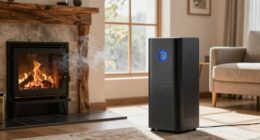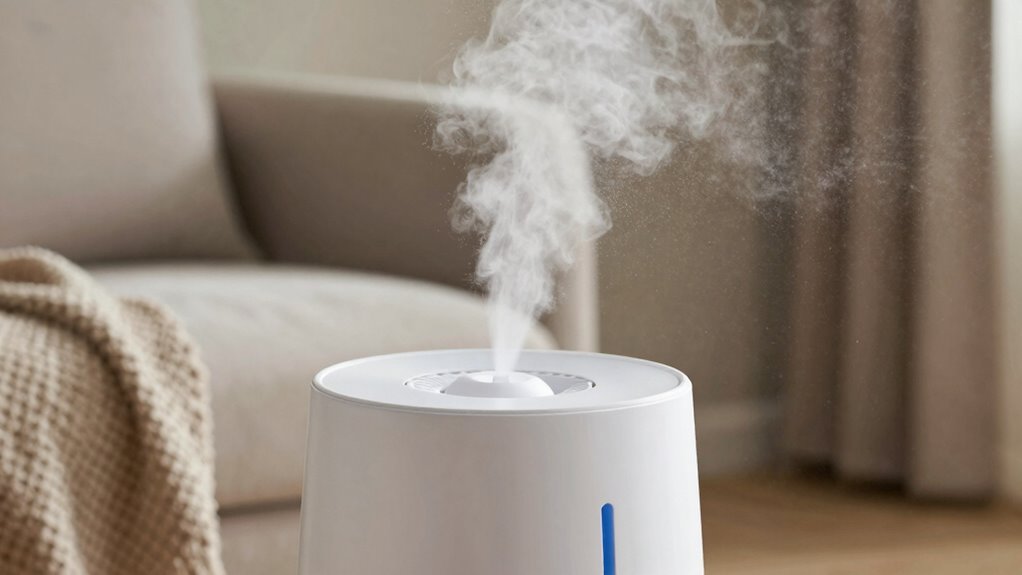
White dust from your humidifier is caused by mineral residues from hard water, which gets dispersed into the air during operation. To prevent this, use distilled or demineralized water and clean your device regularly with vinegar to remove mineral buildup. Incorporate UV sterilization to reduce bacteria and mold that can worsen dust formation. Maintaining proper humidity levels also helps. Keep exploring to discover more effective tips for cleaner indoor air and a healthier environment.
Key Takeaways
- White dust is mineral residue from hard water minerals like calcium and magnesium dispersed by humidifiers.
- Using distilled or demineralized water significantly reduces mineral deposits and white dust formation.
- Regularly cleaning your humidifier with vinegar prevents mineral buildup and airborne dust.
- Incorporating UV sterilization minimizes microbial growth that can promote mineral deposits.
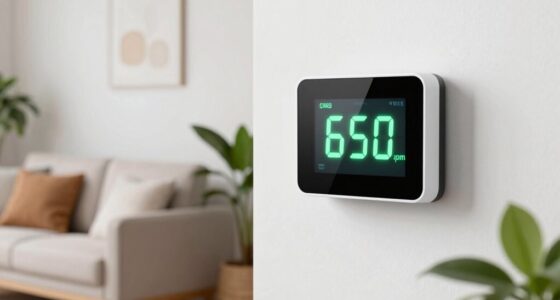
- Maintaining indoor humidity between 30-50% helps prevent excess mineral dust and mold growth.
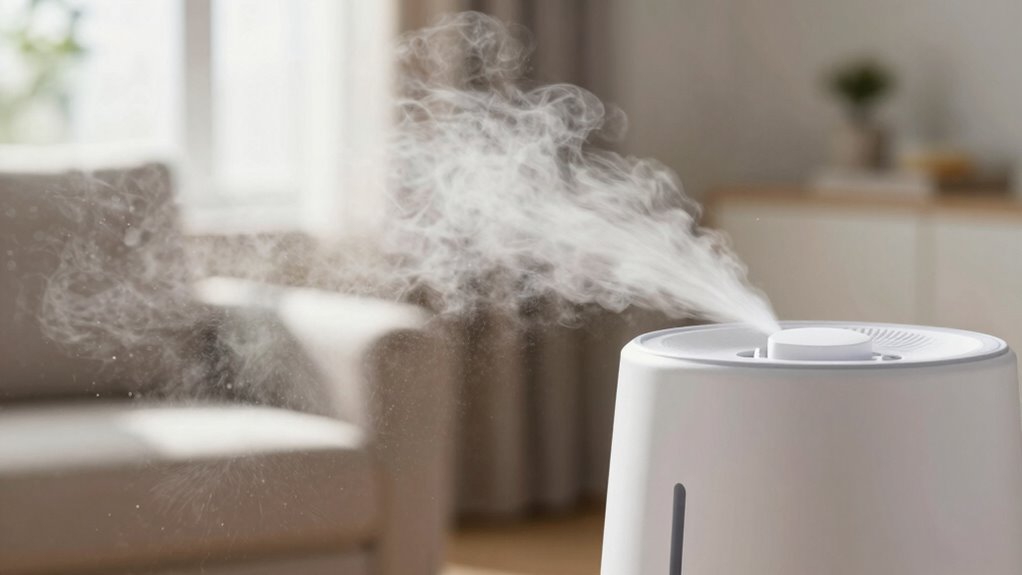
If you’ve noticed a fine white dust settling around your humidifier, you’re not alone. This white dust is typically mineral residue from hard water, which gets dispersed into the air when your humidifier runs. While it might seem harmless, breathing in this dust over time can cause irritation or exacerbate allergy symptoms. To keep your air clean and your device functioning properly, understanding the causes and prevention methods is vital. One effective approach is incorporating ultraviolet sterilization into your humidifier’s design or maintenance routine. Ultraviolet (UV) sterilization uses UV light to kill bacteria, mold, and other microbes inside the unit. This process reduces the growth of biological contaminants that can contribute to mineral buildup and white dust. When your humidifier is regularly sterilized with UV light, it minimizes the chance of mold or bacteria mixing with mineral deposits, resulting in cleaner, healthier air.
Using UV sterilization helps reduce bacteria and mold, preventing mineral buildup and white dust in your humidifier.
Along with UV sterilization, proper humidifier maintenance plays a key role in preventing white dust. It starts with always using distilled or demineralized water instead of tap water. Hard water contains minerals like calcium and magnesium, which are responsible for the white dust. Using distilled water minimizes mineral content, drastically reducing the residue that gets airborne. Regularly cleaning your humidifier is equally important. Follow the manufacturer’s instructions to wash all parts, especially the tank and nozzle, at least once a week. Use a mixture of vinegar and water to dissolve mineral deposits and prevent buildup. Neglecting maintenance allows minerals to accumulate and get dispersed into your indoor air as dust.
Another key step is monitoring humidity levels. Keeping indoor humidity between 30-50% not only prevents mold growth but also reduces the likelihood of mineral dust becoming airborne. Over-humidifying can cause more minerals to settle into the air and contribute to white dust problems. Additionally, consider using humidifiers equipped with filtration systems or mineral absorption pads, which can trap minerals before they are dispersed. Incorporating advanced filtration systems can further enhance air quality by capturing fine particles and reducing white dust.
Incorporating UV sterilization into your humidifier maintenance routine, along with using the right water and regular cleaning, creates a complete defense against white dust. These practices ensure you’re not just reducing mineral residue but also maintaining a healthier environment. Remember, consistent maintenance and the right technology make all the difference in preventing this common indoor air issue. By staying proactive, you can enjoy the benefits of humidified air without the unwanted white dust settling around your space.
Frequently Asked Questions
Can White Dust Harm My Health?
White dust from your humidifier can pose airborne health risks, especially if you have allergies or respiratory issues. While it’s not usually dangerous for healthy individuals, inhaling fine particles may affect your indoor air quality over time. To protect yourself, regularly clean your humidifier and use distilled or filtered water. This helps reduce dust and keeps the air in your home healthier and safer for everyone.
Are Certain Humidifiers More Prone to White Dust?
Yes, certain humidifiers are more prone to white dust. Devices with plastic components or poor design can release more mineral particles into the air. Humidifiers made from high-quality materials and with better device design reduce white dust formation. Look for models with filters or ultrasonic technology, as they tend to produce less white dust. Regular cleaning and using distilled water also help minimize mineral residue.
Does Using Distilled Water Eliminate White Dust?
Using distilled water can considerably reduce or eliminate white dust, as it contains no minerals. Tap water, which has mineral content, increases the likelihood of white dust forming when the humidifier runs. By switching to distilled water, you prevent mineral buildup and airborne particles, keeping your indoor air cleaner. Always check your humidifier’s instructions to guarantee it’s compatible with distilled water for the best results.
How Often Should I Clean My Humidifier to Prevent White Dust?
You should clean your humidifier at least once a week to prevent white dust buildup. Follow a regular cleaning schedule and maintenance tips, like emptying, drying, and disinfecting the tank thoroughly. If you notice white dust, increase cleaning frequency. Using distilled or filtered water can also help, but consistent cleaning is essential to keep your humidifier running smoothly and reduce mineral deposits that cause white dust.
Is White Dust Visible Only in Specific Room Conditions?
Imagine tiny snowflakes gently settling on surfaces—that’s when white dust becomes visible, influenced by air quality and humidity levels. You might notice it more in rooms with high humidity or poor air circulation, where the minerals in water are more likely to settle visibly. To keep white dust at bay, maintain ideal humidity and guarantee good air quality, making your space feel fresh and comfortable, regardless of room conditions.
Conclusion
To keep your indoor air clean and healthy, understanding and preventing white dust from humidifiers is key. Did you know that over 90% of households with ultrasonic humidifiers report some level of white dust? That tiny, almost invisible residue can settle on furniture and be inhaled, affecting your health. By using filtered or distilled water and maintaining your device, you can markedly reduce this white dust. Take these steps seriously—your home’s air quality depends on it.