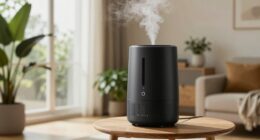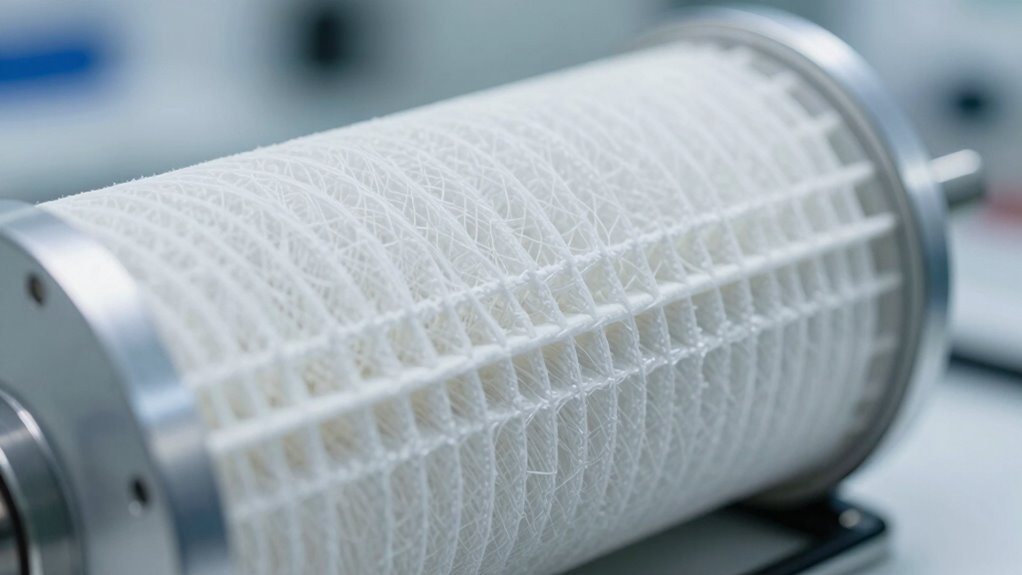
H13 HEPA isn’t just a marketing term; it’s a certified standard of high-efficiency filtration that meets strict international benchmarks, capturing at least 99.95% of 0.3-micron particles. This means your air purifier can effectively remove allergens, bacteria, and microscopic dust, ensuring better indoor air quality. Knowing the difference helps you choose reliable products that genuinely improve your environment. If you want to understand how this standard impacts your health and shopping choices, keep exploring further.
Key Takeaways
- H13 HEPA is a certified standard based on international norms like EN 1822, ensuring at least 99.95% efficiency for 0.3-micron particles.
- The classification confirms the filter’s verified performance, not just a marketing term, indicating reliable air purification.
- Properly labeled H13 filters are tested to effectively remove allergens, bacteria, and microscopic particles, improving indoor air quality.
- Using a true H13 HEPA filter ensures high filtration efficiency, preventing unfiltered air bypass and maximizing purifier effectiveness.
- Recognizing H13 as a standard helps consumers distinguish genuine filters from vague marketing claims, supporting informed choices.

Have you ever wondered how some air purifiers capture nearly all airborne particles? The secret often lies in the filter’s ability to meet high filtration standards and deliver exceptional air purifier efficiency. When you see the label “H13 HEPA,” it’s natural to ask whether it’s just a marketing term or something more meaningful. The truth is, H13 HEPA filters are rooted in strict filtration standards that guarantee their performance, making them a reliable choice for improving indoor air quality.
H13 HEPA is a classification based on international filtration standards set by organizations such as EN 1822 in Europe. These standards specify the minimum efficiency a filter must achieve to be labeled as H13. Specifically, an H13 HEPA filter captures at least 99.95% of particles as small as 0.3 microns in diameter—the size of many allergens, bacteria, and fine dust. This high level of filtration ensures that nearly all harmful particles are removed from the air you breathe, drastically improving your indoor environment. When you choose an air purifier with an H13 HEPA filter, you’re selecting a device that meets rigorous standards, offering a level of reliability that surpasses lower-grade filters.
Understanding air purifier efficiency is vital when evaluating different filtration options. A filter’s efficiency directly impacts its ability to remove microscopic particles, which are often the most damaging to your health. H13 HEPA filters are designed to perform at their best across a broad range of particle sizes, especially those that can penetrate deep into your lungs or trigger allergies. This efficiency doesn’t just depend on the filter’s material but also on its design and fit within the purifier. A well-sealed, high-quality H13 HEPA filter ensures that unfiltered air doesn’t bypass the filter, maximizing the purifier’s effectiveness.
While some manufacturers might use the term “HEPA” loosely for marketing, H13 classification confirms a filter’s performance according to established standards. It’s not just a marketing buzzword; it’s a meaningful indicator of how well the filter can perform. When you see the H13 designation, you can rest assured that the filter has been tested and verified to meet specific efficiency benchmarks, giving you confidence in its ability to purify your air.
Additionally, understanding media literacy can help consumers distinguish between genuine standards and marketing claims, empowering better decision-making when selecting air purification products.
Frequently Asked Questions
How Does H13 HEPA Compare to Other HEPA Classifications?
H13 HEPA filters offer higher filter efficiency than lower classifications, capturing at least 99.95% of particles as small as 0.3 microns. Compared to other HEPA standards like H11 or H12, H13 filters provide superior air purification, making them ideal for environments requiring rigorous standards. Certification standards guarantee that your filter meets these efficiency benchmarks, giving you confidence in their ability to remove harmful particles effectively.
Can H13 HEPA Filters Remove Viruses Effectively?
Think of H13 HEPA filters as a gatekeeper for airborne viruses, blocking up to 99.95% of viral particles through viral filtration. They’re highly effective for virus removal, but their efficiency depends on proper fit and filter lifespan. Over time, the filter’s ability to trap viruses diminishes, so regular replacement is key to maintaining their protective power. With proper maintenance, you can confidently reduce airborne viral transmission in your space.
Are H13 HEPA Filters Suitable for Industrial Use?
Yes, H13 HEPA filters are suitable for industrial use because they offer high efficiency and industrial durability. They effectively capture particles, including viruses, while maintaining a reliable filter lifespan under demanding conditions. You can trust these filters to perform consistently in industrial environments, ensuring clean air and safety. Just make sure to select filters designed for your specific airflow requirements to maximize performance and longevity.
What Maintenance Is Required for H13 HEPA Filters?
Cleaning your H13 HEPA filter is like tending to a delicate garden; it requires regular care. You should check the filter’s condition monthly and replace it when the filter lifespan is reached, typically every 6 to 12 months, depending on usage. Keep the surrounding area tidy and ensure proper airflow. This routine maintenance keeps your filter working efficiently and preserves indoor air quality.
Do All Air Purifiers Advertise H13 HEPA Filters?
Not all air purifiers advertise H13 HEPA filters, as consumer perceptions often influence marketing claims. Some brands highlight H13 certification standards to showcase filtration quality, but others may use less specific terms. You should verify if the filter meets official certification standards, like those from the IEST or DOE, ensuring you’re getting genuine HEPA filtration. Always check product specifications to confirm the filter’s true performance level.
Conclusion
So, next time you see “H13 HEPA” on a filter, remember it’s more than just a buzzword—it’s a meaningful standard that promises better air quality. Think of it as your modern-day knight, battling against tiny invaders, much like a knight defending the castle from invaders during medieval times. Don’t let marketing hype fool you; understand what the label means and choose wisely for your health. After all, a clean home is your kingdom’s greatest treasure.