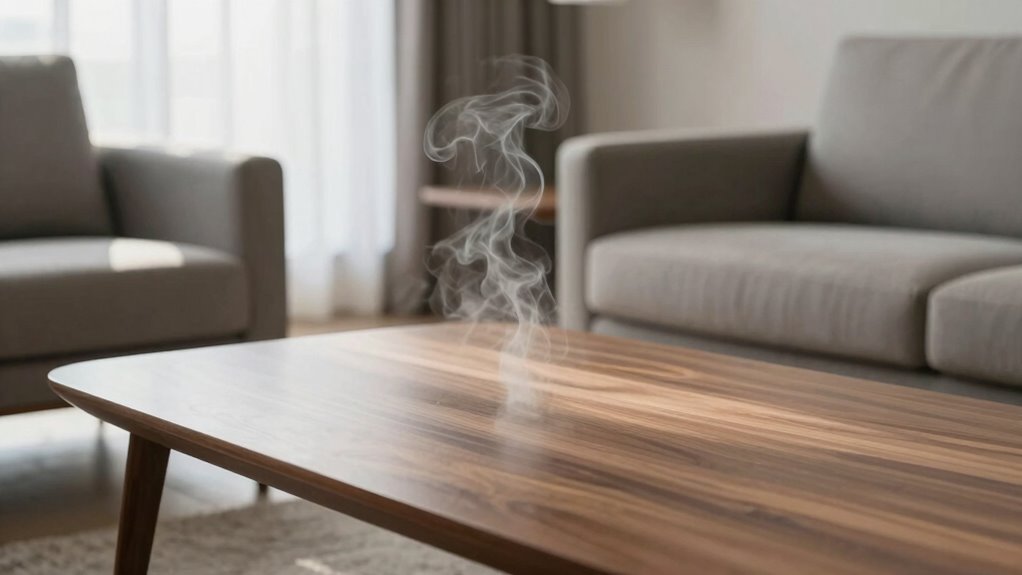

When you bring new furniture into your home, it often releases a sharp, pungent smell caused by formaldehyde off-gassing from pressed wood and particleboard. This odor results from volatile organic compounds (VOCs) that emit into the air, especially when the furniture is new. The smell is more noticeable in warm, humid conditions and can last from days to months. To understand how to reduce exposure and improve air quality, keep exploring these causes and solutions.
Key Takeaways
- New furniture often contains pressed wood and adhesives with formaldehyde, which release VOCs causing a sharp smell.
- Formaldehyde off-gassing is more intense in the initial days after furniture is purchased.
- Warm and humid conditions accelerate formaldehyde release, making the smell more pungent.
- The sharp odor is a sign of active formaldehyde emissions affecting indoor air quality.
- Ventilation and air purification can help reduce the smell and indoor formaldehyde levels.
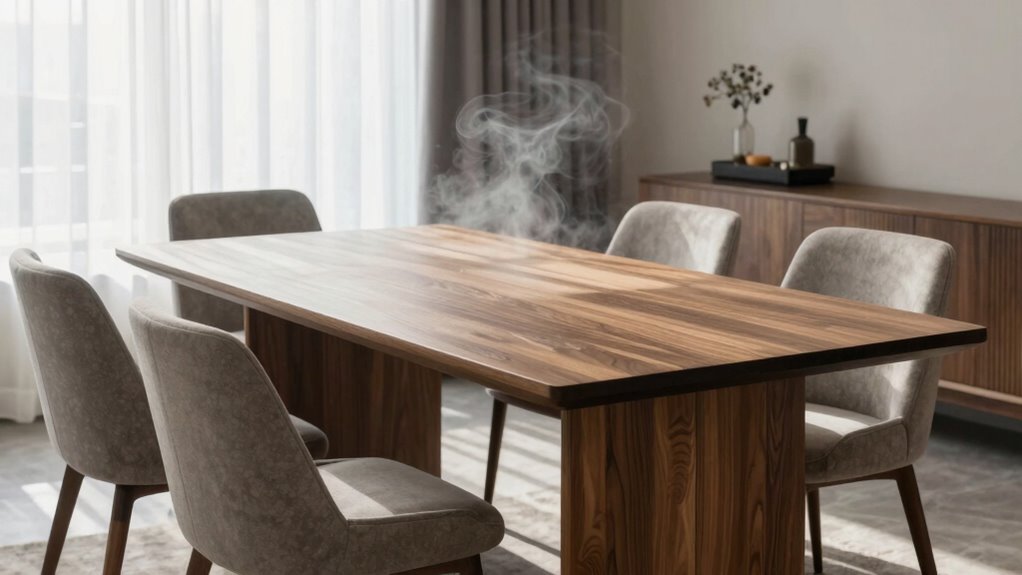
Formaldehyde off-gassing occurs when this chemical releases from building materials and furnishings into the air you breathe. When you step into a new home or open a box of fresh furniture, you might notice a sharp, pungent smell. That scent is often caused by VOC emissions—volatile organic compounds—that come from formaldehyde-based products. These emissions can considerably impact indoor air quality, making your environment less healthy and more irritating. You may not see the formaldehyde, but its presence is felt through the smell and through potential health effects.
As formaldehyde off-gasses, it disperses into the air, increasing the concentration of VOCs indoors. This process can last for days, weeks, or even months, especially with furniture that contains pressed wood or particleboard. The more new your furniture is, the higher the likelihood of strong VOC emissions, which contribute to that characteristic “new” smell. These emissions are not only unpleasant but also problematic because they can cause eye, nose, and throat irritation, headaches, or even trigger allergies. Long-term exposure might impact your respiratory health or contribute to other health issues, particularly if your indoor air quality isn’t well-ventilated.
Formaldehyde off-gassing can last months, causing irritation and health issues from new pressed wood furniture.
You might wonder why this off-gassing occurs in the first place. It’s because many furniture items and building materials use adhesives and resins that contain formaldehyde to hold everything together. These substances are effective and inexpensive but release VOCs over time. When you bring new furniture into your home, those VOC emissions are released into the air, creating that sharp smell that many people associate with fresh furniture. The intensity of the smell and the duration of off-gassing depend on factors like temperature, humidity, and the type of materials used. Higher temperatures and humidity tend to accelerate formaldehyde release, making the smell more noticeable and persistent. Additionally, employing air purification devices with activated carbon filters can significantly help absorb VOCs and improve indoor air quality.
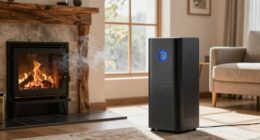
To reduce exposure, you can improve indoor air quality by increasing ventilation—opening windows, using exhaust fans, and running air purifiers equipped with activated carbon filters that can absorb VOCs. Choosing furniture labeled as low-emission or formaldehyde-free can also help minimize VOC emissions. Over time, the amount of formaldehyde off-gassing will decrease as the chemicals dissipate, but taking proactive steps helps protect your health in the meantime. Being aware of how VOC emissions influence indoor air quality allows you to make smarter decisions about new furnishings and maintain a healthier living environment.
Frequently Asked Questions
How Long Does Formaldehyde Off-Gassing Typically Last?
Typically, formaldehyde off-gassing lasts from a few days to several months, depending on factors like temperature, humidity, and ventilation. You can speed up VOC reduction by airing out your furniture regularly and using air purifiers. Keep in mind, chemical emissions decrease over time, so the smell should fade considerably within 3 to 6 months. Staying proactive helps guarantee a healthier indoor environment during this period.
Are There Safe Levels of Formaldehyde in Furniture?
You might wonder if there’s a sweet spot for formaldehyde levels in furniture. While strict formaldehyde regulations exist, aiming for minimal emissions is best. Certified furniture often meets safety standards, making it a safer choice for your home. Although tiny amounts are permitted, reducing exposure is wise. Look for furniture with credible certification to ensure you’re making a healthier, more informed decision for your space.
Can Air Purifiers Eliminate Formaldehyde Odors?
Yes, air purifiers can help eliminate formaldehyde odors. Their effectiveness depends on using advanced VOC filtration techniques, like activated carbon filters, which adsorb formaldehyde molecules. Look for purifiers specifically designed for VOC removal to maximize results. Regularly running your air purifier in the room with new furniture can considerably reduce sharp formaldehyde smells and improve indoor air quality.
What Are the Health Risks of Prolonged Formaldehyde Exposure?
Think of prolonged formaldehyde exposure like walking through a fog that never lifts. You risk serious health issues—carcinogenic effects increase, and respiratory issues become persistent. For example, workers exposed to formaldehyde over time develop chronic coughing or even higher cancer risks. Staying in poorly ventilated spaces with off-gassing furniture heightens these dangers, so it’s essential to minimize exposure and seek proper ventilation to protect your health.
How Can I Test My Furniture for Formaldehyde?
You can test your furniture for formaldehyde with DIY testing kits available online or at hardware stores. These kits usually involve swabs or test strips that change color if formaldehyde is present. For more accurate results, consider hiring a professional assessment. Experts can use advanced equipment like air quality monitors to measure formaldehyde levels precisely, helping you guarantee your indoor air remains safe and healthy.
Conclusion
Imagine opening a brand-new piece of furniture and feeling like you’re walking into a fresh paint shop—that sharp, chemical smell can be overwhelming. This smell is formaldehyde off-gassing, a common issue with new furniture. Just as a sponge soaks up water, your furniture releases these chemicals into the air, gradually decreasing over time. Being aware and ventilating your space helps clear out the fumes, turning that sharp smell into a distant memory, making your home safer and more comfortable.