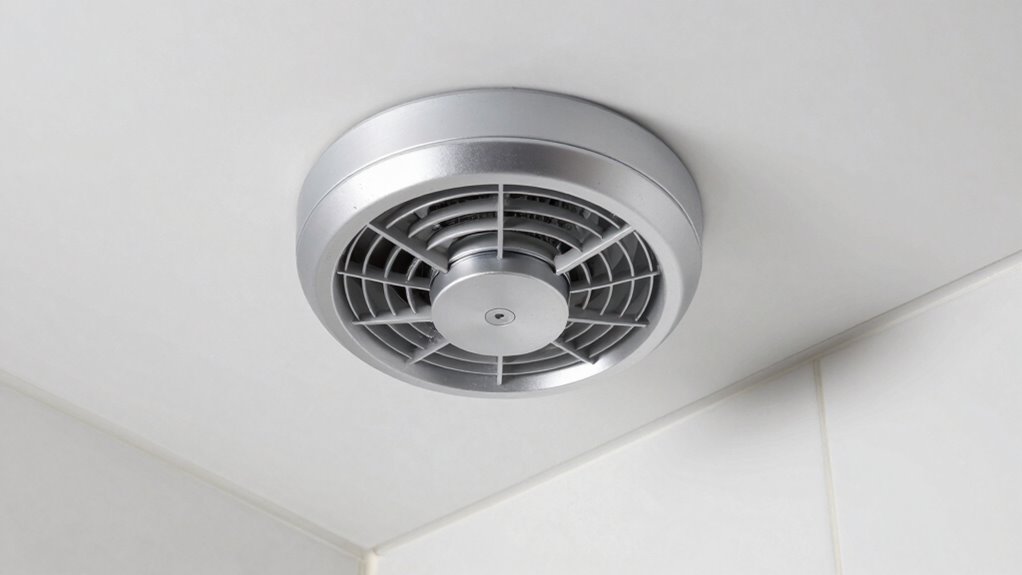

To properly size your bathroom fan, measure your space in square footage and follow recommended guidelines—usually around 1 CFM per square foot. Smaller bathrooms need about 50 CFM, while larger ones may require more to effectively remove moisture and odors. Picking the right size prevents mold growth, saves energy, and keeps your air fresh. If you want to make sure you select the perfect fan for your bathroom, there’s more to think about that can make a difference.
Key Takeaways
- Measure your bathroom’s square footage to determine the recommended CFM based on industry standards.
- Use established ventilation guidelines, typically 8 air changes per hour, to select the appropriate fan size.
- Consider bathroom features like humidity levels and multiple fixtures to choose a fan with sufficient capacity.
- Match fan capacity closely to bathroom size to prevent over- or under-ventilation, ensuring effective moisture and odor removal.
- Opt for quiet, energy-efficient fans with proper installation and venting outside for optimal moisture control and comfort.
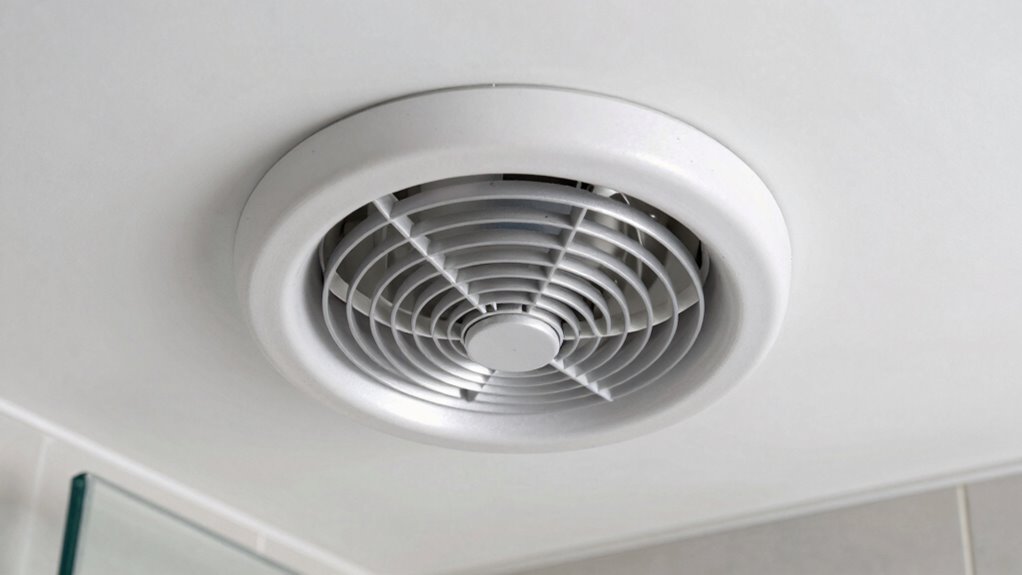
Choosing the right bathroom fan size is vital to guarantee proper ventilation and prevent moisture buildup. When you select a fan that’s too small, it won’t effectively remove humidity or odors, which can lead to mold, mildew, and lingering smells. Conversely, an oversized fan might waste energy and create unnecessary noise. To get it just right, you need to understand the ventilation standards that guide proper airflow and how energy efficiency plays a role in your choice. Ventilation standards, typically set by building codes or industry guidelines, specify how much air should be exchanged in your bathroom to maintain healthy air quality. These standards often recommend a minimum of 8 air changes per hour, or a specific cubic feet per minute (CFM) rating based on your bathroom’s size. For example, a small bathroom might only need a 50 CFM fan, while a larger one could require 100 CFM or more. Knowing these standards helps you choose a fan that effectively clears moisture and odors without overdoing it.
Additionally, selecting a fan with the appropriate air exchange rate ensures optimal moisture removal and odor control. Energy efficiency is also a vital factor to contemplate. A fan that consumes less power while delivering the necessary airflow not only saves you money on utility bills but also reduces your environmental impact. Look for models with Energy Star ratings or those designed with energy-saving features, such as motion sensors or timers, to cut down on unnecessary operation. When you match the fan’s capacity to your bathroom’s size based on ventilation standards, you guarantee that you’re not over-ventilating—saving energy—and not under-ventilating—preventing damage from excess moisture.
To determine the right size, measure your bathroom’s square footage, then consult the ventilation standards to find the recommended CFM. For example, if your bathroom is 50 square feet, a 50 CFM fan might suffice, but adding a few extra CFM can provide a buffer for higher humidity levels or multiple leaks. Consider also the fan’s noise level; a quieter fan with the right power can make your bathroom more comfortable without sacrificing performance. Proper installation is equally important—if the fan isn’t vented properly to the outside, it won’t remove moisture effectively, regardless of its size.
In the end, choosing the correct bathroom fan size based on ventilation standards and energy efficiency guarantees you fix moisture and odor problems without guesswork. It guarantees a healthier, more comfortable bathroom environment while keeping your energy costs in check. By paying attention to these guidelines, you’ll make smarter choices that enhance your home’s comfort and safety for years to come.
Frequently Asked Questions
How Do I Measure My Bathroom Ceiling Height Accurately?
To measure your bathroom ceiling height accurately, grab a tape measure or a laser distance measurer. Stand directly underneath the ceiling, extend the tape or aim the laser at the ceiling, and record the measurement from the floor to the ceiling. Use consistent measurement techniques, like keeping the tape straight and level, to guarantee accuracy. Double-check your measurement for precision before selecting the right fan size.
Can a Fan Be Too Powerful for My Bathroom Size?
Yes, a fan can be too powerful for your bathroom size, causing more harm than good. Think of it like fitting a square peg in a round hole—overpowering ventilation capacity can lead to excessive noise levels and energy waste. Choose a fan that matches your bathroom’s square footage; this guarantees effective moisture removal without loud disturbances. Proper sizing keeps the air fresh without turning your space into a noisy tornado.
Are There Specific Fan Types for Different Bathroom Layouts?
Yes, different bathroom layouts often require specific exhaust fan types. For example, wall-mounted fans work well in small or awkward spaces, while ceiling-mounted fans suit larger bathrooms. When choosing, consider bathroom fan features like humidity sensors or low noise levels to match your needs. By selecting the right exhaust fan type, you guarantee effective moisture and odor control tailored to your bathroom’s design, making your space more comfortable.
How Often Should I Replace or Clean My Bathroom Fan?
You should clean your bathroom fan at least every six months to guarantee proper airflow and prevent mold buildup. Follow a regular maintenance schedule and use simple cleaning tips like turning off power, removing the cover, and wiping down the blades and housing with a damp cloth. Replace the fan if it becomes noisy, stops working, or shows signs of damage, typically every 8-10 years.
What Energy-Efficient Options Are Available for Bathroom Ventilation?
You should look for energy-efficient fans that have ENERGY STAR certification, which guarantees low power consumption and eco-friendly ventilation. These fans typically feature quiet operation and high airflow, helping you save on energy bills. Consider models with motion sensors or timers to optimize usage. Switching to an eco-friendly ventilation system not only reduces your carbon footprint but also keeps your bathroom fresh and moisture-free efficiently.
Conclusion
Properly sizing your bathroom fan ensures effective moisture and odor control, preventing mold and preserving air quality. For example, imagine installing a fan that’s too small in a large, high-ceiling bathroom—you’ll still face lingering humidity. Conversely, a correctly sized fan, like one rated for 100 CFM in a 100-square-foot space, clears out moisture quickly. Take the time to select the right size; your bathroom will stay fresher, healthier, and free of costly damage.