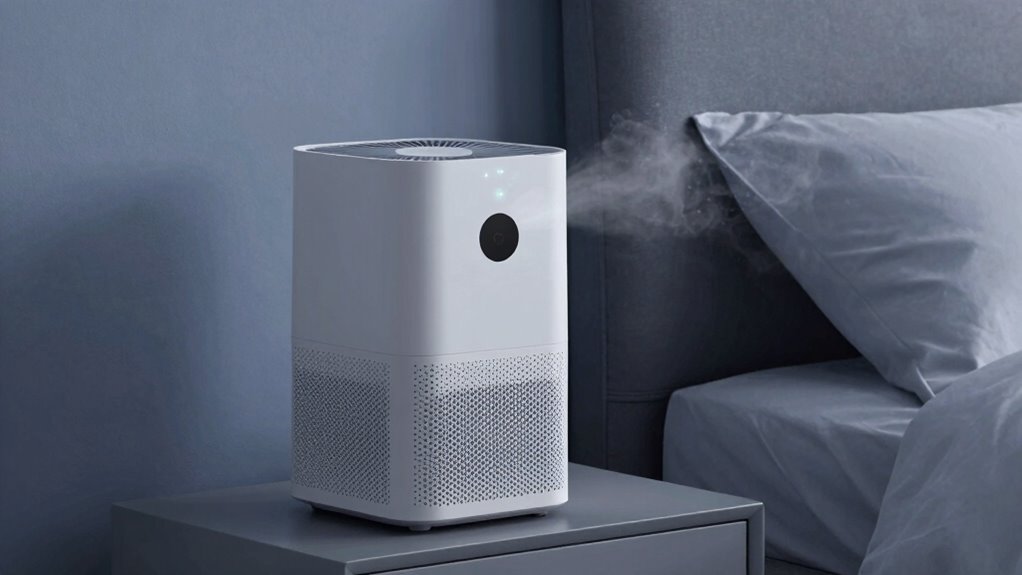

The noise level of your air purifier can considerably impact your sleep quality. Devices operating at 20-40 dB are quiet enough to run all night without disturbing you, while higher decibels, like 60 dB or more, can cause disruptions. Choosing a purifier with a sleep mode or sound-insulating features helps keep noise minimal. Understanding how decibels affect comfort ensures you pick a model that keeps your air clean and your sleep undisturbed—discover more to make the best choice.
Key Takeaways
- Noise levels in air purifiers are measured in decibels, affecting sleep quality and comfort.
- Quiet models operating around 20-40 dB promote restful sleep and continuous air filtration.
- Loud purifiers exceeding 60 dB can disrupt sleep, making them less suitable for bedrooms.
- Features like sleep modes and sound insulation help minimize noise for better sleep experiences.
- Choosing an air purifier with low decibel output balances air quality benefits with a peaceful environment.
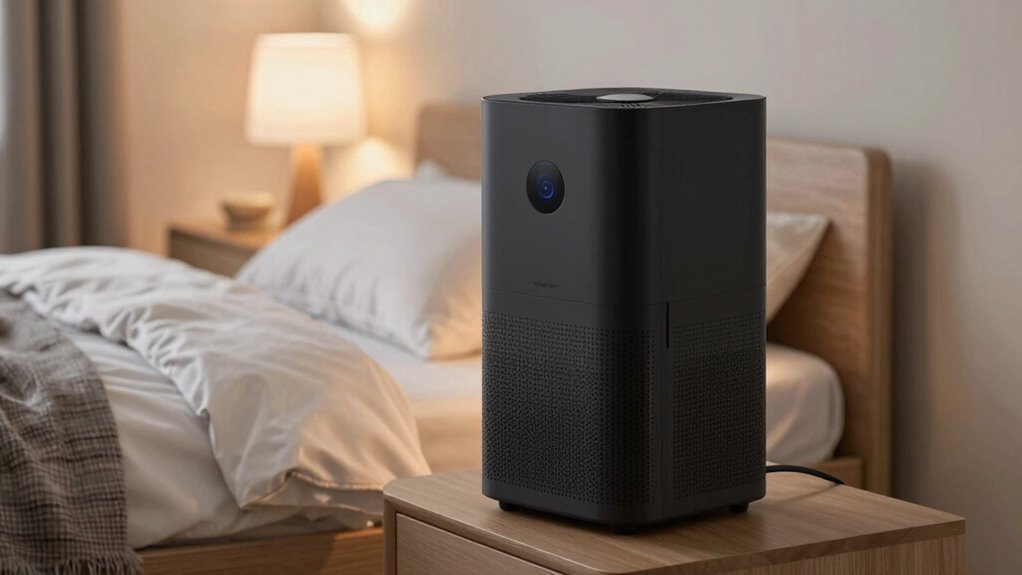
Air purifiers are essential for improving indoor air quality, but their noise levels can often be a concern for users. When you’re trying to breathe cleaner air, the last thing you want is a device that disrupts your peace with constant noise. Noise levels are a critical factor because they directly impact your comfort, especially when you’re trying to sleep or focus. If an air purifier is too loud, it can become more of a distraction than a help, reducing the overall benefits of better air quality. Conversely, a quieter model can seamlessly blend into your environment, making a noticeable difference without being intrusive.
Understanding noise levels is key to choosing the right air purifier. Most devices specify their noise output in decibels (dB), which provides a clear measure of how loud the unit is. For context, a whisper usually registers around 20-30 dB, normal conversation is about 60 dB, and a vacuum cleaner can reach up to 80-85 dB. When shopping for an air purifier, look for models that operate within the lower decibel range if noise is a concern. Many modern units are designed with sleep modes or quiet settings, often operating at 20-40 dB, which is barely noticeable and ideal for bedrooms or quiet spaces.
You should also consider how noise levels influence your perception of air quality. If your purifier is loud, you might be tempted to turn it off, defeating its purpose of continuously filtering the air. On the other hand, if it’s whisper-quiet, you’re more likely to leave it running consistently, ensuring that the air remains fresh and free of pollutants. When noise levels are minimal, it’s easier to maintain a peaceful environment, leading to better sleep and increased comfort. This is especially important if you suffer from allergies or respiratory issues, as consistent filtration can markedly improve your air quality without disturbing your rest.
Some models include features that help reduce noise, like advanced fan designs or sound-insulating materials. These innovations allow you to enjoy cleaner air without sacrificing tranquility. Keep in mind that the size of the room and the purifier’s capacity also influence noise levels; larger units may produce more noise, but they often have settings to minimize sound output. Ultimately, finding a balance between effective filtration and acceptable noise levels makes a big difference in how much you benefit from your air purifier daily. Lower noise levels mean you can enjoy cleaner air without compromising your peace or sleep quality. Additionally, understanding net worth can sometimes influence the choice of premium models with quieter operation, as wealth accumulation often provides access to higher-end, quieter devices.
Frequently Asked Questions
Can Air Purifier Noise Affect Pets Differently Than Humans?
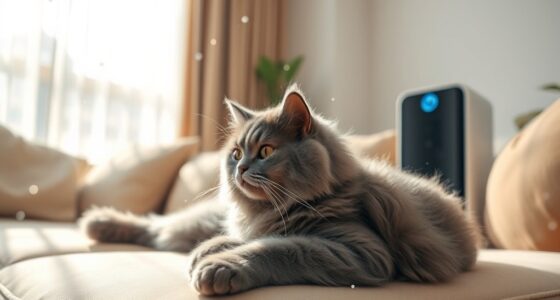
Yes, air purifier noise can affect pets differently than humans. Pets often have heightened noise sensitivity, making even low decibels disruptive to their sleep. You might notice your pet becoming restless or avoiding certain areas when the purifier runs loudly. To guarantee their pet sleep remains undisturbed, choose a quieter model or run it during times when your pet is less likely to be affected.
What Is the Optimal Decibel Level for Sleep Comfort?
Think of your sleep environment as a peaceful lake, where gentle ripples soothe you. The ideal decibel level for sleep comfort is around 30-40 dB, comparable to a quiet library. Anything louder can disturb your rest, like a boat’s wake disrupting calm waters. Keep your air purifier quiet enough to maintain serenity, ensuring your sleep remains undisturbed and restorative.
Do Air Purifiers With Variable Speeds Produce Less Noise?
Yes, air purifiers with variable speed settings typically produce less noise because you can lower the fan speed when you need quieter operation. This noise reduction helps you sleep more comfortably, especially if you’re sensitive to sound. By adjusting the speed, you control the decibel level, ensuring the purifier runs quietly during the night, making it easier to relax and get restful sleep without disruptions.
How Does Room Size Impact Purifier Noise Levels?
Imagine you’re in a grand castle – the bigger the room, the more space for sound to travel. Larger rooms tend to amplify noise levels from your purifier, making them seem louder, while smaller spaces contain sound better. So, your room size directly impacts purifier noise levels. To keep things peaceful, opt for quieter models or adjust settings based on your room’s size, ensuring a restful sleep.
Are Noise-Canceling Features Effective in Reducing Purifier Sound?
Noise-canceling features can be quite effective in reducing purifier sound, especially if they incorporate soundproofing benefits. You’ll notice a significant decline in background noise, helping you sleep better. These features work by actively reducing or blocking out ambient sounds, making your environment quieter and more peaceful. Keep in mind, the effectiveness depends on the quality of the noise-canceling technology and how well it complements your room’s acoustics.
Conclusion
In the quiet symphony of your sleep, an air purifier’s noise level acts as the conductor. Keep it too loud, and it’s like a thunderstorm drowning out your dreams; too soft, and it may not do its job. By choosing a purifier with the right decibel level, you create a peaceful oasis where sleep can flourish. Remember, the right noise isn’t just background—it’s the gentle whisper that guides you into restful slumber.