
Choosing between white and pink noise depends on your personal preference and how your body responds. White noise offers a steady, static-like sound that can effectively drown out external disruptions, but it might feel harsh over time. Pink noise, with its softer, deeper tones, is often more soothing and can promote better sleep quality. Experiment with both to see which helps you relax more—there’s more to contemplate that could improve your sleep experience.
Key Takeaways
- White noise provides a consistent, static-like sound that effectively masks external noises, aiding sleep for many individuals.
- Pink noise offers a softer, deeper sound that can promote more restful sleep by reducing disruptions and encouraging stable sleep cycles.
- Personal preference plays a key role; some find white noise too harsh, while others prefer pink noise’s natural, soothing qualities.
- Both sounds help create a calming environment, but pink noise is generally perceived as less intrusive and more relaxing over time.
- Experimenting with both can help determine which noise type better supports individual sleep quality and comfort.
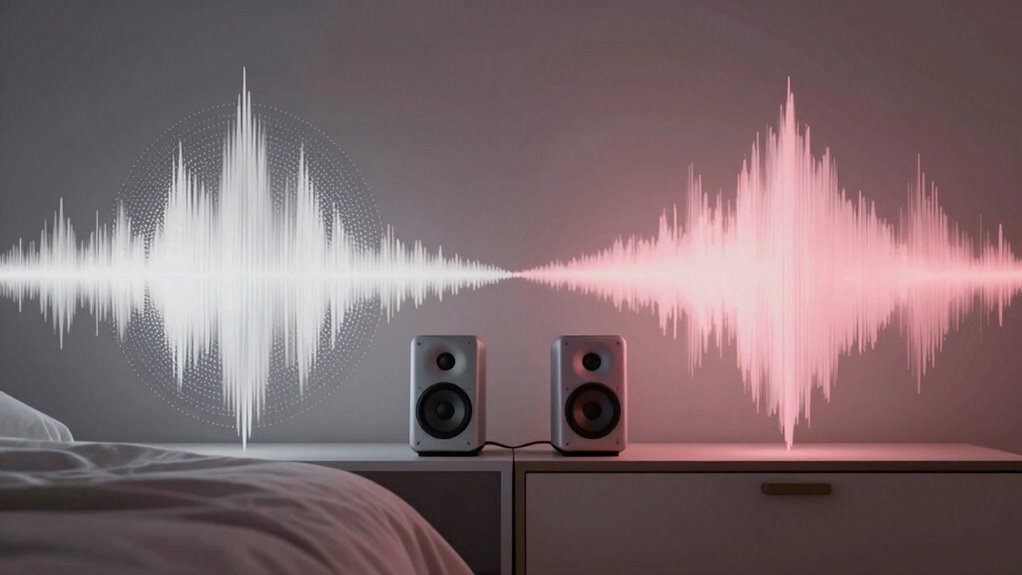
When it comes to sound masking and relaxation, white noise and pink noise are two popular options that serve different purposes. Both are used to improve your sleep environment, but they do so in unique ways. Sound masking involves introducing a consistent background sound to drown out disruptive noises, and both white and pink noise can be effective for this purpose. Your goal is to create a stable auditory environment that minimizes sudden sounds, helping you fall asleep faster and stay asleep longer. White noise, with its equal intensity across all frequencies, produces a static-like sound that can effectively mask external noise. It’s often used in sleep environments to block out sounds like traffic, barking dogs, or noisy neighbors. Its steady, unchanging quality helps your brain ignore interruptions, making it easier to relax and drift into sleep. However, white noise’s high-frequency components can sometimes be harsh or overly stimulating for some people, especially over long periods. Understanding different sound qualities can help you choose the most comfortable option for your needs. Pink noise, on the other hand, offers a different experience. Its sound spectrum decreases in intensity as frequency increases, meaning it emphasizes lower frequencies more than white noise. This results in a softer, deeper sound that many find more soothing and less intrusive. When you incorporate pink noise into your sleep environment, you might notice it feels more natural and less jarring than white noise. Pink noise is also believed to promote better sleep quality by encouraging more stable sleep cycles and reducing the likelihood of waking up during the night. Because of its gentler nature, pink noise is often preferred for relaxation and sleep, especially if you’re sensitive to high-frequency sounds or find white noise too sharp. Both options can be used in sound masking strategies to improve your sleep, but choosing between white noise and pink noise depends on your personal preference and how you respond to different sound qualities. If you need a more neutral, consistent background to drown out external noise, white noise might be your best choice. If you prefer a softer, more natural sound that still masks disruptive noises, pink noise could be more effective. Experimenting with both can help you determine which type enhances your sleep environment best. Ultimately, the goal is to reduce sudden sounds, create a calm atmosphere, and make your sleep experience more restful and uninterrupted. Whether you opt for white noise or pink noise, both can be valuable tools in establishing a peaceful sleep setting.
Frequently Asked Questions
Can White or Pink Noise Help With Insomnia?
Yes, white or pink noise can help with insomnia by providing noise therapy that masks disruptive sounds. This consistent background noise promotes sleep enhancement by creating a calming environment, making it easier for you to fall asleep and stay asleep. Experiment with different noise types to see which works best, and consider using a sound machine or app to incorporate noise therapy into your nightly routine.
Are There Any Side Effects From Using Noise Machines?
Using a noise machine generally poses minimal risks, but you should consider noise machine safety and long-term effects. Prolonged exposure to loud sounds can cause hearing damage, so keep volume at a safe level. While most people tolerate noise machines well, some might experience slight discomfort or headaches. To minimize risks, limit usage time and volume, and consult a healthcare professional if you notice any adverse effects over time.
Which Noise Type Is Better for Children’s Sleep?
You should choose pink noise for your child’s sleep because it offers a gentler, more soothing sound that promotes comfort and relaxation. Pink noise helps maintain a consistent environment, encouraging longer sleep and reducing disturbances. Pay attention to your child’s noise preferences, and observe their reactions to different sounds. By prioritizing their comfort and tuning into what they prefer, you create a calming atmosphere that supports restful, uninterrupted sleep.
How Long Should I Listen to White or Pink Noise?
You should listen to white or pink noise for about 30 minutes to an hour, following the duration guidelines for ideal listening time. This helps you fall asleep without overstimulation or dependence. Turn on the noise as you wind down and keep it at a comfortable volume. If you notice you’re waking up or feeling groggy, consider adjusting the duration or volume for a better sleep experience.
Do White or Pink Noise Improve Sleep Quality in the Long Term?
White and pink noise can improve your sleep quality in the long term if you use them consistently and find what works best for you. These sounds help mask disruptive noises, creating a stable sleep environment. While long-term effects vary, regular use may lead to better sleep patterns and reduced nighttime awakenings. To maximize benefits, choose the type of noise that feels most calming and incorporate it into your nightly routine.
Conclusion
So, whether you find yourself drifting off easiest with white noise or pink noise, it’s almost like the universe conspired to help you sleep. Maybe the gentle hum of pink noise is like a soft breeze guiding you into dreams, while white noise acts like a steady heartbeat keeping distractions at bay. Whatever sound you choose, it’s your personal soundtrack to a peaceful night—just a small coincidence in your nightly routine that makes all the difference.