When you take slow, deliberate exhalations, you activate your parasympathetic nervous system, which helps your body relax. By focusing on extending your exhale to be longer than your inhale—say, six seconds out—you signal your brain to calm down from stress. This quick, two-minute technique shifts your state from tension to relaxation, giving you instant peace. Keep going to discover how this simple practice can transform your stress response even further.
Key Takeaways
- Slow exhalation activates the parasympathetic nervous system, signaling the body to relax.
- Extending exhale duration helps reduce physical stress signs like rapid heartbeat and tense shoulders.
- Focusing on breathing sensations enhances mindfulness, calming racing thoughts and mental clutter.
- The technique can be performed discreetly anywhere, providing quick relief during stressful moments.
- Regular practice improves overall stress resilience by training the body to respond calmly to tension.
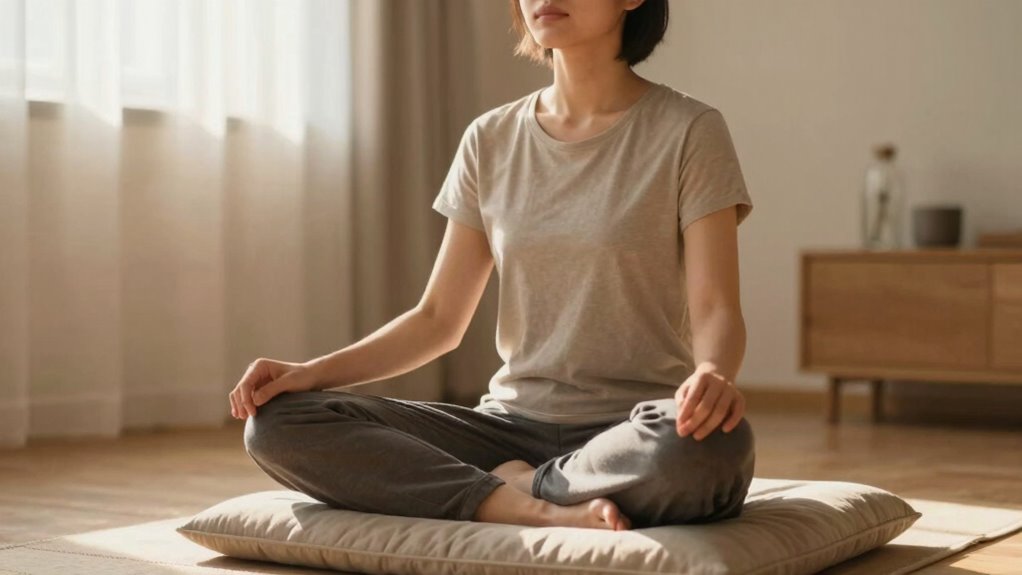
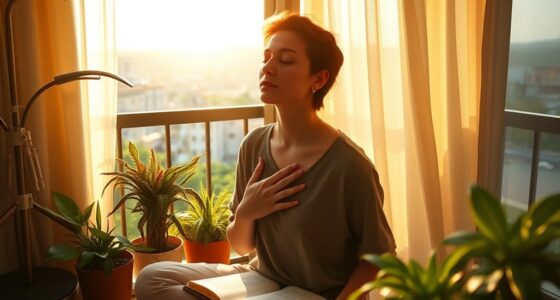
When stress piles up or you need a quick mental reset, a simple 2-minute breath reset can make a significant difference. It’s a straightforward technique that anyone can do anywhere, offering immediate relief from tension. This approach is rooted in mindfulness meditation and stress reduction techniques that focus on controlling your breath to calm your nervous system. By intentionally slowing your exhale, you send a signal to your body that it’s safe to relax, which can decrease feelings of anxiety and help you regain focus. Incorporating breath control techniques can further enhance the calming effects of this practice. Start by finding a comfortable position—sit upright or lie down, whichever feels best. Close your eyes if you’re in a private space; if not, keep a soft gaze. Inhale deeply through your nose for about four seconds, filling your lungs completely. Then, exhale slowly and deliberately through your mouth or nose for a count of six or more seconds. The key is to extend your exhale longer than your inhale. This slow, deliberate breathing pattern activates the parasympathetic nervous system, responsible for calming your body and mind. It’s a simple yet powerful stress reduction technique that can be performed discreetly at your desk, in a crowded space, or even during a quick break.
As you focus on your breath, try to clear your mind of clutter or racing thoughts. Pay attention to the sensation of the air entering and leaving your body. If your mind wanders, gently bring it back to your breath without judgment. This practice aligns with mindfulness meditation principles, encouraging present-moment awareness and acceptance. Over time, you’ll notice how these slow exhalations help reduce the physical signs of stress—such as tight shoulders, rapid heartbeat, or shallow breathing.
The beauty of this 2-minute breath reset is its simplicity and effectiveness. It’s a quick tool you can turn to whenever stress strikes, whether during a hectic workday or before a big presentation. Incorporating this breathing technique into your routine can enhance your overall stress management strategy. Regular practice not only provides immediate relief but also trains your body to respond more calmly to future stressors. By mastering slow exhalation, you harness a natural, accessible method to calm your body swiftly and efficiently. In just two minutes, you can shift from feeling overwhelmed to feeling centered, making this a crucial part of your stress reduction toolkit.
Frequently Asked Questions
Can This Technique Be Used During High-Stress Situations?
Yes, you can use this technique during high-stress situations. It acts as a mindful distraction, helping you focus on your breath instead of stressors. By consciously slowing your exhale, you activate your relaxation response, making it an effective stress management tool. Just take a moment to breathe deeply and slowly, and you’ll notice your body calming down, allowing you to handle the situation more calmly and clearly.
How Does Slow Exhaling Affect Heart Rate Variability?
When you slow your exhale, you enhance autonomic balance and promote respiratory coherence, which directly boosts your heart rate variability. This technique helps your nervous system shift from stress to relaxation, making your heart’s rhythm more adaptable. By consciously extending your exhale, you signal your body to relax, improving overall resilience and calmness. This simple shift in breathing can make a noticeable difference in your body’s ability to respond to stress.
Is There an Optimal Duration for the Breath Reset?
The ideal timing for a breath reset typically involves a breath duration of about 4 to 6 seconds for slow exhales. You should aim to find a rhythm that feels comfortable and sustainable, allowing your body to relax without strain. Consistently practicing this ideal timing helps improve your heart rate variability and promotes calmness, making your breath reset more effective over time.
Can This Method Help With Anxiety or Panic Attacks?
Think of your breath as a dial to control your emotional storm. This method can definitely help with anxiety or panic attacks by promoting stress reduction and emotional regulation. Slow, deliberate exhales send a calming signal to your nervous system, helping you regain control. Practicing this simple reset during moments of distress can make a real difference, grounding you and easing overwhelming feelings quickly.
Are There Any Risks Associated With Prolonged Slow Exhalation?
Risks assessment shows that prolonged slow exhalation is generally safe, but you should be cautious if you feel dizzy or lightheaded. Safety precautions include listening to your body and stopping if you experience discomfort. If you have respiratory or cardiovascular conditions, consult a healthcare professional before trying this technique. Overall, when done mindfully, slow exhalation helps calm your nervous system without significant risks.
Conclusion
Now, imagine what just two minutes could do for you—calm, clarity, control. That simple, slow exhale holds a secret power you might never have guessed. Are you ready to open it? The next breath could change everything, transforming chaos into calm in an instant. Don’t wait—try the 2-minute breath reset now and discover what’s possible when you pause, breathe, and take back your peace. Your calmer, clearer self is just one breath away.