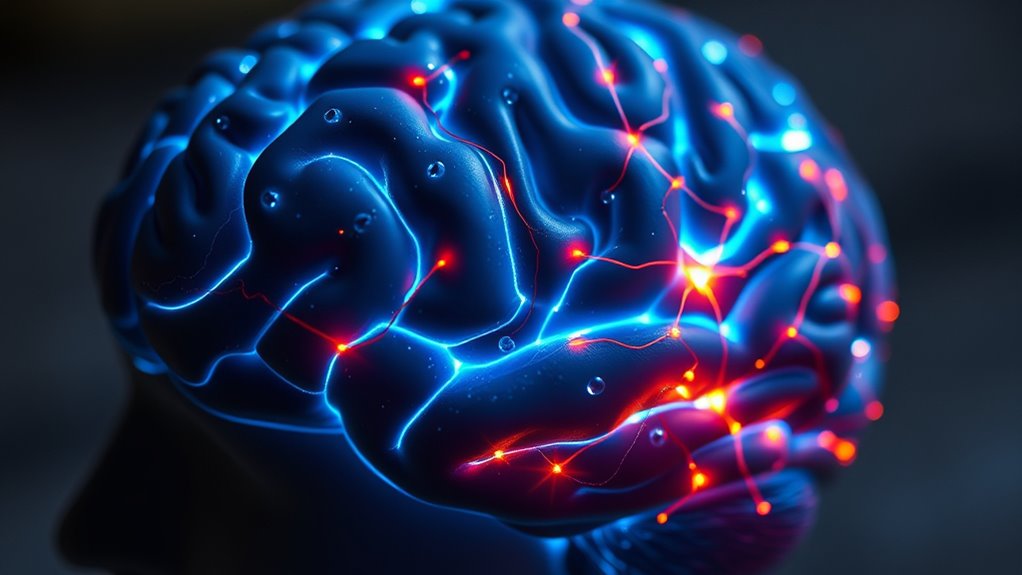

Neuroplasticity is my brain’s ability to rewire itself through small, daily actions. When I learn something new or change a habit, my neural connections adapt and strengthen. Even tiny habits, like a few minutes of exercise or mindfulness, create lasting shifts over time. The more I practice, the more flexible my brain becomes, building resilience and growth. Keep exploring, and you’ll see how your everyday choices shape your mind’s incredible potential.
Key Takeaways
- Small daily habits, like learning or exercising, trigger neural connections and strengthen existing pathways, promoting brain rewiring.
- The brain’s natural flexibility allows it to reorganize neural circuits in response to consistent, intentional actions.
- Repeated efforts gradually enhance neural network efficiency, leading to lasting structural changes in the brain.
- Neuroplasticity persists throughout life, enabling ongoing adaptation through simple daily activities.
- Maintaining a growth mindset and persistence maximizes the brain’s ability to rewire itself over time.

Neuroplasticity is the brain’s remarkable ability to change and adapt throughout our lives. It’s not just a fancy term for kids learning to walk or talk; it’s a continuous process that shapes how we think, feel, and behave every day. At its core, neuroplasticity involves brain flexibility—the capacity of our neural circuits to reorganize in response to new experiences, learning, or even injury. This neural adaptation means that, regardless of age, our brains can rewire themselves, creating new connections and strengthening existing ones. Understanding this process reveals that we’re not static beings but dynamic organs capable of growth and change at any stage.
Neuroplasticity enables lifelong brain change, fostering growth, resilience, and adaptability at any age.
When I focus on small daily habits, I realize just how powerful neuroplasticity can be. Every time I challenge myself to learn a new skill, such as playing an instrument or practicing mindfulness, my brain undergoes subtle shifts. These changes might seem insignificant initially, but over time, they accumulate, enhancing brain flexibility. It’s fascinating how, through consistent effort, I can encourage my neural networks to adapt—making connections more efficient or even forming entirely new pathways. This is the essence of neural adaptation: the brain’s ability to respond to my actions, thoughts, and environment by reshaping itself accordingly.
What’s truly inspiring is that this process isn’t limited to children or young adults. Older brains remain remarkably adaptable, capable of rewiring in response to new challenges or habits. For example, when I commit to daily exercise or learning a language, I’m actively promoting neural adaptation. These small, deliberate choices don’t just improve my physical health—they physically change my brain, fostering greater flexibility and resilience. It’s as if I’m continuously sculpting my mental landscape, making it more adaptable to future demands.
Understanding neuroplasticity also makes me more compassionate toward myself. If I struggle to change a habit or forget something, I no longer see it as a failure but as an opportunity for my brain to adapt further. Every effort I make—no matter how minor—contributes to my brain’s ongoing reorganization. This mindset encourages me to stay consistent, knowing that even small daily actions can lead to meaningful neural changes. In the end, neuroplasticity assures me that my brain’s capacity to evolve is limitless, as long as I nurture it with brain flexibility and persistence.
mindfulness meditation for brain health
As an affiliate, we earn on qualifying purchases.
As an affiliate, we earn on qualifying purchases.
Frequently Asked Questions
Can Neuroplasticity Reverse Age-Related Brain Decline?
Yes, neuroplasticity can help reverse age-related brain decline. I’ve seen how engaging in new activities, learning skills, and staying mentally active can combat brain aging and slow cognitive decline. By consistently challenging my brain with these small daily changes, I believe I can support its ability to adapt and maintain function. It’s empowering to know that even later in life, I can make positive impacts on my brain’s health.
How Long Does It Take to See Changes From Daily Neuroplasticity Exercises?
Think of your brain as a garden, needing daily watering to bloom. I’ve seen brain change happen in as little as two weeks with consistent daily practice, but real transformation often takes about a month. Patience is key; the more you nurture those neural pathways, the stronger they grow. Keep at it, and you’ll start noticing subtle shifts—like new leaves unfurling—proof that your efforts are rewiring your brain.
Are Certain Brain Areas More Receptive to Change Than Others?
Some brain areas are more receptive to change because of brain flexibility, especially in plasticity zones like the hippocampus and prefrontal cortex. I’ve found these zones adapt faster because they’re involved in learning and memory. While other regions are less plastic, consistent daily exercises can boost their flexibility over time. So yes, certain zones are more responsive, but everyone’s brain can change with patience and effort.
Can Neuroplasticity Help Recover From Brain Injuries?
Did you know that neuroplasticity can remarkably aid brain injury recovery? I’ve seen firsthand how neural rewiring helps the brain adapt after trauma. By engaging in targeted therapies and consistent practice, the brain can form new connections, bypass damaged areas, and regain lost functions. It’s incredible how small daily efforts can promote neural rewiring, giving hope for improved brain injury recovery and a better quality of life.
Does Neuroplasticity Occur in All Individuals Equally?
Neuroplasticity doesn’t occur equally in everyone. I’ve learned that genetic differences and environmental influences play a big role. Some people have a brain more adaptable due to their genes, while others might experience more plasticity because of their environment, like learning new skills or overcoming challenges. So, while everyone’s brain can change, the extent and speed vary based on these factors, making each person’s neuroplasticity unique.
Conclusion
So, think of your brain as a sculptor shaping its masterpiece daily. Every small change you make—learning a new skill, practicing mindfulness, or even just choosing different routes—acts like chipping away at old patterns. Over time, these tiny adjustments build a new, stronger, more flexible mind. It’s like planting seeds that grow into a vibrant garden of endless potential. Your daily choices truly have the power to rewire your brain and transform your life.