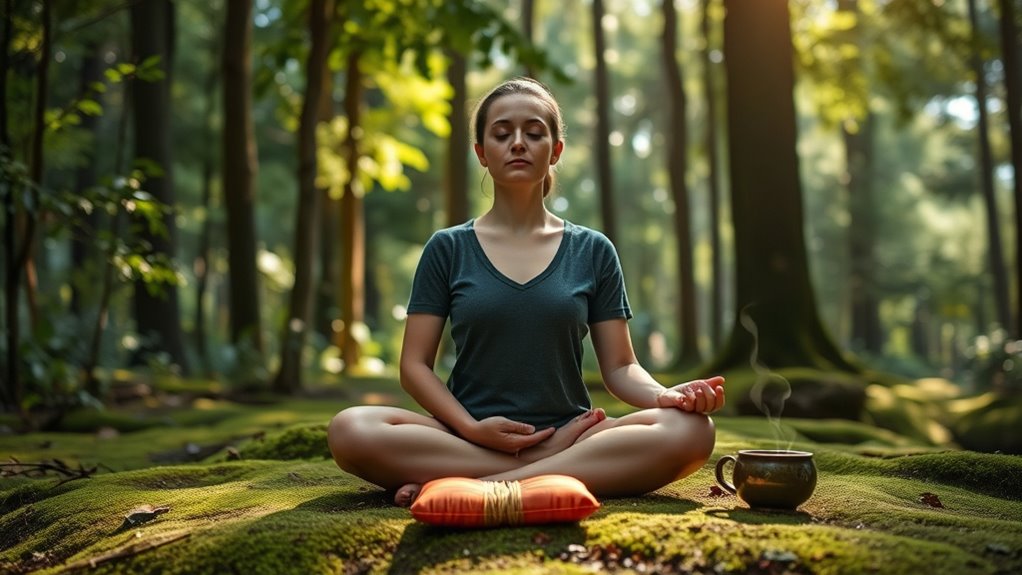

If you’re new to mindfulness, start with simple, evidence-based practices like focused breathing and body scans. These techniques are easy to do anywhere and help bring calm, reduce stress, and improve mental clarity. I suggest practicing regularly, paying gentle attention to your breath or physical sensations without judgment. As you become more familiar, you’ll discover how quickly these tools can become a natural part of your daily routine—there’s more to learn that can deepen your experience.

Get oils, diffusers and self-care delivered free with Prime
- Fast, free delivery on millions of items
- Prime Video, Amazon Music and more included
- Member-only deals all year
Key Takeaways
- Start with simple breathing exercises like inhaling through the nose and exhaling through the mouth to quickly calm your mind.
- Use body scans to systematically notice sensations from toes to head, promoting relaxation and physical awareness.
- Practice mindfulness regularly to build familiarity, making techniques more effective over time.
- Incorporate these practices into daily routines, such as waiting in line or during breaks, for continuous stress relief.
- Focus on gentle awareness without judgment to enhance mental clarity and emotional well-being effortlessly.

Have you ever wondered how to find calm amid life’s chaos? It’s a question many of us ask, especially when stress feels overwhelming and our minds race with endless worries. I’ve discovered that simple, evidence-based practices like breathing exercises and the body scan can make a real difference. These techniques are accessible, effective, and don’t require any special equipment or hours of free time. They’re tools you can incorporate into your daily routine to bring a sense of peace and clarity when you need it most.
Discover simple, effective mindfulness techniques to find calm amid everyday chaos.
Breathing exercises are one of the easiest ways to anchor yourself in the present moment. I often start with slow, deep breaths—inhale through my nose, feeling my chest and belly expand, then exhale gently through my mouth. This simple act helps slow my heart rate and calms my mind. When I feel anxious or distracted, I focus solely on my breath, counting each inhale and exhale if I need extra focus. This act of mindful breathing can interrupt the cycle of racing thoughts and bring me back to the here and now. It’s powerful because it’s always available, anytime, anywhere. Whether I’m waiting in line or sitting at my desk, I can pause for a few breaths and regain a sense of control.
The body scan is another effective practice that deepens mindfulness. I start by lying down or sitting comfortably, closing my eyes if possible. Then I systematically bring my attention to different parts of my body—my toes, feet, legs, torso, arms, neck, and head. I notice any sensations, tension, or discomfort without judgment. If I find tightness, I breathe into that area, imagining the tension melting away as I exhale. This process helps me develop a gentle awareness of my physical presence and release built-up stress. Over time, I’ve found that the body scan not only relaxes my muscles but also increases my overall awareness of how stress manifests physically. It’s a way to connect with my body in a compassionate, non-judgmental manner.
Both practices—breathing exercises and the body scan—are rooted in evidence-based mindfulness techniques. They don’t require a lot of time, and with consistent practice, I’ve noticed they become easier and more effective. They help me pause, breathe, and reconnect with the present moment, no matter how chaotic life gets. If you’re just starting out, give these a try. They’re simple, powerful tools to help you find calm amid the chaos of everyday life.
As an affiliate, we earn on qualifying purchases.
Frequently Asked Questions
How Long Should I Practice Mindfulness Daily?
I recommend starting with a daily practice time of about 10 to 15 minutes for mindfulness. This duration helps you build a habit without feeling overwhelmed. As you become more comfortable, you can gradually extend your mindfulness duration if you’d like. The key is consistency; even a few minutes each day makes a difference. Find a routine that fits your schedule, and stick with it to see the best results.
Can Mindfulness Help With Chronic Pain Management?
Have you wondered if mindfulness benefits extend to chronic pain? I believe they do, as mindfulness helps shift focus from pain to the present moment, reducing stress and emotional suffering. Regular practice offers pain relief techniques like deep breathing and body scans. These methods can lessen discomfort and improve overall well-being. So, yes, incorporating mindfulness into your routine could be a powerful tool in managing chronic pain effectively.
Is Mindfulness Effective for Children and Teenagers?
I believe mindfulness is effective for children and teenagers because it supports healthy child development and enhances emotional regulation. When kids practice mindfulness, they learn to manage stress, stay focused, and develop resilience. I’ve seen how simple mindfulness activities can help young people handle their emotions better, leading to improved mental well-being. It’s a valuable tool that grows with them, fostering lifelong skills for emotional balance and growth.
What Are Common Challenges Beginners Face With Mindfulness?
Did you know that nearly 60% of beginners face common challenges with mindfulness? I’ve found that misconceptions about what mindfulness should look like often cause frustration. Many fall into beginner pitfalls like expecting immediate calm or thinking they must do it perfectly. These misconceptions can hinder progress, but understanding that mindfulness is a skill that takes time helps me stay patient and committed. Don’t worry—everyone struggles at first!
Does Mindfulness Require Any Special Equipment or Settings?
Mindfulness doesn’t require any special equipment or settings, but having meditation accessories like a cushion or mat can make practice more comfortable. I recommend finding a quiet environment where you won’t be disturbed, as it helps deepen your focus. You can practice mindfulness anywhere—at home, outdoors, or even during a break—so create a space that feels peaceful and free of distractions to get the most out of your practice.
Conclusion
Starting your mindfulness journey is about taking small, intentional steps—breathing deeply, observing quietly, and being present fully. Each practice builds your awareness, sharpens your focus, and nurtures your well-being. As you embrace these simple habits, you’ll find clarity in chaos, calm in confusion, and peace amidst the noise. Remember, mindfulness isn’t a destination but a daily choice—to notice, to accept, and to grow. Let these practices become your steady companions on this transformative path.
Halloween Picks
halloween
As an affiliate, we earn on qualifying purchases.