In SIBO breath tests, I look at hydrogen and methane gases to understand gut bacteria activity. Hydrogen is produced when bacteria ferment sugars quickly, leading to symptoms like gas and bloating. Methane, on the other hand, is made by different bacteria and can cause issues like constipation. Knowing the differences helps me interpret your results better. If you’re curious about how these gases influence your health, keep exploring—I’ve got more insights for you.
Key Takeaways
- Hydrogen indicates bacteria fermenting carbohydrates quickly, while methane suggests specific methanogenic bacteria overgrowth.
- Elevated hydrogen levels often relate to bloating and diarrhea, whereas high methane associates with constipation.
- Both gases are measured during breath tests to identify different bacterial activity profiles.
- Test choice (lactulose or glucose) influences gas production and interpretation of hydrogen versus methane levels.
- Understanding the gases helps tailor treatments and improves the accuracy of SIBO diagnosis.
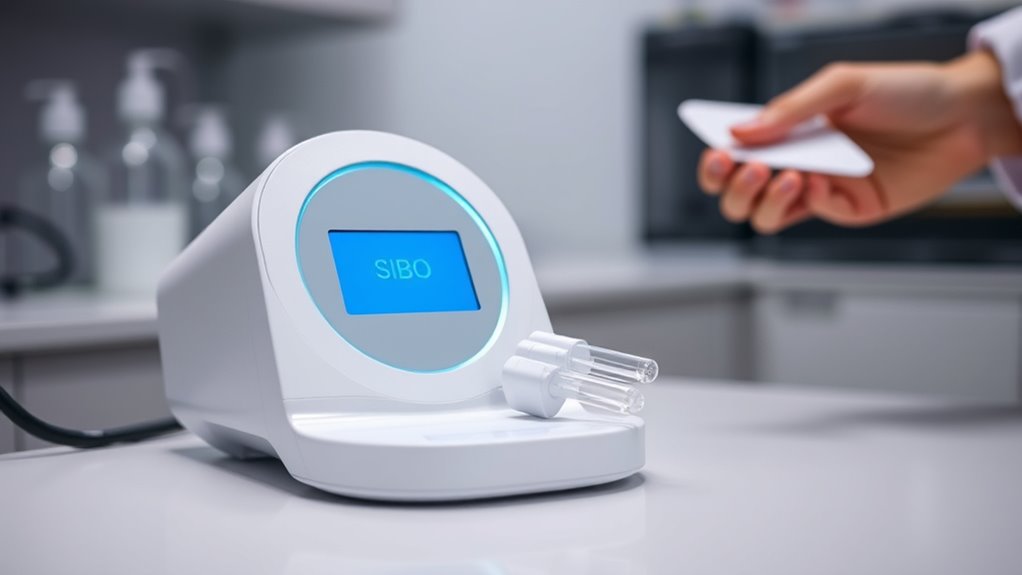
Have you ever wondered how doctors diagnose Small Intestinal Bacterial Overgrowth (SIBO)? It’s not as straightforward as many might think. Instead of relying on traditional blood tests or imaging alone, doctors often turn to breath tests that analyze your gut bacteria activity. These tests are designed to detect specific gases produced when bacteria in your small intestine ferment carbohydrates. But what makes these tests reliable? Well, test accuracy is a key concern here. The more precisely they measure the gases, the better the diagnosis. Since gut bacteria vary widely among individuals, getting an accurate reading can be challenging but is essential for proper treatment.
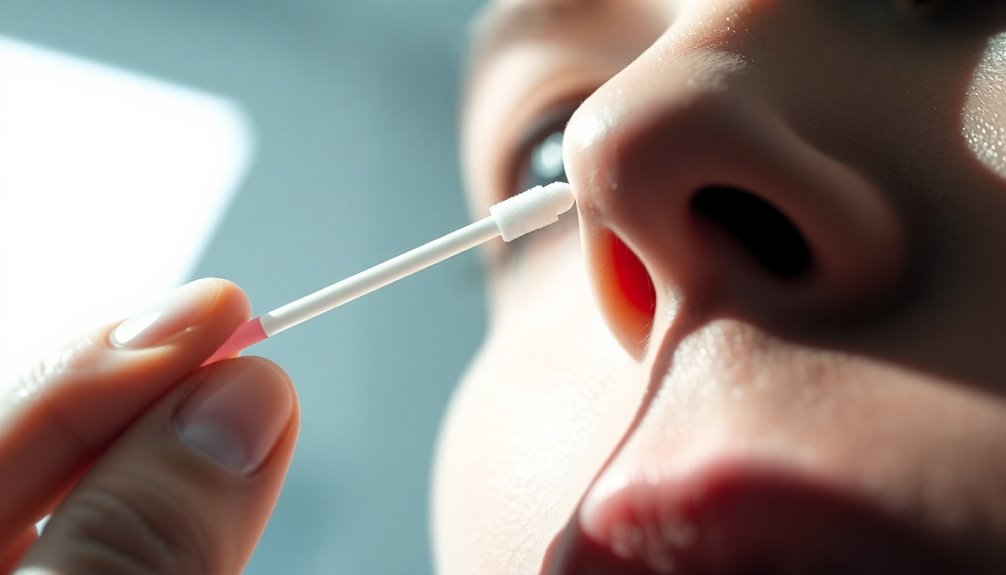
Breath tests for SIBO detect gases from bacteria fermenting carbohydrates, but accuracy depends on proper testing methods.
When I first learned about SIBO breath tests, I discovered that they mainly focus on two gases: hydrogen and methane. These gases are produced by different types of bacteria in your gut. Hydrogen is generated when bacteria ferment sugars like lactulose or glucose. Methane, on the other hand, is produced by a specific group of bacteria called methanogens. The presence and levels of these gases give clues about the kind of bacterial overgrowth you might have. If your test shows high hydrogen levels, it suggests that certain bacteria are fermenting carbohydrates rapidly. Elevated methane levels can indicate a different bacterial profile that might be responsible for bloating, constipation, or other symptoms.
What’s interesting is that the test’s accuracy depends heavily on how well it detects these gases. Factors like the type of substrate used (lactulose or glucose), timing of sample collection, and even your diet before the test can influence results. Sometimes, the same person might show different results depending on these variables, which can be confusing. That’s why choosing a well-validated test and following pre-test instructions carefully is critical. Proper preparation ensures that the gut bacteria are accurately represented during the test, minimizing false positives or negatives. Additionally, understanding the gas production mechanisms helps interpret the results more effectively and tailor treatments accordingly.
Understanding the differences between hydrogen and methane in breath testing helps me see why some tests might focus on one gas or measure both. It’s also why a thorough approach—considering symptoms, test results, and clinical history—is necessary. No test is perfect, but when done correctly, breath tests for SIBO can be quite effective. They provide a window into the complex world of gut bacteria, helping us identify overgrowths that cause discomfort and other issues. Ultimately, the goal is to improve test accuracy so that treatments can be tailored precisely, giving hope for relief from SIBO symptoms.
Frequently Asked Questions
Can SIBO Breath Tests Detect Other Gastrointestinal Disorders?
Yes, SIBO breath tests can sometimes help identify other gastrointestinal disorders, but they’re mainly designed for SIBO detection. I recommend exploring alternative diagnostics if you’re experiencing non-GI symptoms or if the breath tests don’t provide clear answers. These tests can be useful, but keep in mind that an all-encompassing evaluation by a healthcare professional is best for diagnosing conditions beyond SIBO, especially when symptoms are diverse or unclear.
How Accurate Are Home SIBO Breath Testing Kits?
Coincidence often makes me wonder about the accuracy of home SIBO breath testing kits. While they offer convenience, their test reliability can vary, sometimes leading to false positives or negatives. User experience is generally straightforward, but proper sample collection and adherence to instructions are essential. I’d recommend consulting a healthcare professional for interpretation, as these kits are helpful but not always as precise as lab-based tests.
Are There Any Dietary Restrictions Before Taking a SIBO Breath Test?
Before taking a SIBO breath test, I always follow pre-test fasting and dietary guidelines to guarantee accurate results. I avoid high-fiber foods, dairy, and certain carbs for about 12 hours beforehand. It’s essential to stick to these dietary restrictions because they help prevent false positives or negatives. Following the instructions carefully makes a big difference in getting reliable results, so I recommend reviewing your provider’s specific guidelines beforehand.
How Long Does It Take to Get Results After Testing?
Test processing times for SIBO breath tests typically range from a few days to a week, depending on the clinic or lab. I’ve found that result turnaround can vary, but most places aim to deliver results within 5 to 7 days. I recommend asking your provider for an estimated timeline upfront so you’re not left waiting in uncertainty. Usually, I get my results quickly enough to start planning my next steps.
Can SIBO Be Cured Without Antibiotics?
Yes, I believe SIBO can be managed and sometimes cured without antibiotics. I’ve seen natural remedies like herbal treatments and probiotics help, along with significant lifestyle changes such as improved diet and stress management. While not guaranteed for everyone, these approaches can reduce symptoms and restore balance in your gut. It’s essential to work with a healthcare professional to develop a personalized plan that’s safe and effective for your situation.
Conclusion
So, after all this talk about hydrogen and methane in SIBO tests, you’d think one would be clearly better than the other, right? Turns out, both gases have their quirks, and relying solely on one might miss the full picture. Ironically, the very tests designed to diagnose our gut issues can be a bit of a guessing game. So, don’t be surprised if your results keep you guessing—sometimes, the most straightforward answers are the hardest to find.