Monitoring a symptom means tracking its patterns and changes over time without trying to find the exact cause right away. It helps you see if it gets better, worse, or stays the same, guiding decisions about when to seek further help. Diagnosing a disease, on the other hand, involves identifying the root cause through tests and detailed info. Understanding the difference can help you manage your health better; keep exploring to learn more about how these approaches work together.
Key Takeaways
- Diagnosing identifies the root cause of symptoms, while monitoring tracks changes over time without necessarily determining the cause.
- Diagnosis involves comprehensive assessment including patient history and diagnostic tests; monitoring focuses on observing symptom patterns.
- Monitoring helps manage uncertainty and assess treatment effects, whereas diagnosis confirms specific health conditions.
- Diagnosis is a definitive process to pinpoint disease; monitoring is an ongoing process to observe symptom progression.
- Both approaches are complementary, guiding appropriate healthcare decisions based on symptom evolution and test results.
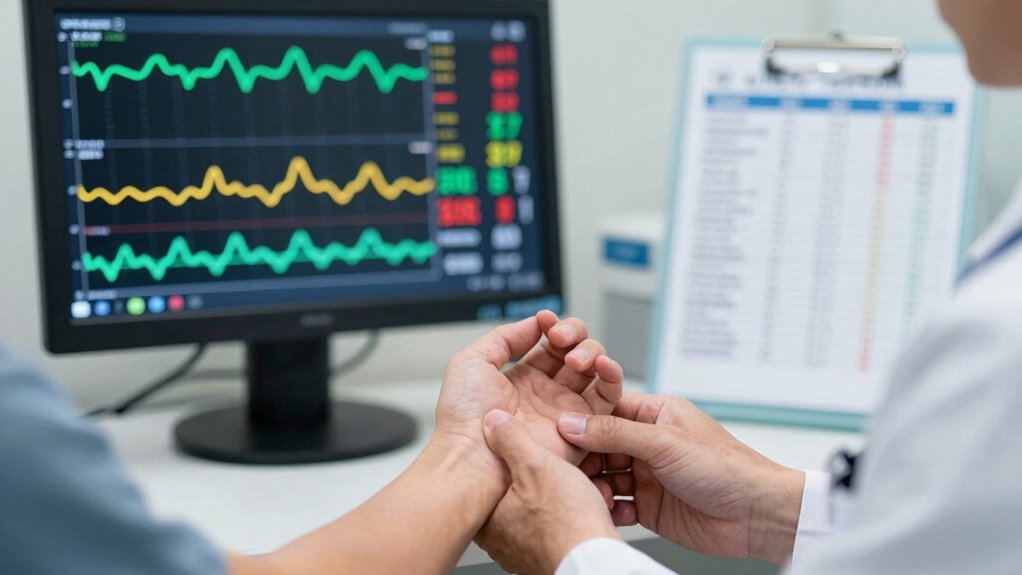
Understanding the difference between monitoring symptoms and diagnosing diseases is vital for effective healthcare. When you notice something isn’t quite right, healthcare providers often start by gathering your patient history. This includes asking about your symptoms, how long they’ve lasted, their severity, and any factors that make them better or worse. Your patient history helps determine whether your symptoms are part of a larger health issue or just temporary discomfort. It’s important to be honest and detailed because this information guides the next steps.
Gathering your detailed patient history helps determine if symptoms indicate a larger health issue or are temporary.
Once your healthcare provider has a clear picture of your symptoms, they may order diagnostic tests. These tests are specific tools—such as blood work, imaging scans, or biopsies—that help provide concrete evidence of what’s happening inside your body. The goal isn’t just to observe or record symptoms but to identify the underlying cause. Diagnostic tests can detect infections, organ issues, or chronic conditions that may not be obvious from symptoms alone. They serve as a way to confirm or rule out potential diagnoses, giving a more definitive answer than just listening to your symptoms.
Monitoring symptoms, on the other hand, involves tracking how your symptoms evolve over time. This process is ongoing and helps you and your healthcare provider understand whether a condition is improving, staying the same, or worsening. For example, if you’re experiencing mild chest discomfort, your doctor might recommend monitoring your symptoms for a few days to see if they resolve on their own or escalate. Monitoring isn’t an attempt to find a diagnosis but to gather information that informs future decisions. It’s especially useful when symptoms are vague or non-specific, making immediate diagnosis difficult or unnecessary. Additionally, digital health tools can assist in tracking and recording these changes more accurately.
The key distinction is that diagnosing a disease aims to identify the root cause, often through a combination of patient history and diagnostic tests. Monitoring symptoms, however, focuses on observing patterns and changes over time to determine if further investigation is needed. While monitoring can sometimes delay a diagnosis, it’s an essential part of managing uncertainty, especially when symptoms are mild or transient.
In practice, you may start with monitoring to see if symptoms resolve or persist, then move on to diagnostic tests if symptoms worsen or remain unexplained. Understanding this process allows you to be more engaged in your healthcare journey, knowing when to seek further testing or when to simply keep an eye on how your body responds. Ultimately, both monitoring symptoms and diagnosing diseases are vital steps that work together to ensure you get the right diagnosis and appropriate treatment.
As an affiliate, we earn on qualifying purchases.
Frequently Asked Questions
Can Monitoring Symptoms Prevent the Development of Diseases?
Yes, monitoring symptoms can help prevent the development of diseases. By practicing symptom tracking, you catch early warning signs and take preventive measures promptly. This proactive approach allows you to address health issues before they escalate. Regularly observing your body’s signals enables you to seek medical advice early, potentially stopping a disease from progressing. So, staying attentive to symptoms plays a vital role in maintaining your overall health and preventing serious illnesses.
How Long Should Symptoms Be Monitored Before Seeking a Diagnosis?
How long should you monitor symptoms before seeking a diagnosis? Usually, if symptoms persist beyond two weeks or worsen, it’s time to think about professional help. Symptom tracking allows you to gather key details for early intervention, which can be vital for effective treatment. Don’t wait too long—prolonged or worsening symptoms might signal an underlying issue that needs prompt medical attention to guarantee your health and peace of mind.
Are There Risks Associated With Misinterpreting Symptoms?
Misinterpreting symptoms can lead to serious risks, like delayed diagnosis or incorrect treatment. Poor symptom interpretation affects diagnostic accuracy, increasing the chance of overlooking serious conditions or causing unnecessary worry. To avoid these risks, trust healthcare professionals for proper assessment, and don’t rely solely on self-monitoring. Accurate symptom interpretation guarantees timely, appropriate care, ultimately safeguarding your health and preventing complications from missed or mistaken diagnoses.
What Tools or Technology Assist in Symptom Monitoring?
Like a modern-day oracle, wearable devices and mobile apps help you track your health in real-time. Wearable devices monitor essential signs, activity levels, and sleep patterns, providing continuous data. Mobile apps allow you to log symptoms, medication, and mood changes, offering insights over time. Together, these tools empower you to detect early warning signs, manage health proactively, and share accurate information with your healthcare provider.
How Does Patient History Influence Diagnosis Accuracy?
Your patient history markedly influences diagnostic accuracy because it provides essential background, revealing patterns and previous health issues. By thoroughly reviewing their medical background, you can identify risk factors and underlying conditions that shape the diagnosis. Accurate patient history helps you avoid misinterpretation, narrows down potential diseases, and guarantees you consider all relevant factors, ultimately leading to more precise and effective treatment plans.
Conclusion
Think of monitoring symptoms as tending to a garden—you notice the flowers blooming or wilting, but you’re not yet planting new seeds. Diagnosing a disease is like finally identifying the specific plant that needs care. While monitoring keeps you aware of changes, diagnosis points you to the root cause. Together, they’re the compass and map guiding you through a maze—each step bringing clarity, until you reach the safe haven of health.