
TL;DR

Get oils, diffusers and self-care delivered free with Prime
- Fast, free delivery on millions of items
- Prime Video, Amazon Music and more included
- Member-only deals all year
Cellino has launched Reservoir, a consumer service that collects and cryopreserves adults’ immune cells for about $5,000, with a $270 annual storage fee after the first year. The company presents the service as a way to preserve future options, but no established medical benefit or specific future use for stored cells is confirmed.
Biotech company Cellino has launched Reservoir, a consumer service that collects and stores adults’ immune cells for potential future medical use. Pricing typically starts at about $5,000, including collection, processing, cryopreservation and the first year of storage, followed by $270 a year; the medical value of preserving cells for healthy adults has not been established.
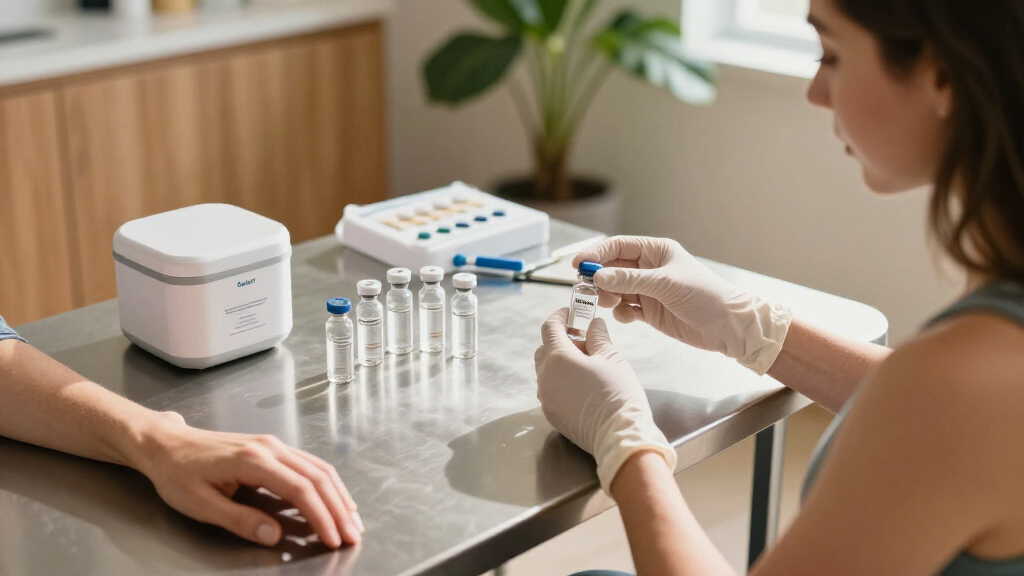
Reservoir begins with a blood draw at a partner clinic or, in some markets, an at-home appointment. The company says it isolates peripheral blood mononuclear cells, or PBMCs, which include T cells, B cells, natural killer cells and monocytes. The cells are counted, cryopreserved at temperatures below -150°C and stored with tracking under the customer’s name. Cellino says the samples are kept at an FDA-registered facility.
According to Cellino, customers retain ownership of their stored cells, which are released only at their request and in coordination with a licensed physician. The company says the service is open to adults 18 and older. Availability initially includes partner clinics in San Francisco, Los Angeles, New York and Boston; at-home collection is offered in select locations, and Cellino says it plans to add markets. Prices can vary by clinic.
Cellino chief executive and co-founder Dr. Nabiha Saklayen said the service grew out of interest from people who had heard about the company’s cell-therapy work and asked whether they could preserve their own cells. The launch brings Cellino’s work in personalized cell-therapy manufacturing into a consumer service, but it does not amount to a treatment or a promise that stored cells will be useful later.
A Paid Bet on Future Cell Therapies
Reservoir asks consumers to pay now for the possibility that their stored cells could have a use in future medicine. Cellino’s rationale is that immune-cell populations change over a person’s lifetime, so cells collected earlier may differ biologically from those collected later. That rationale describes the company’s premise; it does not establish that younger stored cells will lead to better health outcomes or be usable in a future therapy.
The launch also reflects a move to sell biological preservation directly to consumers, beyond established uses in research and specialized medical settings. For customers, the immediate commitment is financial and long term: the advertised starting price covers only the first storage year, with annual fees afterward. The value proposition depends on developments in cell-based medicine that remain uncertain, including whether a particular person’s stored cells could be used safely and effectively for any future purpose.
As an affiliate, we earn on qualifying purchases.
Cellino’s Shift From Biotech to Consumers
Cellino, based in Cambridge, Massachusetts, was co-founded by Saklayen and Marinna Madrid in 2017. The company is developing automated manufacturing technology intended to support production of personalized cell therapies. The source report says Cellino has raised more than $96 million from investors and received an award of up to $25 million from the Advanced Research Projects Agency for Health. Those company and funding credentials provide context for the launch, but do not verify the future clinical usefulness of Reservoir’s stored cells.
Cellino compares immune-cell banking with services such as egg freezing and cord blood banking, where biological material is preserved for possible later use. However, the potential applications of Reservoir samples are less defined, and the service is not described as an established longevity intervention. Harvard Medical School faculty member Jay Luthar, founder of partner clinic Lutanen Health, characterized it as preserving options rather than providing a proven health benefit.
““Cell preservation is unique because it is fundamentally about optionality: preserving your cells as they are today, so that whatever the science makes possible later, you still have the material to use.””
— Dr. Jay Luthar, Harvard Medical School faculty member and founder of partner clinic Lutanen Health
Future Uses Remain Unproven
The source report does not identify an approved treatment that uses Reservoir’s stored samples or provide evidence that banking immune cells improves longevity or prevents disease. It is unclear what future therapies, if any, will be compatible with cells stored through the service, what those therapies might cost, or whether customers’ samples would meet their requirements. A company claim that cells are stored in an FDA-registered facility does not, by itself, establish FDA approval of the service or its future medical uses.
Other details that may affect customers’ decisions are not provided in the report, including the full storage terms, procedures if a customer stops paying annual fees, and the specific conditions for sample release and future use. Prospective customers would need to review the service’s contract and consult a licensed physician about individual circumstances. The underlying premise of preserving biological material is distinct from evidence that doing so will provide a clinical benefit.
Market Expansion and Customer Uptake
Cellino says Reservoir will add markets beyond its initial clinic locations and offers a nationwide waitlist for people where the service is not yet available. The next visible developments are likely to be geographic expansion and information about how customers use the service; the source report does not give a schedule for new locations or a target for enrollment.
For now, customers can check local availability through Reservoir’s website. Any claims about medical value should be weighed against the current limits: the cells can be collected and stored, but whether they can support a safe, effective future therapy remains uncertain.
Key Questions
What is Cellino’s Reservoir service?
Reservoir collects and cryopreserves immune cells from adults after a blood draw. Cellino says samples are stored for possible future medical use, but that use is not guaranteed.
How much does immune-cell banking cost?
The service typically starts at about $5,000, covering collection, processing, cryopreservation and the first storage year. Cellino lists an ongoing fee of $270 annually; prices may vary by clinic.
Does storing immune cells provide a proven longevity benefit?
No proven longevity benefit is established in the source report. The service is presented as preserving cells for potential future use, and the medical value of that option for healthy adults remains uncertain.
Who can use Reservoir, and where is it available?
Cellino says the service is open to adults 18 and older. It initially operates through partner clinics in San Francisco, Los Angeles, New York and Boston, with at-home collection available in select locations and additional markets planned.
Can customers access their stored cells whenever they want?
Cellino says customers own their cells and samples are released at the customer’s request in coordination with a licensed physician. The source report does not set out the full release terms or explain which future treatments might be able to use the samples.
Source: rss
Halloween Picks
halloween
As an affiliate, we earn on qualifying purchases.