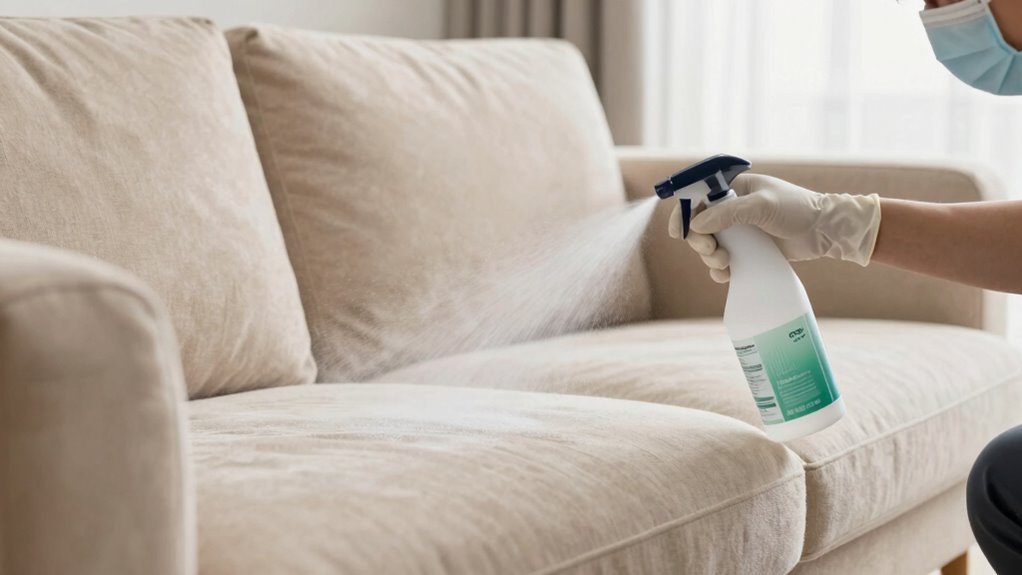

To safely remove odors from your couches and chairs, choose gentle, upholstery-specific cleaners that won’t damage fabrics. Treat stains promptly with enzyme-based or mild detergents, and blot instead of rubbing. Use a soft cloth or brush carefully, avoiding too much water. Air out your furniture and sprinkle baking soda for persistent smells. Following proper cleaning and odor control techniques guarantees your furniture stays fresh and inviting—more tips will help you get the best results.
Key Takeaways
- Use gentle, upholstery-safe cleaners specifically formulated for furniture to effectively eliminate odors without damage.
- Treat stains promptly with enzyme-based or mild detergent solutions to target odor-causing organic residues.
- Minimize over-wetting and thoroughly rinse cleaned areas to prevent mold, mildew, and residual odors.
- Air out furniture by opening windows and using fans, and consider baking soda for natural odor absorption.
- Follow proper drying and maintenance practices to preserve fabric integrity and maintain a fresh, odor-free environment.
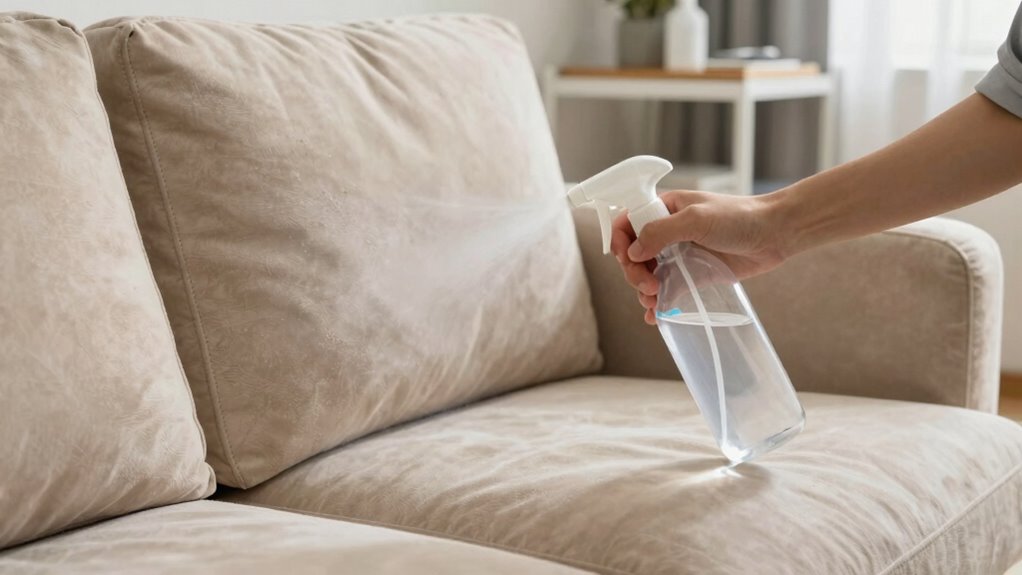
Over time, upholstery can develop unpleasant odors from spills, pet accidents, or everyday use, making your furniture feel less inviting. These smells can linger and become more stubborn if not addressed properly. The good news is that you can effectively remove odors without resorting to harsh chemicals—using the right techniques and products makes all the difference. The first step is choosing the correct detergent, which plays a vital role in both odor elimination and stain treatment. You want a gentle, upholstery-safe cleaner that can break down odors without damaging the fabric. Look for detergents formulated specifically for furniture or delicate fabrics, and avoid anything too harsh or overly fragrant, as these can sometimes trap odors rather than eliminate them.
Choose a gentle, upholstery-safe cleaner to effectively remove odors and stains without damaging your furniture.
Before applying any cleaner, it’s essential to treat stains promptly. Stain treatment involves targeting the root cause of the odor, especially if it’s linked to spills or pet accidents. Blot the affected area with a clean cloth to absorb as much of the spill as possible—never rub, as that can spread the stain and embed it deeper into the fibers. Once you’ve blotted out the excess, apply a stain remover or a mixture of mild detergent and water directly to the spot. For pet accidents, enzyme-based cleaners work best because they break down organic compounds that cause odor. Always test your stain treatment on a small, inconspicuous area first to ensure it won’t discolor or damage the fabric.
After treating the stain, you can proceed with cleaning the entire surface. Use a clean cloth or a soft brush dipped in your chosen detergent solution to gently scrub the upholstery. Work in small sections, focusing on areas with visible stains or odors, and avoid over-wetting the fabric. It’s best to use a minimal amount of water—excess moisture can lead to mold or mildew, which only worsens odors. Once cleaned, rinse the area with a damp cloth to remove any leftover soap residue. Proper rinsing helps prevent soap buildup, which can trap dirt and odors over time. Additionally, consider local automation options such as smart cleaning devices or odor-neutralizing gadgets that can enhance your cleaning routine and help maintain freshness longer.
Finally, guarantee thorough drying by allowing your furniture to air out completely. Open windows, turn on fans, or use a dehumidifier if needed. For stubborn odors, consider sprinkling baking soda over the fabric once it’s dry, then vacuuming it up after a few hours. Baking soda is a natural deodorizer that absorbs persistent smells. By carefully selecting your detergent, treating stains promptly, and following proper cleaning steps, you can restore your upholstery’s freshness safely and effectively, making your furniture inviting once again.
Frequently Asked Questions
Can I Remove Upholstery Odors Without Professional Help?
Yes, you can remove upholstery odors without professional help using DIY techniques and household items. Start by sprinkling baking soda over your furniture and let it sit for a few hours to absorb odors. Then, vacuum thoroughly. You can also use a mixture of equal parts water and white vinegar in a spray bottle to neutralize smells. These simple methods are safe, effective, and cost-efficient for freshening up your couches and chairs.
How Long Does It Take for Upholstery to Dry After Cleaning?
Think of drying your upholstery as waiting for a flower to bloom—you need patience. Typically, it takes 4 to 8 hours for your fabric to dry completely after cleaning. Factors like fabric absorption, humidity, and ventilation influence drying time. To speed things up, make sure good airflow and avoid using the furniture until it’s thoroughly dry. Proper drying prevents mold and keeps your furniture fresh and inviting.
Are Natural Remedies Safe for All Types of Upholstery?
Natural remedies are generally safe for most upholstery types because they use natural ingredients, reducing chemical safety concerns. However, you should always check the manufacturer’s instructions or test a small, hidden area first to avoid potential damage. While natural ingredients can effectively remove odors and stains, some delicate fabrics may still require professional cleaning. Always prioritize safety and follow guidelines to ensure your upholstery stays clean and undamaged.
Will Odor Removal Products Damage Fabric or Discolor Furniture?
Think of odor removal products as a gentle rain—if used properly, they won’t harm your fabric dyes or leave stains. When you follow instructions and choose products formulated for upholstery, cleaning chemicals won’t damage your furniture. However, aggressive chemicals can strip colors or weaken fabric fibers, so always test in a hidden spot first. Proper care guarantees your couch stays vibrant and fresh without any unintended damage.
How Often Should I Clean My Upholstery to Prevent Odors?
You should clean your upholstery every 6 to 12 months to prevent odors effectively. Regular cleaning, based on your household’s activity level, helps maintain freshness and reduces the buildup of dirt and moisture that cause odors. Consistent cleaning frequency is key to odor prevention, especially if you have pets or allergies. By sticking to this schedule, you’ll keep your furniture smelling clean and fresh longer.
Conclusion
Now that you know the safe way to banish upholstery odors, your couch and chairs will breathe easy again, like fresh blooms after a storm. With these simple tricks, you’re the gardener of your home’s air quality, tending to every fabric with care. Say goodbye to stubborn smells and hello to a space that invites relaxation and comfort. Your furniture will shine brighter than a sunbeam, ready to welcome you with open arms.