
Towels turn sour faster if you don’t rinse away detergent residues, which trap bacteria and mold, creating a breeding ground. Using too much detergent or not drying towels thoroughly leaves dampness and buildup that promote sour odors. Rough fibers or fabric softeners can trap dirt and moisture, speeding up the smell. Proper washing, drying, and maintaining your machine are key. Keep going, and you’ll discover simple tips to keep your towels fresh longer.
Key Takeaways
- Residual laundry detergents and softeners create environments that trap bacteria and mold, leading to sour odors.
- Damp, improperly dried towels foster bacterial and mold growth, accelerating sour smell development.
- Frequent washing in hot water can damage fibers, making towels more prone to odor retention.
- Poor ventilation and inadequate drying leave fibers moist, promoting sour smells.
- Lack of regular machine cleaning allows mold and bacteria buildup, transferring odors to towels.
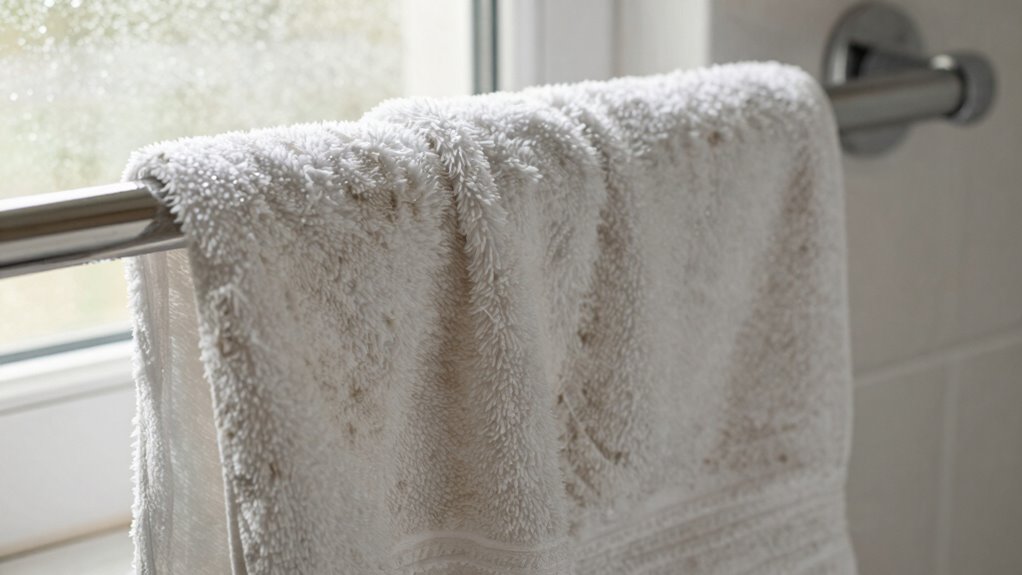
If you’ve noticed that your towels have started to smell sour despite regular washing, you’re not alone. It’s frustrating when you put in the effort to keep your towels clean, only to find that they develop that unpleasant sour odor sooner than expected. The culprit often lies in the way towels are washed and maintained, and understanding this can help you extend their freshness.
One common reason towels turn sour quickly is how they interact with laundry detergents. Many detergents contain additives or leftover residues that, if not rinsed out properly, can trap bacteria and mold in the fibers. Over time, these microorganisms feed on residual detergent and sweat, producing that characteristic sour smell. Using too much detergent or not rinsing thoroughly leaves behind these residues, creating a breeding ground for bacteria. Opting for a high-quality laundry detergent formulated to thoroughly clean fabrics can make a difference. Look for detergents that are free of harsh chemicals or heavy fragrances, which can sometimes contribute to buildup. Additionally, adding a cup of white vinegar during the rinse cycle can help break down detergent residues and restore freshness.
Another factor that accelerates towels turning sour is neglecting fabric softness. Towels with rough or stiff fibers tend to trap more moisture and dirt, making it easier for bacteria to thrive. Fabric softness can be maintained by avoiding fabric softeners that leave a film on fibers, which, ironically, can trap dirt and bacteria. Instead, use natural alternatives like vinegar or specialized fabric softening agents designed to keep fibers plush without compromising cleanliness. Proper drying is equally essential. Make sure your towels are thoroughly dried after each wash, either in a dryer or air-dried in a well-ventilated space. Dampness left in the fibers encourages mold growth, which contributes to the sour smell.
Additionally, washing towels too frequently in hot water can damage their fibers, reducing their ability to repel moisture and harbor bacteria. Conversely, washing in cold water might not be effective enough to eliminate all bacteria, especially if you’re dealing with heavily soiled towels. Striking the right balance—using warm water combined with the right laundry detergent and proper drying—can keep your towels fresher longer. Regularly cleaning your washing machine can also prevent mold and bacteria buildup that may transfer onto your towels and further contribute to sour odors.
In essence, preventing towels from turning sour involves mindful laundry habits. Choosing the right laundry detergents, avoiding unnecessary fabric softeners, ensuring thorough rinsing and drying, and maintaining fabric softness all play essential roles. When you pay attention to these details, you’ll find that your towels stay cleaner, softer, and smelling fresh far longer than you’d expect.

ARM & HAMMER Sensitive Skin Free & Clear Liquid Laundry Detergent, 105 fl oz, 105 Loads
- Bottle Size: 105 fl oz for 105 loads
- Gentle on Skin: Dermatologist-tested and hypoallergenic
- Free & Clear: No dyes, perfumes, or preservatives
As an affiliate, we earn on qualifying purchases.
As an affiliate, we earn on qualifying purchases.
Frequently Asked Questions
Can Washing Towels With Fabric Softener Cause Sour Smell?
Yes, washing towels with fabric softener can cause a sour smell. Fabric softeners leave a residue that traps moisture and bacteria, leading to unpleasant odors. Using harsh laundry detergents or not rinsing towels thoroughly can also contribute. To prevent this, avoid fabric softeners and guarantee proper towel storage in a dry, well-ventilated area. Regularly washing towels with the right detergent helps keep them fresh and odor-free.
How Does Towel Material Affect Odor Retention?
Your towel material considerably affects odor retention. Towel weaving made from cotton, especially low-quality or tightly woven fabrics, tends to trap moisture and bacteria, leading to sour smells. Additionally, color retention can influence odor buildup; faded or poorly dyed towels may harbor more bacteria. To prevent odors, choose high-quality, well-woven towels, wash them thoroughly, and avoid fabric softeners that can weaken fibers and trap odors.
Does Hard Water Contribute to Towels Turning Sour?
Think of your towel as a garden that flourishes with the right care. Hard water, rich in mineralization, acts like a stubborn weed, encouraging sour odors by causing pH imbalances. This mineral buildup creates a perfect environment for bacteria to thrive, making your towels turn sour faster. To prevent this, use water softeners or vinegar during washing, helping maintain a balanced pH and keeping your towels fresh longer.
Can Soaking Towels in Vinegar Prevent Sour Odors?
Soaking towels in vinegar can help prevent sour odors by breaking down bacteria and residue that cause unpleasant smells. Use a solution of one cup vinegar in warm water, and soak your towels for about 30 minutes before washing. This process enhances the effectiveness of your laundry detergents and keeps towels fresh longer. Proper towel storage, like keeping them dry and well-ventilated, also plays an essential role in avoiding sour odors.
How Often Should I Replace My Towels to Avoid Sourness?
Your towels are like delicate blooms that need fresh air to thrive. Replace them every 3-4 years or after about 50 washings to prevent sourness. Laundering frequency matters—wash towels weekly to keep odors at bay. Proper towel storage also plays a role; keep them in a dry, well-ventilated space to avoid dampness that causes sour smells. Regular replacement and good storage habits keep your towels fresh and inviting.
Conclusion
So, next time your towel turns sour faster than you expected, remember there might be more at play than just neglect. Could that lingering smell hint at unseen bacteria or improper drying? Don’t wait until it’s too late—your towel’s story might be revealing a hidden secret. Stay curious, stay vigilant, and uncover what’s really lurking in your linen closet before it’s too late. The truth about your towels might surprise you.