Steam cleaning effectively kills many germs, bacteria, and dust mites by using high temperatures, making surfaces more hygienic. However, it doesn’t eliminate all viruses, especially those with protective coatings, or fully sanitize porous materials like fabrics and carpets. While great for cleaning grime and grease, steam isn’t a complete disinfectant for biological hazards like blood or bodily fluids. To learn the full truth about what steam kills and what it doesn’t, keep exploring this topic.
Key Takeaways
- High-temperature steam kills many germs, bacteria, and dust mites on contact, but may not eliminate all viruses or spores.
- Steam effectively removes dirt, grease, and soap scum but is limited in disinfecting porous surfaces like fabrics and carpets.
- Not all pathogens, especially some viruses with protective coatings, are fully eradicated by steam cleaning alone.
- Proper ventilation, protective gear, and adherence to manufacturer instructions are essential for safe and effective steam use.
- Steam cleaning is a supplementary cleaning method; it does not replace traditional disinfectants for complete sanitation.
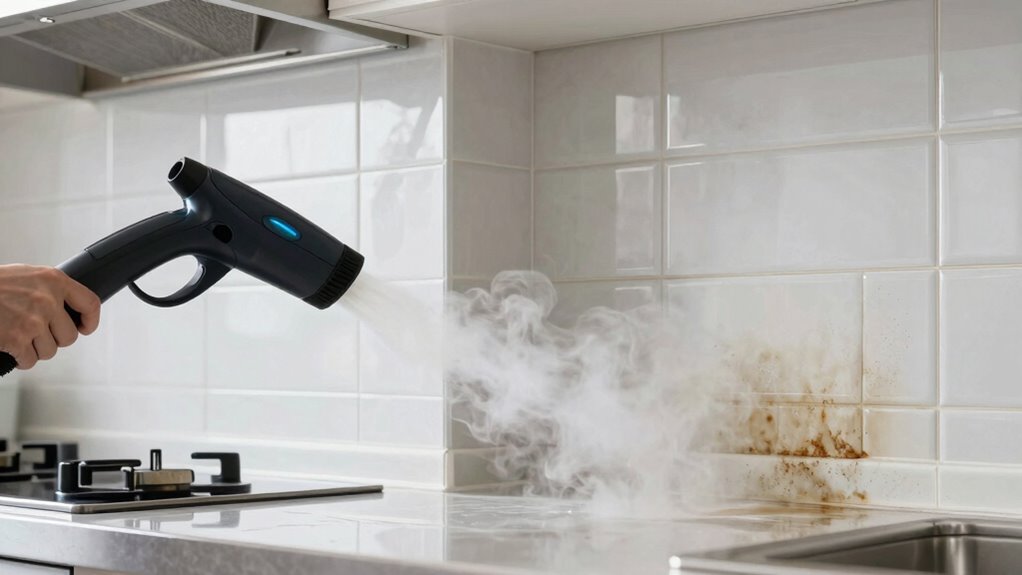
Steam cleaning has become a popular method for deep cleaning and sanitizing various surfaces, but there’s more to it than just spraying hot vapor. When you opt for steam cleaning, you’re choosing a technique that’s often eco friendly benefits, offering a greener alternative to chemical cleaners. By using just water turned into steam, you reduce the need for harsh chemicals that can harm the environment and your indoor air quality. This method minimizes chemical residues, making it a safer choice for households with children or pets. However, even with these advantages, safety precautions are essential. You need to handle the equipment carefully to prevent burns from the hot steam and ensure proper ventilation to avoid moisture buildup, which can lead to mold growth. Always read the manufacturer’s instructions and wear protective gear like gloves and goggles when operating a steam cleaner.
You might think that steam cleaning kills everything, but that’s not entirely accurate. It’s effective at eliminating many germs, bacteria, and dust mites on surfaces like tiles, countertops, and sealed hardwood floors. The high temperature of the steam can destroy these microbes on contact, providing a more hygienic environment. However, steam doesn’t eradicate all types of pathogens. Viruses, especially those with protective coatings, aren’t always fully eliminated by steam alone. Also, porous surfaces such as fabric upholstery or carpets aren’t guaranteed to be sanitized just with steam, since the heat doesn’t penetrate deeply enough. For these surfaces, you may need additional cleaning methods or chemicals to ensure complete disinfection. Proper surface porosity understanding is crucial for effective cleaning strategies.
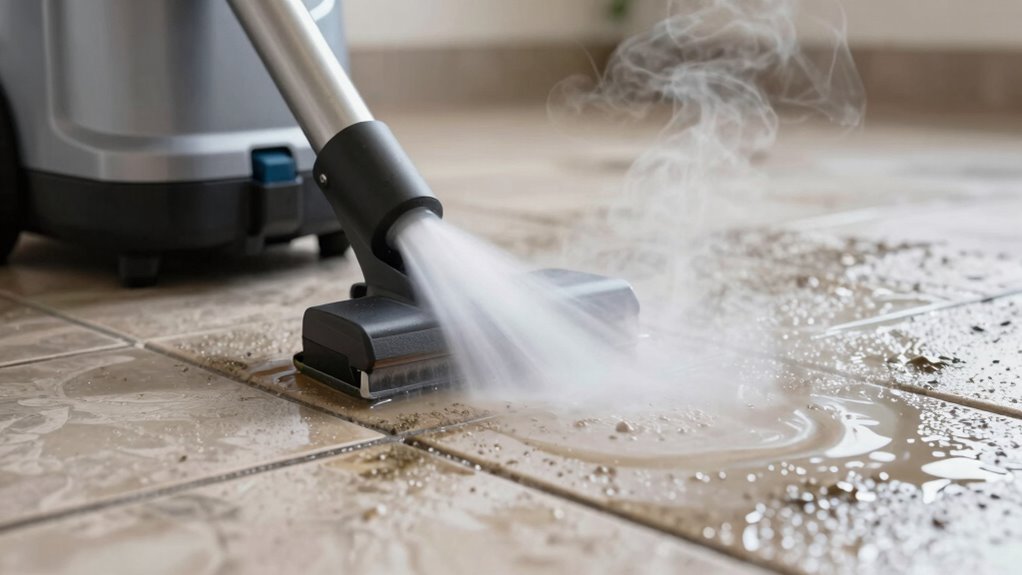
Additionally, steam cleaning is excellent for removing grime, grease, and soap scum from surfaces like bathroom tiles, kitchen counters, and appliances. It loosens dirt effectively without the need for scrubbing or chemical cleaners. But keep in mind, steam doesn’t replace all cleaning routines. It’s not a magic solution for mold removal in porous materials or for disinfecting areas contaminated with biological hazards like blood or bodily fluids. For such purposes, more specialized cleaning procedures are necessary.
Frequently Asked Questions
Can Steam Cleaning Remove All Types of Stains Permanently?
Steam cleaning can’t remove all types of stains permanently, especially deep stains or those with chemical residues. While it’s effective for surface dirt and some bacteria, it often doesn’t fully eliminate stubborn or old stains. You might need specialized cleaning solutions or methods for deep stain removal. Keep in mind, steam cleaning is a great supplement but not a universal fix for every stain.
Is Steam Cleaning Effective Against Bed Bugs and Fleas?
It’s a case of killing two birds with one stone—steam cleaning can be effective against bed bugs and fleas if done correctly. The high heat penetrates mattresses, furniture, and carpets, aiding in bed bug eradication and flea control. However, it’s not a guaranteed fix for all infestations. For best results, combine steam cleaning with other methods like vacuuming and treatment sprays to ensure these pests are truly gone.
How Safe Is Steam Cleaning for Children and Pets?
Steam cleaning is generally safe for children and pets because it’s a chemical-free cleaning method that eliminates many allergens and germs without toxic residues. You can confidently use it to disinfect your home, but make sure to keep the steamer moving to avoid burns. Prioritizing pet safety, always supervise your pets around the equipment and ensure the area is cool before allowing children or pets back in.
Does Steam Cleaning Eliminate Mold Completely?
Like a modern-day hero, steam cleaning can markedly aid mold removal and surface sterilization, but it doesn’t guarantee complete elimination. It kills mold on surfaces and reduces spores, yet stubborn or hidden mold behind walls might persist. To truly eliminate mold, you may need additional treatments or professional removal. Relying solely on steam cleaning might leave some mold spores behind, so consider it a valuable part of your cleaning arsenal, not the sole solution.
Can Steam Cleaning Be Used on Delicate or Antique Surfaces?
Yes, you can use steam cleaning on delicate surfaces and for antique preservation, but with caution. Make sure to use a low-temperature setting and gentle pressure to avoid damage. Test a small, inconspicuous area first to confirm it won’t harm the surface. Steam cleaning can be effective for cleaning delicate and antique items, but always prioritize gentle methods to preserve their integrity and avoid any unintended harm.
Conclusion
Steam cleaning is a powerful tool, but it’s not a miracle cure. While it kills 99.9% of germs and bacteria on contact, it doesn’t eliminate all allergens or deep-seated dirt. Did you know that a study found steam cleaning can reduce airborne bacteria by up to 80%? So, use it wisely—combine it with other cleaning methods for the best results. Keep your space sanitized and fresh without relying solely on steam!