
You might think a HEPA vacuum’s high filtration rating is enough to guarantee cleaner air, but without a sealed design, even top filters can fall short. A sealed system prevents leaks that let unfiltered air escape, keeping dust, allergens, and pollutants contained. Proper sealing around the filter and components ensures consistent performance and maintains airflow. If you want to maximize your vacuum’s efficiency and protect your indoor air quality, understanding the importance of a sealed design will reveal more.
Key Takeaways
- Sealed design prevents air leaks, ensuring particles stay trapped, unlike filtration efficiency alone.
- Proper sealing maintains airflow, suction power, and consistent filtration over time.
- Airtight components protect sensitive filters and improve overall device reliability.
- Sealed systems are especially beneficial for allergy and asthma sufferers by containing pollutants.
- Investing in a sealed vacuum ensures better environmental cleanliness and longer-lasting performance.

When choosing a HEPA vacuum, it’s tempting to focus on flashy marketing claims about filtration efficiency. Companies often highlight how their filters trap 99.97% of particles, but that number alone doesn’t tell the whole story. What truly matters is how well the vacuum prevents those tiny particles from escaping back into the air you breathe. This is where sealed design becomes crucial. A vacuum with a sealed system ensures that air flows directly through the HEPA filter without leaks, so dust, allergens, and other pollutants don’t bypass the filter at any point. If the system isn’t sealed, even the most advanced filter won’t deliver on its promise, because contaminated air can escape through gaps or openings.
You might think that a high-efficiency filter alone guarantees cleaner air, but without proper sealing, your vacuum could be doing more harm than good. Air filtration isn’t just about capturing particles; it’s about ensuring that particles stay trapped until they’re safely contained. A sealed design guarantees this by preventing leaks that would allow allergens and dust mites to escape back into your home. This is especially essential if you or someone in your household suffers from allergies or asthma. For allergy relief, a vacuum with a sealed system offers a significant advantage by ensuring the air you breathe remains as free of irritants as possible.
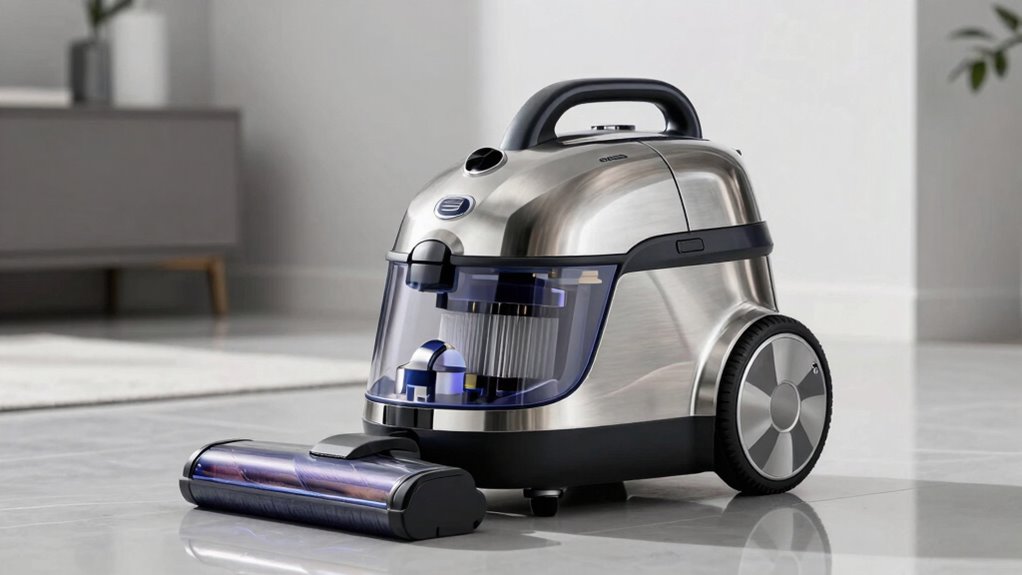
Additionally, the effectiveness of a HEPA vacuum is closely tied to the airtight construction of its components, which plays a vital role in maintaining filtration integrity. You should also pay attention to the construction of the vacuum itself. A sealed HEPA vacuum typically features airtight compartments and gaskets that prevent unfiltered air from bypassing the filter. It’s not enough to just have a HEPA filter; the entire airflow path must be airtight. This means choosing a model with a proper seal around the filter and the dustbin or bag compartment. Proper airflow management is essential for maintaining consistent filtration performance over time, especially with frequent use. When you switch from one vacuum to another, you’ll notice that sealed models tend to be more reliable in maintaining consistent air filtration performance over time.
In addition, airtight design also helps in reducing the loss of suction power, ensuring the vacuum performs efficiently for longer periods without needing maintenance. When you prioritize sealed construction, you’re investing in a cleaner environment and a more reliable device.

Shark Navigator Lift-Away Vacuum, HEPA, Carpet and Pet Hair, Blue, NV360
- Powerful Suction: Effective on carpets and hard floors
- Lift-Away Functionality: Detachable pod for above-floor cleaning
- Pet Hair Removal: Specialized tools for pet hair cleanup
As an affiliate, we earn on qualifying purchases.
As an affiliate, we earn on qualifying purchases.
Frequently Asked Questions
How Does a Sealed Design Improve HEPA Vacuum Filtration?
A sealed design improves HEPA vacuum filtration by preventing air leaks, ensuring all air passes through the filter for maximum filtration efficiency. You’ll notice better air quality because contaminants stay trapped inside, rather than escaping back into the room. This airtight setup guarantees that allergens and dust particles are effectively removed, giving you cleaner air and a healthier environment. Sealed designs truly enhance your vacuum’s performance and your indoor air quality.
Can a Non-Sealed HEPA Vacuum Still Be Effective?
Think of a non-sealed HEPA vacuum as a sieve with holes—airflow restrictions let dust sneak past, reducing effectiveness. While it can still clean, its filter durability takes a hit, and airborne particles might escape. Without a sealed design, tiny leaks allow contaminants to bypass the filter, lowering overall performance. So, yes, it can work, but sealing keeps your vacuum performing at its best, trapping more and lasting longer.
What Are Common Signs of a Compromised Sealed Vacuum?
You’ll notice airflow restrictions or a sudden drop in suction, which are common signs of a compromised sealed vacuum. Seal deterioration often causes dust and allergens to escape, reducing effectiveness and potentially worsening air quality. If you see dust around the seals, hear whistling sounds, or notice increased noise or difficulty in vacuuming, these are indicators that the sealed design is compromised and needs inspection or repair.
How Often Should the Seals on a HEPA Vacuum Be Replaced?
Like tuning your vintage radio, maintaining your HEPA vacuum’s seals is essential. You should replace the seals every 1-2 years, depending on usage and seal durability. Regular inspections help identify wear or damage early, ensuring peak filtration. Neglecting seal replacement can compromise your vacuum’s performance and air quality. Stay proactive, and you’ll keep your vacuum running efficiently and your indoor air healthier—just like a well-maintuned antique.
Does Sealed Design Affect Vacuum Maintenance and Cleaning?
Yes, a sealed design directly impacts vacuum maintenance and cleaning. It enhances filter durability by preventing dust from bypassing, which extends the lifespan of filters and reduces replacements. Additionally, a sealed structure boosts user convenience because it minimizes leaks and guarantees consistent suction power. This means you spend less time troubleshooting and more time enjoying a cleaner environment, making sealed design a smart feature for long-term maintenance and efficient cleaning.
Conclusion
Ultimately, choosing a HEPA vacuum with a sealed design guarantees you’re truly protecting your indoor air quality. Imagine someone with allergies relying on a vacuum that claims to be HEPA but leaks dust and allergens—you’re just wasting your money. Instead, invest in a sealed model, like the one Emily used, which kept her allergy symptoms at bay. Remember, it’s not just marketing—it’s your health on the line. Prioritize sealing for genuine clean air.