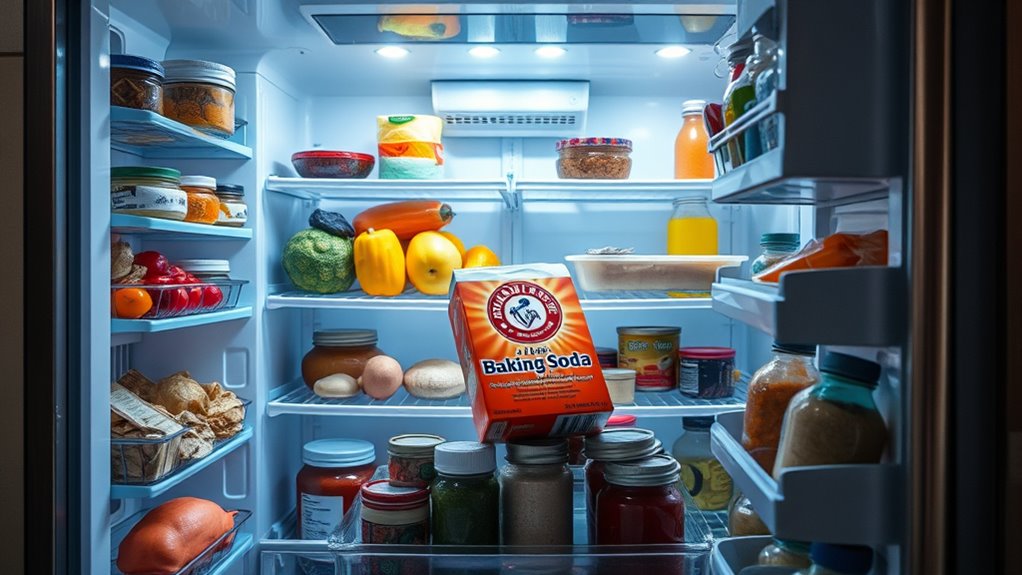

Refrigerator odors often stem from spoiled food, spills, or mold hidden behind shelves and under drawers. Poor ventilation and overcrowding trap these smells, while old or expired items release foul gases. Dirty containers and improper storage worsen the problem. Mold and bacteria grow in damp areas, amplifying odors. Regular cleaning, removing spoiled items, and ensuring good airflow can help eliminate these smells. If you want to learn effective strategies to banish fridge odors for good, keep going.

Get oils, diffusers and self-care delivered free with Prime
- Fast, free delivery on millions of items
- Prime Video, Amazon Music and more included
- Member-only deals all year
Key Takeaways
- Spoiled or strong-smelling foods release gases that cause persistent refrigerator odors if not promptly discarded.
- Spills and leaks, especially behind shelves or under drawers, promote mold and bacteria growth, leading to foul smells.
- Mold, mildew, and bacteria thrive in damp, hidden areas, emitting musty or sour odors over time.
- Poor ventilation and overcrowding trap stale air and odors, worsening smell buildup inside the fridge.
- Regular cleaning, proper food storage, and inspection of hidden spots prevent odor-causing mold, spills, and bacterial growth.
As an affiliate, we earn on qualifying purchases.
Common Food Culprits Behind Refrigerator Odors

Certain foods are more likely to cause refrigerator odors than others. Strong-smelling leftovers, like fish or cheese, can quickly fill your fridge with unpleasant scents if left too long. Fruits such as berries and melons release natural sugars and acids that contribute to odor buildup. Cooked foods, especially those with garlic, onions, or spices, emit potent smells that linger if not stored properly. Dairy products like sour milk or yogurt can develop strong odors when they spoil. Processed meats, like sausages or deli meats, often have preservatives and flavors that intensify smell issues. Vegetables like cabbage or broccoli release sulfur compounds, which can create pungent aromas. Keeping these foods covered and consuming them promptly helps prevent odors from spreading throughout your fridge. Using proper storage techniques, such as airtight containers, can also help minimize odor escape and maintain a fresh environment inside your refrigerator.
How Spills and Leaks Contribute to Unpleasant Smells
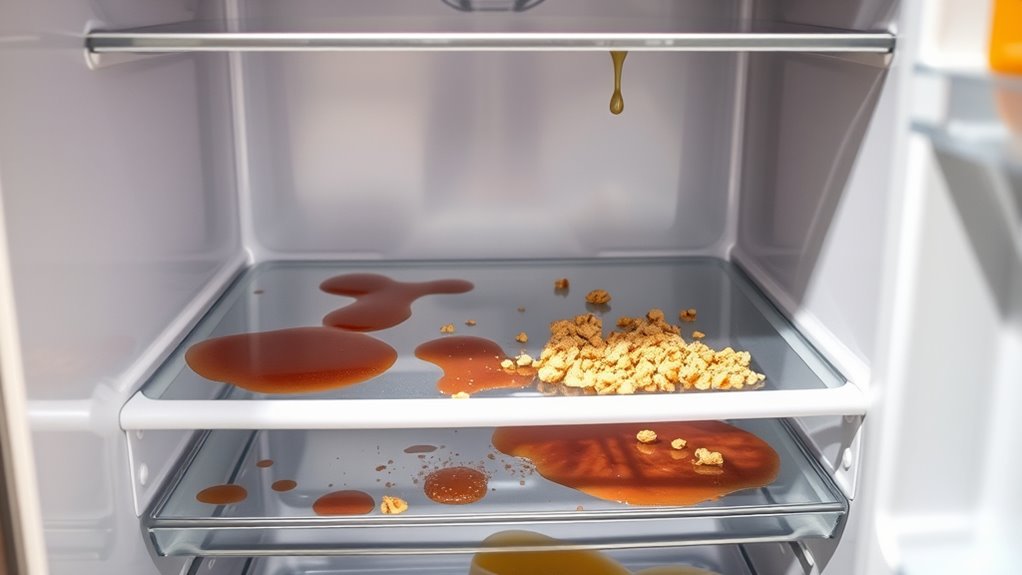
When spills and leaks happen, they often leave behind hidden residues that can cause unpleasant odors. These wet spots create the perfect environment for mold growth, which worsens the smell over time. Without cleaning up promptly, these persistent sources can make your refrigerator smell much worse. Additionally, if a spill occurs near electronic components, it could potentially lead to cybersecurity vulnerabilities, emphasizing the importance of thorough cleaning to prevent hidden damages.
Hidden Spill Residues
Hidden spill residues are often the main culprits behind persistent refrigerator odors, even when spills seem clean on the surface. These residues cling to shelves, drawers, and crevices, releasing foul smells over time. They can be difficult to spot because they’re hidden beneath or behind items, making regular cleaning insufficient. To tackle this, you should:
- Remove all food and shelves for a thorough wipe-down
- Use warm, soapy water or vinegar to break down residues
- Check corners, gaskets, and seals where spills hide
- Use a flashlight to spot hidden spots
- Dry all surfaces completely before restocking
- Consider using secure payment processing options to ensure safe transactions while shopping for cleaning supplies.
Mold Growth Risk
Leaks and spills that go unnoticed can create the perfect environment for mold to grow, which often leads to persistent and unpleasant odors in your refrigerator. Mold thrives in damp, dark areas where organic matter is present, making spills an ideal breeding ground. When liquids leak onto shelves or drip behind panels, moisture settles into cracks and crevices, providing mold spores with the moisture they need to develop. Over time, this mold releases musty odors that seep into your food and air, making your fridge smell bad even after cleaning. To prevent mold growth, it’s essential to promptly clean up spills, dry affected areas thoroughly, and ensure proper ventilation. Regular inspections help catch leaks early before mold has a chance to establish itself. Additionally, maintaining proper refrigerator hygiene can significantly reduce the risk of mold and odors.
Persistent Odor Sources
Spills and leaks that go unnoticed can quickly become persistent odor sources in your refrigerator. When liquids seep into cracks or under shelves, they create an environment for bacteria and mold to thrive, causing unpleasant smells. Over time, these odors embed deep into surfaces, making them hard to eliminate. To prevent this, regularly check for and clean up spills immediately. Also, be mindful of leaks from spoiled or broken containers. Use airtight storage to contain odors and prevent them from spreading. Here are common sources of persistent odors:
- Spilled liquids or food residues
- Leaking containers or bottles
- Moldy leftovers hidden in crisper drawers
- Crumbs trapped under shelves
- Rotten produce hiding behind other items
Proper cleaning and maintenance can reduce nutrient retention loss and help keep odors at bay. Addressing spills promptly and maintaining cleanliness keeps odors at bay and preserves a fresh-smelling fridge.
The Role of Mold and Bacteria in Creating Odors

Mold and bacteria are primary culprits in producing unpleasant odors inside your refrigerator. They thrive on food residues, spills, and damp surfaces, releasing foul-smelling compounds as they grow. Mold often appears as fuzzy patches, especially on forgotten produce or spills left uncleaned. Bacteria, on the other hand, break down organic matter, emitting strong, sour, or rotten odors. These microorganisms multiply rapidly in moist environments, making your fridge a breeding ground if not properly maintained. When mold and bacteria proliferate, their odors can permeate stored foods, causing persistent foul smells. Regular cleaning, drying, and proper food storage are essential to prevent microbial growth. Understanding the impact of contrast ratio helps in recognizing how image quality can be affected by microbial buildup, emphasizing the importance of cleanliness in maintaining optimal conditions. Eliminating mold and bacteria from your fridge not only stops odors but also promotes a healthier environment inside your appliance.
Impact of Old or Expired Food Items
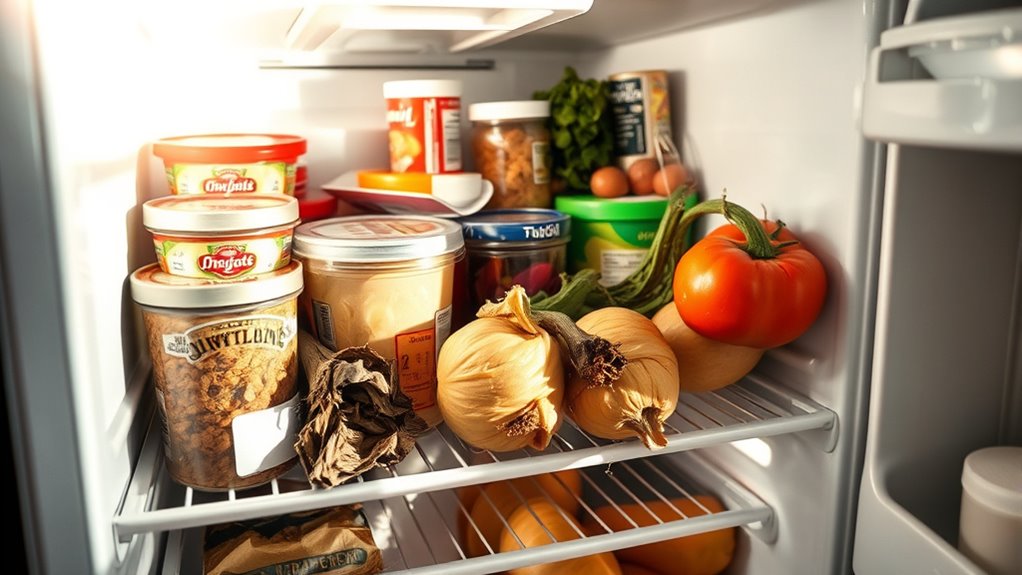
Old or expired food items are a common source of persistent refrigerator odors because they release foul-smelling gases as they spoil. These gases spread throughout your fridge, making it smell unpleasant and difficult to eliminate. When food sits too long, bacteria and mold break it down, producing strong odors that linger. To prevent this, regularly check expiration dates and discard spoiled items promptly. Monitoring smartphone usage and engaging in digital literacy programs can also encourage better organization and awareness of food storage habits.
You can also:
- Remove anything that’s clearly spoiled or moldy
- Clean out expired leftovers or produce
- Use airtight containers for storing perishable foods
- Keep an eye on dairy and meat products
- Regularly inspect for hidden spoilage behind other items
Staying vigilant about old food helps keep your fridge fresh and odor-free.
Improper Storage and Container Issues

Improper storage practices and faulty containers are common causes of refrigerator odors because they allow moisture, leaks, and bacteria to flourish. When you store food in unsealed or damaged containers, odors can seep out and mix with other items, creating a persistent smell. Overpacking the fridge makes it harder for air to circulate, trapping moisture and fostering bacteria growth. Putting warm or uncovered foods directly into the refrigerator introduces excess humidity, increasing the chance of mold and bad odors. To prevent this, always use airtight containers and ensure lids are secure. Store leftovers and perishables properly, and avoid overloading shelves. Keeping your fridge organized and sealed reduces moisture buildup, preventing odors from developing and keeping your appliance smelling fresh. Additionally, understanding how electric bike components work can help you identify potential sources of moisture and leaks that contribute to odors.
The Effect of Poor Ventilation and Air Circulation

Poor ventilation and inadequate air circulation in your refrigerator can markedly contribute to lingering odors. When air isn’t flowing properly, smells become trapped and intensify over time. Stale air allows bacteria and mold to thrive, worsening the smell. To prevent this, ensure your fridge has proper airflow. You can do this by:
- Regularly cleaning vents and fans
- Avoiding overcrowding shelves
- Using open containers for strong-smelling foods
- Keeping the door closed during long absences
- Placing an open box of baking soda to absorb odors
- Ensuring the air circulation system is functioning properly and not blocked
Good air circulation helps odors dissipate faster and keeps your fridge smelling fresh. Proper ventilation also slows down spoilage, preserving your food’s quality. Taking these simple steps improves odor control and maintains a cleaner, more pleasant fridge environment.
Signs of Hidden or Hard-to-Spot Odor Sources
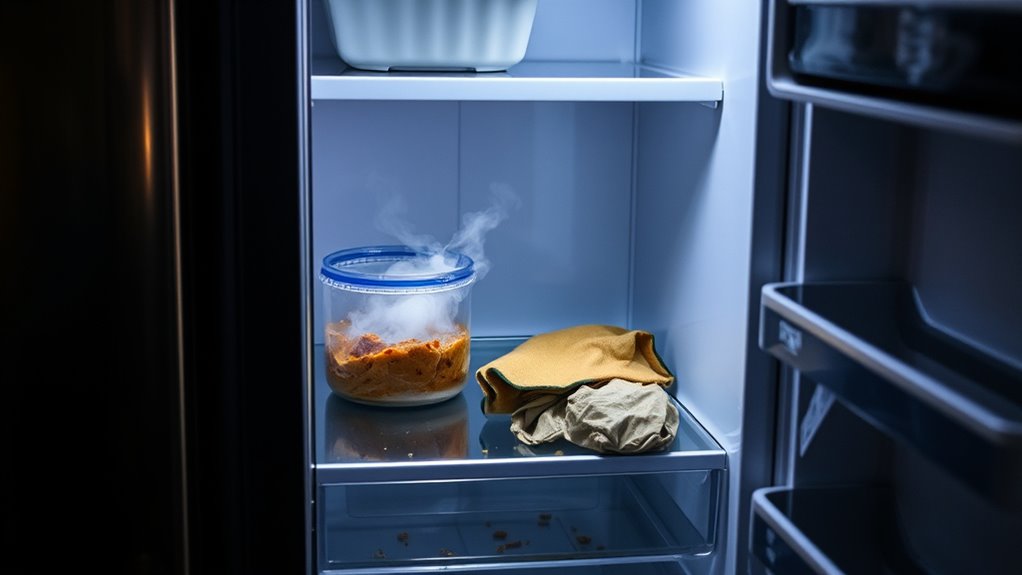
You might have hidden spills or leaks that you don’t see but still cause odors. Mold and mildew can grow in places you can’t easily spot, silently contributing to the smell. Recognizing these hidden sources helps you eliminate odors more effectively. Using proper cleaning techniques and inspecting inaccessible areas can prevent mold buildup and lingering odors.
Unseen Spills and Leaks
Hidden spills and leaks can quietly cause unpleasant odors in your refrigerator without immediately obvious signs. Even small drips from spoiled produce or unnoticed liquid spills can seep into crevices, creating a lingering smell. These leaks often go unnoticed because they’re hidden behind shelves or beneath drawers. To identify them, look for:
- Sticky or damp spots on shelves or walls
- Mold or discoloration around seals or seams
- Unexplained dampness on drawers or bins
- Foul smell near the back of the fridge
- Small puddles or crusty residue that might be missed
Regularly check behind and under shelves, clean spills immediately, and inspect seals and drip pans. Detecting these hidden sources early prevents odors from spreading and keeps your fridge fresh.
Hidden Mold and Mildew
Mold and mildew often develop in places you can’t see easily, making it difficult to detect their presence until odors become strong. These hidden colonies thrive in dark, damp corners, such as behind shelves, under drawers, or in seals and gaskets. You might not notice any visible signs at first, but musty smells can signal their presence. If you detect a persistent odor despite cleaning visible areas, it’s likely mold or mildew lurking out of sight. Check for any moisture buildup or water leaks, especially around door seals and drip pans. Regularly clean and dry these hidden spots to prevent mold growth. Addressing these unseen sources promptly stops odors from spreading and keeps your refrigerator fresh and safe.
Effective Cleaning and Maintenance Techniques
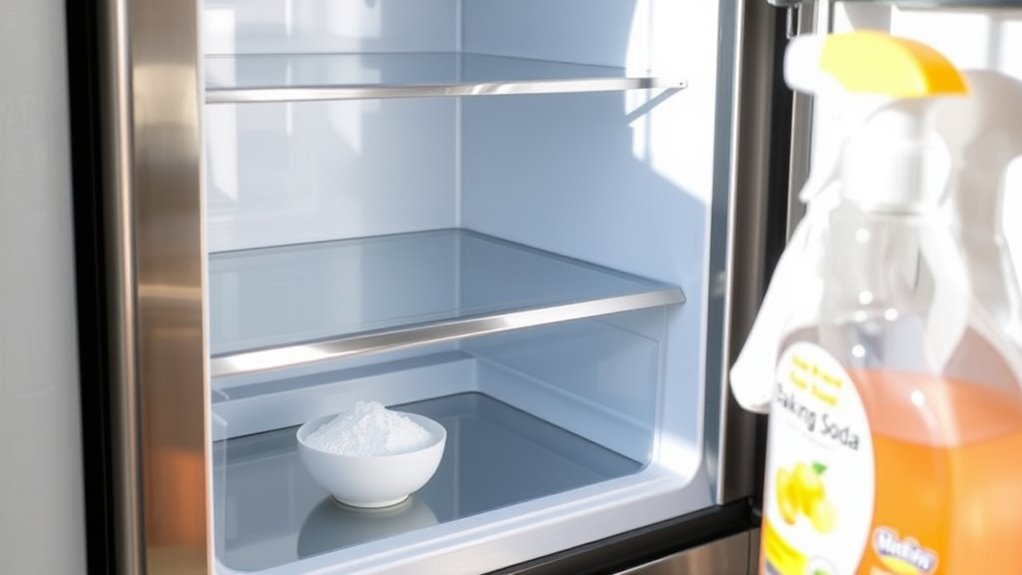
Regular cleaning is essential to keep refrigerator odors at bay, and adopting effective maintenance techniques can make this task easier. Start by regularly checking and discarding expired or spoiled food. Wipe shelves and drawers with a mixture of warm water and mild detergent weekly. Use a soft brush or cloth to clean hard-to-reach spots. Keep vents and drip pans free of debris to prevent mold buildup. Additionally, leave the door slightly open when not in use to prevent stale air. Consider these tips:
- Schedule bi-weekly interior cleanings
- Use baking soda or vinegar for natural deodorizing
- Wipe spills immediately to avoid stains and smells
- Regularly check door seals and gaskets
- Keep an organized fridge to minimize clutter and odors
Consistent upkeep guarantees your fridge stays fresh and odor-free.
Natural and DIY Methods to Neutralize Fridge Odors
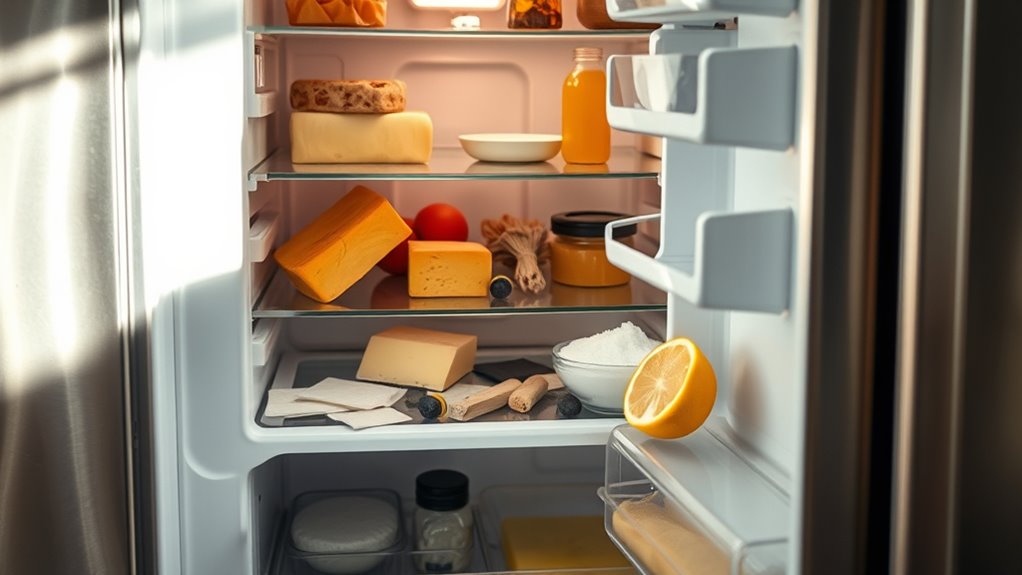
When it comes to neutralizing refrigerator odors naturally, homemade solutions can be highly effective and safe for your family. One simple method is to place a bowl of baking soda inside your fridge; it absorbs lingering smells efficiently. You can also use activated charcoal, which works similarly, by placing small amounts in a breathable bag or container. Another effective DIY trick is to combine white vinegar and water in a spray bottle; spritz inside the fridge to neutralize odors without harsh chemicals. Additionally, placing lemon or other citrus peels can offer a fresh scent while absorbing bad odors. Regularly replacing these natural remedies guarantees your fridge stays fresh. These methods are affordable, eco-friendly, and free from synthetic fragrances, making them excellent choices for maintaining a clean, odor-free refrigerator.
Frequently Asked Questions
How Often Should I Clean My Refrigerator to Prevent Odors?
You should clean your refrigerator at least once every three to four months to prevent odors. Regular cleaning helps remove spoiled food and spills that cause smells. Remember to wipe down shelves, drawers, and door seals with a mild cleaner. Also, check for expired items and toss them. Keeping your fridge tidy not only stops odors but also keeps your food fresh and safe to eat.
Can Certain Foods Cause Long-Lasting or Recurring Smells?
Think of your fridge as a garden; some plants (foods) can spread their scent far and wide. Yes, certain foods like onions, garlic, and strong cheeses can cause long-lasting or recurring smells if you don’t store them properly or clean spills promptly. These odors cling to surfaces and can bloom anew, so always wrap pungent items tightly, clean spills immediately, and do regular deep cleans to keep your fridge smelling fresh.
Do Refrigerator Odor Issues Indicate a Mechanical or Electrical Problem?
If you’re wondering whether odor issues hint at a mechanical or electrical problem, it’s unlikely. Most refrigerator smells come from spoiled or strong-smelling foods, mold, or spills that haven’t been cleaned properly. Mechanical or electrical problems usually cause issues like failure to cool, strange noises, or leaks. So, if your fridge isn’t cooling properly, then you might have a mechanical issue, but odors alone usually point to food or cleaning issues.
How Can I Tell if Mold Is Hidden Behind the Fridge Walls?
You might suspect hidden mold behind your fridge walls if you notice persistent, musty smells even after cleaning. Check for visible signs like discoloration or dampness around the edges and underneath the unit. You can also feel for excess moisture or moldy residues. If odors persist despite cleaning, consider pulling the fridge out to inspect behind the panels or call a professional to assess hidden mold growth.
Are There Commercial Products Specifically Designed to Eliminate Fridge Odors?
Yes, there are commercial products specifically made to eliminate fridge odors. You can find odor absorbers, such as activated charcoal or baking soda-based products, designed to neutralize smells effectively. These products are easy to use; just place them inside your fridge and replace them regularly. Some sprays and gels also work to freshen the air quickly. Always choose products labeled safe for food storage to guarantee safety.
Conclusion
To banish those stubborn fridge odors, think of your fridge as a fresh canvas awaiting your touch. With regular cleaning, smart storage, and natural remedies, you’ll turn that foul smell into a distant memory. Like a gentle breeze clearing storm clouds, your efforts will restore freshness and harmony inside. Keep up this mindful routine, and your fridge will sing with clean, crisp notes, welcoming every new item with a breath of pure, inviting freshness.
Halloween Picks
halloween
As an affiliate, we earn on qualifying purchases.