To determine if an odor comes from air, fabric, or plumbing, pay attention to its pattern and location. If the smell lingers on fabrics or intensifies when touched, it’s likely fabric-based; airing out or washing can help confirm. If the odor smells like rotten eggs or sewage and concentrates near plumbing fixtures or damp spots, it’s probably plumbing-related. Monitoring how the odor changes with environmental shifts can help you pinpoint the source—keep exploring for more tips.
Key Takeaways
- Smell fabrics directly; odors on or near fabrics suggest a fabric source, especially if they diminish after washing.
- Check for persistent odors near plumbing fixtures; sewage or rotten egg smells indicate plumbing issues.
- Observe if the odor intensifies in enclosed spaces or during specific weather, indicating air circulation or infiltration.
- Listen for plumbing sounds like gurgling or dripping; associated odors often stem from plumbing problems.
- Use environmental clues like dampness, stains, or mold to differentiate between fabric, air, and plumbing odor sources.
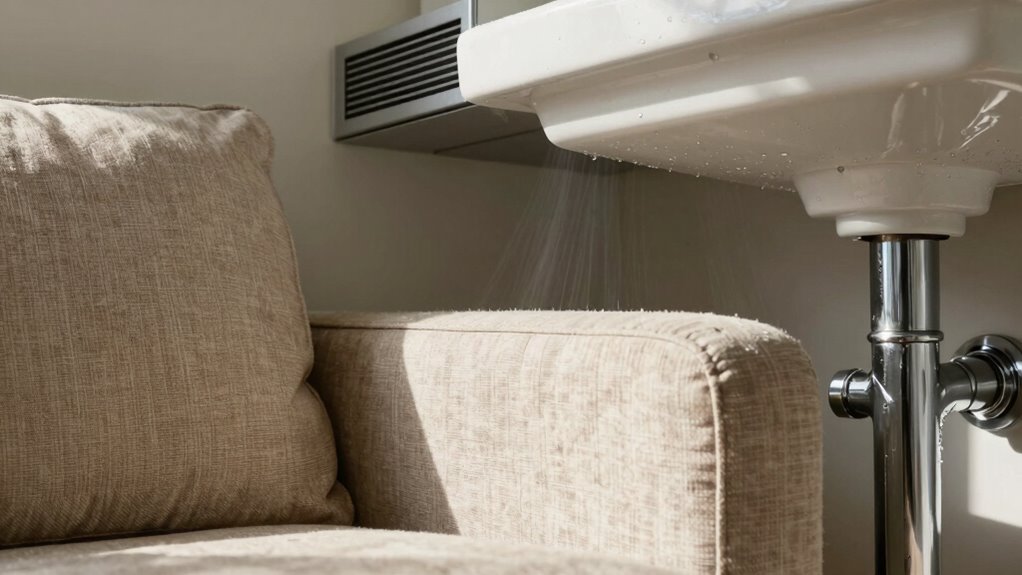
If you notice a strange smell lingering in your home, figuring out where it’s coming from can be tricky. Odor sources can stem from various places—air, fabric, or plumbing—and each has its own clues. To identify the culprit, you need to pay close attention to your detection techniques, which involve observing the smell’s behavior, location, and consistency.
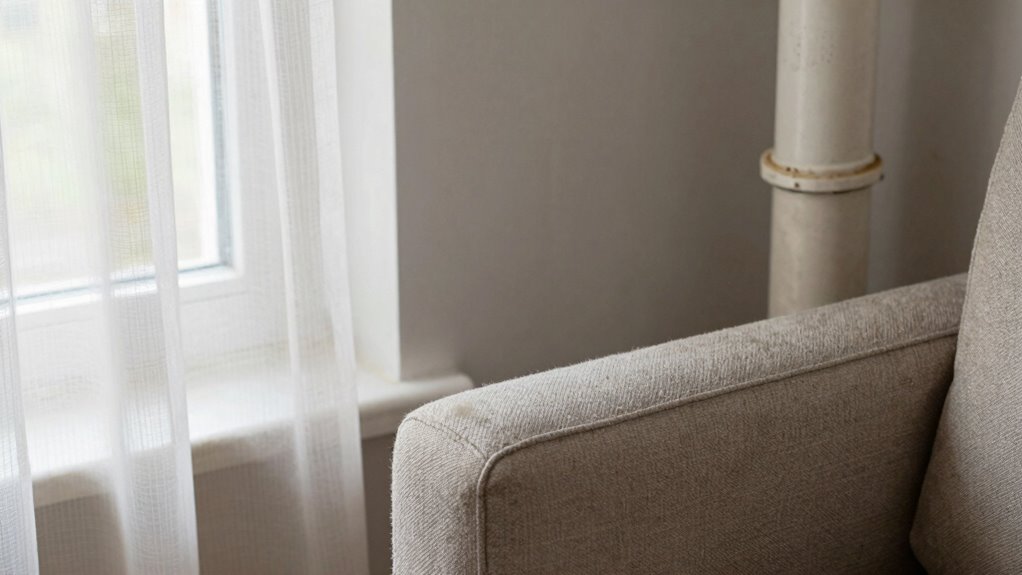
Start by evaluating whether the odor is present in the air or seems to cling to specific objects. If the smell is only noticeable when you’re near certain fabrics—like curtains, upholstery, or clothing—it’s likely coming from the fabric itself. Fabrics can trap odors from smoke, pets, or spills, releasing them when disturbed or heated. In this case, you might notice the smell intensifies when you’re close to or touching these materials. To confirm, try washing or airing out the fabric and see if the odor diminishes. If it does, you’ve probably identified fabric as the source.
Check if the odor only appears near fabrics like curtains or clothing—washing or airing them out can confirm the source.
Next, consider if the smell seems to originate from a particular area or is pervasive throughout your home. An odor that’s concentrated around a specific spot, like a corner or closet, could point toward an issue with plumbing or hidden mold. Plumbing-related odors often smell like rotten eggs or sewage, especially if there’s a leak, clog, or dry trap. Detection techniques here involve listening for sounds of dripping, running water, or gurgling pipes. You can also check for dampness, mold growth, or water stains, which are common indicators of plumbing problems. If the smell persists even after running water or flushing toilets, it’s a sign you should investigate further or call a professional. Proper detection methods can help you identify the exact source more effectively. Recognizing the signs of plumbing issues is crucial for accurate diagnosis. Additionally, understanding common plumbing odors can help you differentiate between different causes more quickly.
Sometimes, the odor’s behavior can help pinpoint its source. For example, if it’s strongest in the morning and lessens during the day, it might be linked to moisture buildup or mold, which thrive in humid conditions. Conversely, if the smell worsens when windows are closed or during certain weather patterns, it could be related to air circulation or outdoor odor infiltration. Use detection techniques like opening windows to see if the smell dissipates or using a portable air quality monitor to measure airborne contaminants. These methods help you discern whether the odor’s origin is airborne, fabric-related, or plumbing-based. Additionally, understanding odor behavior can provide valuable clues to its source. Recognizing how environmental factors influence odors can further aid in accurate identification.
In essence, understanding odor sources hinges on keen observation and strategic detection techniques. By paying attention to where the smell appears most intensely, how it behaves over time, and what environmental factors influence it, you can accurately identify whether your home’s odor stems from air, fabric, or plumbing issues, and take appropriate action to eliminate it.
As an affiliate, we earn on qualifying purchases.
Frequently Asked Questions
Can Odors Come From Multiple Sources at Once?
Yes, odors can come from multiple sources at once, leading to overlapping odors that complicate identification. You might notice a mix of smells from air, fabric, and plumbing, making it harder to pinpoint the exact cause. When multiple sources contribute, the scents can blend, creating a persistent or confusing odor. To address this, identify each source separately and ventilate the area to eliminate overlapping odors effectively.
How Long Does It Take for an Odor to Dissipate Naturally?
When you leave a room, imagine the lingering scent slowly fading like mist lifting with the morning sun. Usually, odors dissipate within a few hours to a few days, depending on the source. Air fresheners and odor masking can speed this process, but natural dissipation varies. To help, open windows or use fans. Patience, along with these tricks, allows the smell to drift away naturally, leaving your space fresh again.
Are There Specific Smells Linked to Plumbing Issues?
Yes, certain smells are linked to plumbing issues. Scent detection and odor profiling can help you identify them. You might notice a musty or sulfuric odor, often resembling rotten eggs, indicating a sewer gas leak or dry trap. A foul, persistent smell near drains suggests a plumbing problem like clogs or vent blockages. Recognizing these specific odors helps you pinpoint plumbing issues early, preventing costly repairs.
Can Air Purifiers Eliminate Fabric or Plumbing Odors?
Air purifiers can assist in eliminating fabric and plumbing odors, but they’re not a cure-all. With effective air filtration, they trap and reduce airborne particles that carry these smells. Regular fabric cleaning removes lingering odors from textiles, while addressing plumbing issues directly is vital for persistent smells. Together, air purifiers and thorough cleaning create a cleaner, fresher space, tackling odors at their source and in the air.
What Professional Tools Are Used to Identify Odor Sources?
You use professional tools like chemical testing kits and odor sampling devices to identify odor sources precisely. Chemical testing analyzes air samples for specific compounds, revealing whether odors stem from chemicals or biological sources. Odor sampling involves collecting air or material samples, which experts then analyze in labs. These tools help you pinpoint whether the smell comes from air, fabric, or plumbing, enabling targeted and effective odor removal strategies.
Conclusion
Once you master the art of sniff detective work, you’ll be unstoppable—like a superhero with a nose so powerful it can sniff out even the sneakiest odors hiding in your air, fabric, or plumbing! No more mysterious stinks lurking in your home, just your keen senses revealing their secrets. With these tips, you’ll conquer odors faster than a rocket blasting into space, leaving your space fresh, clean, and smelling so good, even the nose of a bloodhound would be jealous!