
The hidden reason dish cloths start smelling “off” is because bacteria thrive in the damp, trapped moisture within their fibers, not just dirt. When you wipe with a wet cloth and leave it damp, bacteria multiply and cause that sour, unpleasant odor. Regular washing may not fully remove these bacteria if moisture stays trapped. To keep odors away, it’s important to focus on thorough drying and proper maintenance—discover more tips to prevent this issue.

Get oils, diffusers and self-care delivered free — and shop member deals
- Fast, free delivery on millions of items
- Access to Prime Big Deal Days deals on October 6–7
- Prime Video, Amazon Music and more included
Key Takeaways
- Trapped moisture in dish cloth fibers creates a bacteria-friendly environment, leading to sour odors.
- Regular washing may not fully eliminate bacteria if the cloth remains damp.
- Material choice affects how quickly the cloth dries and bacterial buildup occurs.
- Inadequate drying and poor air circulation allow bacteria to thrive, causing smells.
- Failing to disinfect or thoroughly dry cloths perpetuates bacterial growth and odors.

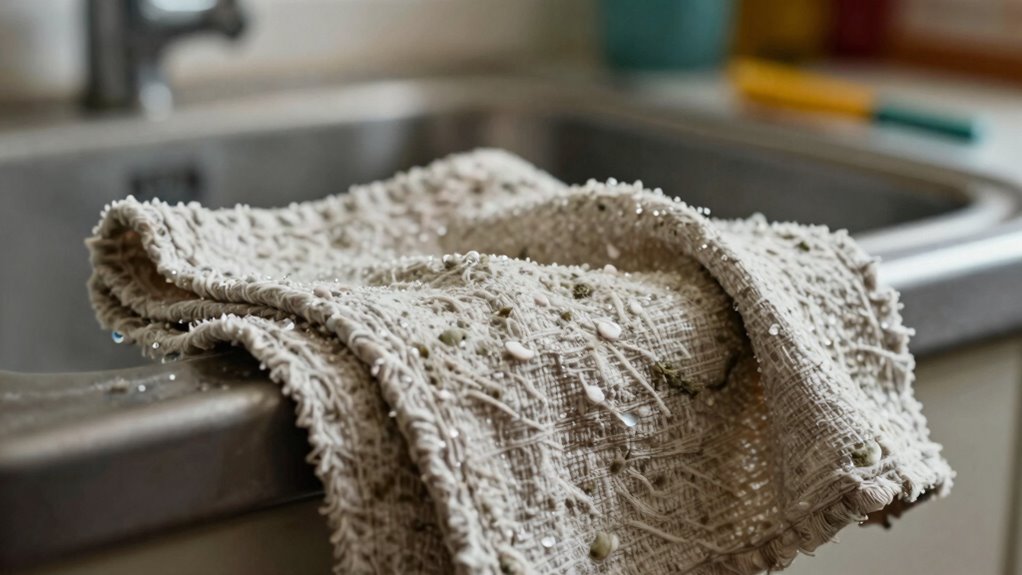
If you’ve ever noticed your dish cloths developing a sour smell despite regular washing, you’re not alone. That foul odor is often caused by dish cloth bacteria thriving in your cleaning tools. Even if you toss your cloth into the laundry frequently, it’s easy for bacteria to persist and multiply. The main culprit behind that lingering smell is moisture buildup. When you use your dish cloth to wipe dishes or countertops, it traps water, creating a damp environment perfect for bacteria to grow. As the bacteria multiply, they produce that unpleasant, sour smell that seems impossible to eliminate.
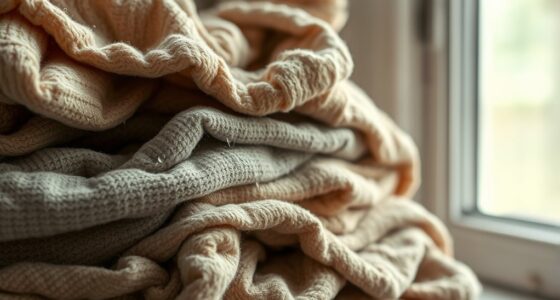
You might think washing your dish cloths in hot water or running them through the dishwasher will solve the problem. While these steps help, they don’t always fully eradicate the bacteria if moisture remains trapped in the fibers. The fibers of your dish cloth act like tiny sponges, holding onto water even after washing. If you leave the cloth wet and crumpled in a pile or in a damp sink, bacteria have a cozy habitat to thrive in. This moisture buildup is a key factor that keeps the smell coming back, no matter how often you clean it. Additionally, understanding bacterial growth can help you better prevent future odors. It’s also important to consider how material choice influences drying time and bacterial retention. Using proper drying techniques can significantly reduce bacterial presence on your dish cloths.
To break this cycle, you need to address the root cause: moisture retention. After each use, wring out your dish cloth thoroughly to remove excess water. Hang it in a well-ventilated area, preferably where it can dry completely between uses. Using a cloth with quick-drying fabric or switching to a microfiber cloth can make a difference because these materials dry faster and are less prone to harboring bacteria. Proper air circulation around your dish cloths can significantly reduce the chances of bacteria thriving. Regularly disinfect your dish cloths by soaking them in a mixture of hot water and vinegar or using a microwave or dishwasher to kill bacteria effectively.
microfiber dish cloths quick-drying
As an affiliate, we earn on qualifying purchases.
As an affiliate, we earn on qualifying purchases.
Frequently Asked Questions
Can Dish Cloths Smell Bad Even After Washing?
Yes, dish cloths can smell bad even after washing. Poor kitchen hygiene and leftover bacteria or mold can cause fabric odor to linger. Regularly washing your cloths in hot water with soap helps, but sometimes, deep cleaning or soaking in vinegar or bleach is necessary to fully eliminate odors. Make sure to dry them thoroughly after each use to prevent bacteria buildup, keeping your kitchen smelling fresh and hygienic.
How Often Should I Replace My Dish Cloths?
You should replace your dish cloths every 1 to 2 weeks. Studies show that kitchen hygiene habits impact health, and dirty cloths harbor bacteria that cause odors and potential illnesses. Regular fabric maintenance, like washing cloths thoroughly and drying them completely, helps prevent smells. Changing them frequently guarantees your kitchen stays clean and safe, reducing the risk of cross-contamination. Stay proactive to keep your space hygienic and odor-free.
Do Different Materials Trap Odors Differently?
Yes, different materials trap odors differently. For instance, microfiber and synthetic cloths often absorb less odor due to their smooth surfaces, making them easier to rinse out. In contrast, cotton and bamboo tend to trap more odors because their porous structures absorb moisture and bacteria, leading to stronger smells. A material comparison shows that choosing the right fabric can help reduce odor absorption, keeping your dish cloths fresher longer.
Are There Natural Remedies to Remove Persistent Smells?
Did you know that natural remedies can effectively eliminate persistent dishcloth smells? You can try soaking your cloths in a solution of natural enzymes, which break down odor-causing bacteria, or add a few drops of essential oils like tea tree or lavender for a fresh scent. These methods are eco-friendly, affordable, and safe, helping you keep your dishcloths smelling clean without harsh chemicals.
Does the Type of Soap Affect Odor Buildup?
Yes, the type of soap you use can affect odor buildup on dishcloths. Some soaps leave more residue, especially if they don’t rinse away easily, leading to soap residue buildup. Additionally, soaps with high or low pH levels can alter the fabric’s environment, encouraging bacteria growth that causes smells. To prevent this, opt for a gentle, well-rinsing soap and regularly wash your cloths to reduce odor-causing bacteria.
Conclusion
So, next time your dish cloth starts smelling off, remember it’s not just about neglect—it’s a battleground against bacteria hiding in the fibers. Think of your cloth as a sponge soaking up more than just water; it’s soaking up germs that can turn your kitchen into a microbial playground. Keep it dry, wash it often, and you’ll keep that nasty smell at bay, turning your dish cloth into a clean, fresh ally rather than a hidden threat.
Fall Picks
fall essentials
As an affiliate, we earn on qualifying purchases.