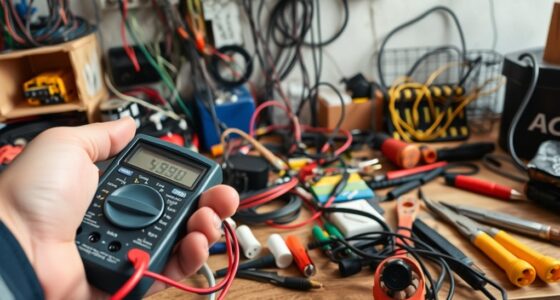
When prepping for a power outage, I prioritize food safety by keeping perishable items cold with ice or coolers and avoiding opening fridge doors often. I keep flashlights, candles, and a fully charged power bank ready for better lighting and communication. I also make certain my emergency supplies are organized and easily accessible. Staying prepared helps minimize chaos and keeps everyone safe. If you want to learn more about effective strategies, keep exploring these essential steps.
Key Takeaways
- Store perishable food in a refrigerator or cooler, keeping the temperature below 40°F to prevent spoilage.
- Use flashlights with fresh batteries and multiple lighting sources to maintain visibility during outages.
- Keep a fully charged power bank and backup communication devices to stay connected with loved ones and emergency services.
- Organize and access emergency supplies quickly, including non-perishable food, water, and first aid kits.
- Regularly check and maintain generators, fuel supplies, and safety procedures to ensure reliable power and safety during outages.

Have you ever been caught in a power outage and felt unprepared? I know I have, and it’s a jarring experience that makes you realize how essential it is to be ready. One of the first things I learned was the importance of generator maintenance. If you rely on a generator to keep your essentials running, regular upkeep isn’t optional—it’s indispensable. I’ve seen people neglect this step, only to find their generator won’t start when they need it most. So, I make it a point to check my generator’s oil levels, test it periodically, and keep fresh fuel on hand. A well-maintained generator can be a lifesaver, providing power for lights, refrigeration, and communication devices. It’s also wise to have an emergency kit with essentials like batteries, flashlights, and a portable charger. These items guarantee that even if the power is out for days, you can still stay informed and safe.
When the lights go out unexpectedly, I immediately reach for my emergency kit essentials. I keep it stocked with batteries, candles, and a backup power source. I’ve learned that having a flashlight with fresh batteries is better than relying solely on my phone’s flashlight, which can drain quickly. Keeping a portable, charged power bank for my devices means I can stay connected longer, which is critical during emergencies. I also make sure to have plenty of non-perishable food, water, and basic first aid supplies, but the importance of communication tools can’t be overstated. Staying in touch with loved ones or emergency services gives me peace of mind.
Preparing for a power outage isn’t just about having supplies; it’s about knowing how to use them effectively. I keep my generator’s manual handy and make sure I understand how to operate it safely. I also check that I have enough fuel stored in a safe container, and I rotate the fuel periodically to prevent it from going bad. Regularly practicing how to set up and run my generator helps me feel confident that I can do so quickly when needed. Having an organized emergency kit means I don’t waste critical time searching for essentials. It’s all about being proactive—checking my supplies, maintaining my generator, and knowing what to do when the lights go out. Additionally, understanding the importance of power output and how it affects your devices can help you choose the right generator for your needs. Taking these steps has made me feel more empowered and less anxious during outages. I encourage you to do the same—preparation is your best defense against the chaos that power outages can bring.
Frequently Asked Questions
How Can I Keep Medications Safe During a Power Outage?
During a power outage, I keep my medications safe by storing them in a cool, shaded place and using a cooler with ice packs if necessary. I also keep a portable, battery-operated thermometer to monitor storage temperature. It’s essential to have a plan for medication storage during power outages to prevent spoilage or loss of effectiveness. Always check with your pharmacist for specific storage instructions, especially for temperature-sensitive medications.
What Are the Best Non-Electric Heating Options?
Coincidentally, when the power goes out, I rely on portable heaters like kerosene or propane units—they’re effective and don’t need electricity. But I always prioritize fire safety, making sure they’re placed on stable surfaces and away from flammable objects. These non-electric heating options keep me warm safely, reminding me that sometimes, traditional methods are the most reliable during emergencies. Stay cautious, and stay warm.
How Do I Prevent Food Spoilage Without Refrigeration?
To prevent food spoilage without refrigeration, I rely on food preservation techniques like curing, drying, and fermenting. I also use alternative cooling methods such as placing foods in cool, shaded spots, buried in the earth, or in a cool stream if available. These methods help slow bacteria growth and maintain freshness, ensuring I can keep perishable foods safe longer during power outages.
What Communication Devices Work Without Power?
Imagine your lifeline when the lights go out—emergency radios and satellite phones are your best bet. These devices work without power, keeping you connected and informed. Emergency radios run on batteries or hand-crank power, while satellite phones link you to the outside world via satellite, no cell towers needed. Keep these in your kit, so you’re never truly cut off, no matter what surprises come your way.
How Can I Ensure My Pets Are Safe During Outages?
To keep my pets safe during outages, I focus on pet safety and outdoor precautions. I bring them indoors to prevent accidents and make certain they stay warm or cool, depending on the weather. I also secure outdoor areas, remove hazards, and provide plenty of fresh water. It is crucial to monitor them closely and avoid letting them roam freely, especially in unfamiliar or dark surroundings, to prevent injuries.
Conclusion
Preparing for a power outage might seem intimidating, but with the right steps, you can stay safe and comfortable. Have you stocked enough non-perishable food, flashlights, and batteries? Staying informed and having a plan makes all the difference. Remember, being ready isn’t just about avoiding inconvenience—it’s about protecting your loved ones. So, why wait until the lights go out? Start your prep today and face any outage with confidence.