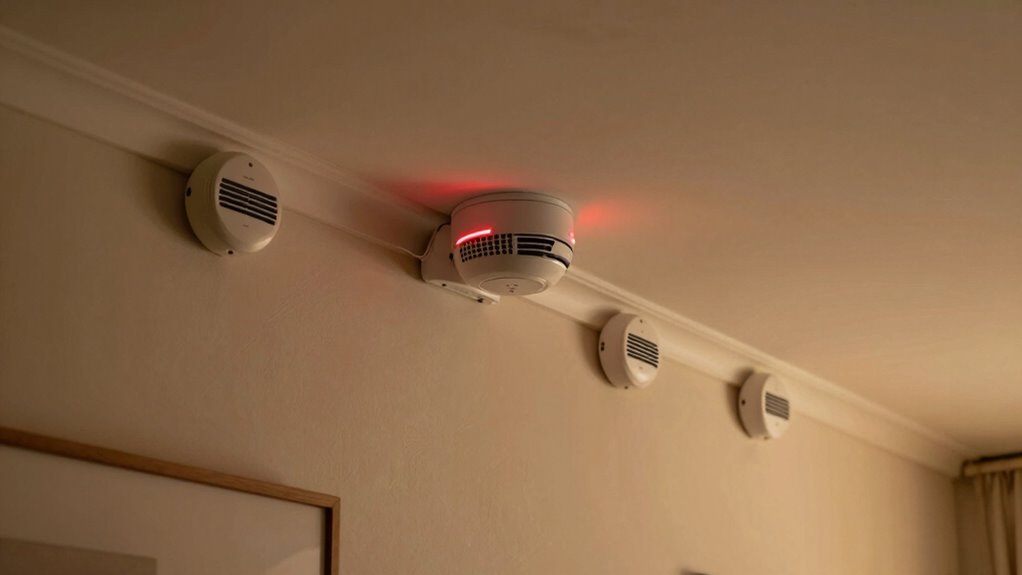

When one interconnected smoke alarm detects smoke, it should trigger all alarms in your house to alert everyone promptly. This interconnected system guarantees that no one misses the warning, even if they’re in a different room or floor. It provides more time to react and evacuate safely. Proper setup and maintenance are key for these alarms to work effectively together. Want to know how to make certain your system triggers correctly? Keep exploring for insider tips.

Get oils, diffusers and self-care delivered free with Prime
- Fast, free delivery on millions of items
- Prime Video, Amazon Music and more included
- Member-only deals all year
Key Takeaways
- Interconnected alarms ensure that a single smoke detection triggers all alarms for comprehensive warning.
- Simultaneous activation provides extra time for occupants to respond and evacuate safely.
- Wireless connectivity allows alarms to communicate instantly across the entire house.
- Proper placement and testing guarantee reliable communication and prompt alerts during emergencies.
- One beep triggering the whole house enhances safety by preventing unnoticed fires in unalerted areas.
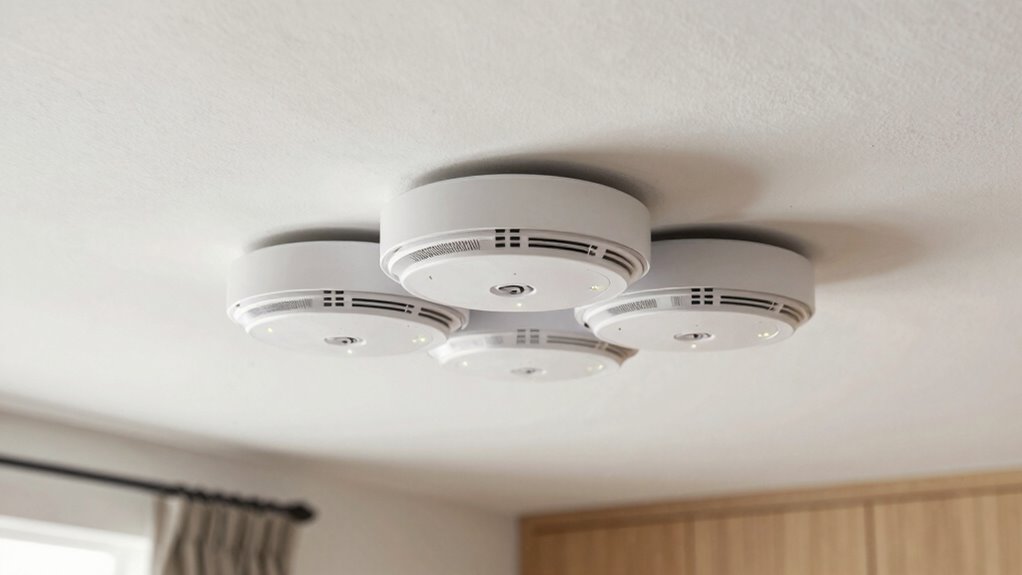
Interconnected smoke alarms are an essential safety feature that can substantially improve your home’s fire detection system. When one alarm detects smoke or fire, all interconnected units sound off simultaneously, giving you and your family more time to react. This setup is especially critical in larger homes or those with multiple floors, where a fire in one area might go unnoticed if alarms aren’t linked. By ensuring that every alarm alerts you at once, interconnected systems significantly boost your safety and peace of mind.
One key aspect to consider when choosing interconnected smoke alarms is wireless compatibility. Many modern systems rely on wireless communication to connect alarms without the need for cumbersome wiring. Wireless compatibility makes installation simpler and more flexible, allowing you to place alarms in optimal locations without worrying about running wires through walls or ceilings. It also enables easier expansion of your system in the future—if you add a new room or upgrade your home, you can incorporate additional alarms into your existing network seamlessly.
When it comes to installation guidelines, it’s important to follow manufacturer instructions carefully to ensure your interconnected system functions correctly. Typically, alarms should be installed on every level of your home, inside bedrooms, and outside sleeping areas. Mount them on the ceiling or high on the wall, following the specific height recommendations provided. For wireless alarms, ensure that the units are within range of each other, usually around 30 to 50 feet, depending on the model. Avoid placing alarms near windows, vents, or fans, as drafts can interfere with smoke detection. Proper placement and adherence to installation guidelines are crucial because they guarantee that the alarms will communicate reliably and alert you promptly in case of fire. Additionally, understanding the field‑of‑view of smoke alarms can help optimize placement for maximum coverage and detection efficiency.
Most wireless interconnected alarms have user-friendly setup procedures, often involving simple pairing steps or connecting via a dedicated app. Once set up, you can test the system to confirm all alarms activate when one detects smoke. Regular maintenance, such as replacing batteries and testing alarms monthly, ensures your system remains operational. Remember, even the most sophisticated wireless compatibility and installation adherence won’t be effective if the alarms aren’t maintained properly.
interconnected wireless smoke alarms
As an affiliate, we earn on qualifying purchases.
As an affiliate, we earn on qualifying purchases.
Frequently Asked Questions
Can Interconnected Smoke Alarms Be Installed in Existing Homes?
Yes, you can install interconnected smoke alarms in existing homes. You’ll need to update your fire alarm wiring to connect the units, ensuring they communicate properly. This upgrade enhances your home safety by alerting you throughout the house if one alarm detects smoke. While it may require some electrical work, many modern interconnected alarms are designed for easy installation, making your safety upgrades more effective and reliable.
What Is the Cost Difference Between Interconnected and Standalone Alarms?
You’ll find that the cost comparison favors standalone alarms initially, with lower purchase and installation expenses. Interconnected alarms, however, cost more upfront due to the need for additional wiring or wireless systems. Installation expenses for interconnected alarms also tend to be higher, but they offer superior safety by sounding throughout the house simultaneously. So, while the initial investment is bigger, the enhanced safety can make it worthwhile.
How Do Interconnected Alarms Communicate With Each Other?
You might wonder how interconnected alarms communicate, and they do so through wireless communication. When one alarm detects smoke, it sends a signal to the others, triggering synchronized alerts throughout your house. This seamless communication guarantees everyone hears the alarm promptly, enhancing safety. The wireless system makes setup easy and reliable, so you can trust that all alarms will respond together during an emergency, giving you peace of mind.
Are Interconnected Smoke Alarms Compatible With Smart Home Systems?
Yes, interconnected smoke alarms can be compatible with smart home systems through wireless connectivity. This integration allows for seamless alarm synchronization across your entire house, ensuring that when one alarm detects smoke, all alarms alert you simultaneously. Using smart technology, you can also receive alerts on your phone or control the system remotely, enhancing safety and convenience. Just check the compatibility of your alarms with your smart home platform before installation.
What Maintenance Is Required for Interconnected Smoke Alarms?
Think of your interconnected smoke alarms as guardians that need regular check-ins. You should replace batteries annually and test sensors monthly to guarantee they’re responsive. I once ignored a sensor test, and it saved my family’s life during a fire. Regular maintenance, like replacing batteries and sensor testing, keeps your alarms reliable and your home safe, giving you peace of mind when it matters most.
Conclusion
Remember, a chain is only as strong as its weakest link. Interconnected smoke alarms guarantee that if one detects smoke, your entire home is alerted immediately. This quick response can make all the difference in keeping you and your loved ones safe. Don’t wait until it’s too late—invest in interconnected alarms so that one beep truly means everyone wakes up. After all, safety isn’t just a precaution; it’s peace of mind.
Fall Picks
fall essentials
As an affiliate, we earn on qualifying purchases.