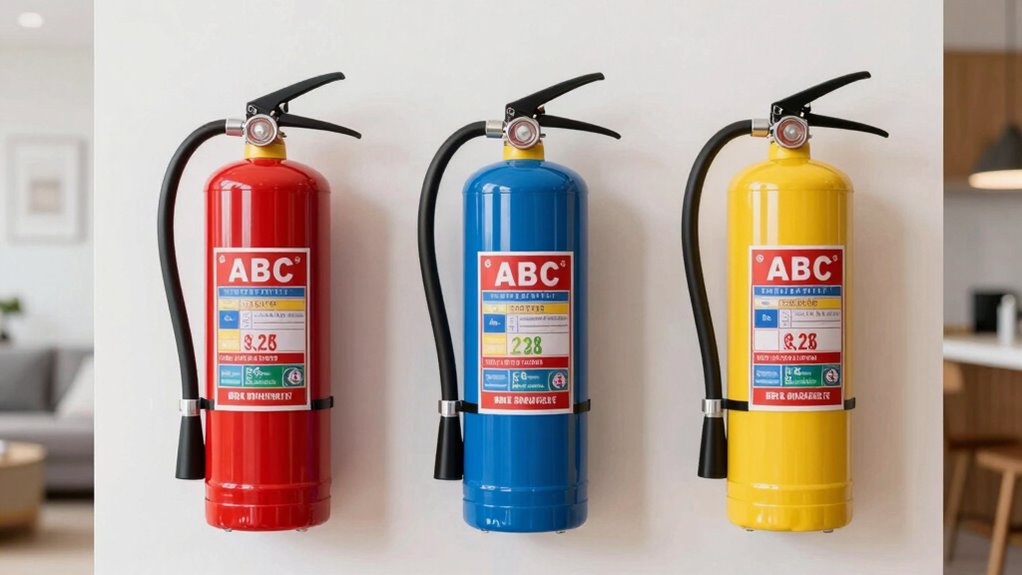

To keep your home safe, choose fire extinguishers with ABC ratings, as they handle most fires—ordinary combustibles, flammable liquids, and electrical fires. Place extinguishers in key areas like the kitchen, garage, and near heaters, ensuring they’re visible and accessible. Regularly check their pressure and condition. Knowing how to select and position the right extinguisher improves your safety. Continue exploring to learn simple steps for effective fire protection and proper use.
Key Takeaways
- ABC-rated fire extinguishers are versatile, effective against common combustibles, flammable liquids, and electrical fires.
- Place extinguishers in high-risk areas like kitchens, garages, and near heating devices for quick access.
- Ensure extinguishers are mounted visibly and within easy reach, with clear pathways for quick retrieval.
- Regularly inspect extinguishers for pressure, pin security, and corrosion to maintain readiness.
- Train household members on proper PASS operation and fire safety procedures for effective use.

Have you ever wondered how a small device can stop a fire in its tracks? It’s incredible how a simple fire extinguisher, when used correctly, can prevent a small blaze from turning into a disaster. Understanding the different fire extinguisher types is key to ensuring you’re prepared for various fire scenarios. There are four main types: Class A, B, C, and D, each designed to target specific kinds of fires. Class A extinguishers tackle common combustibles like wood and paper. Class B is for flammable liquids such as gasoline and oil. Class C is used on electrical fires, which are common in homes with appliances and wiring. Class D is meant for combustible metals, although these are less common in household settings. Knowing which type to use in each situation is essential for safety.
Understanding fire extinguisher types is essential for safety in various fire emergencies.
When it comes to safety tips, the first thing is to always keep fire extinguishers accessible and visible. Place them in locations where fires are most likely to occur, like the kitchen, garage, or near heating appliances. Make sure they’re mounted securely and have a clear path for quick access. Regularly inspect your extinguishers—check the pressure gauge, ensure the safety pin is intact, and look for any signs of corrosion or damage. Remember, a fire extinguisher isn’t a substitute for calling emergency services. If a fire becomes unmanageable or spreads quickly, evacuate immediately and call 911.
Using a fire extinguisher correctly is crucial. Remember the acronym PASS: Pull the pin, Aim the nozzle at the base of the fire, Squeeze the handle, and Sweep from side to side. Always stand at a safe distance—about 6 to 8 feet away from the flames—and move closer only if the fire begins to decrease. Never attempt to fight a large fire on your own; your safety is the priority. Also, consider the importance of having the right type of extinguisher for your environment and knowing how to operate it before a fire occurs. Many accidents happen because people aren’t familiar with their extinguishers or use the wrong type.
In addition to understanding fire extinguisher types and safety tips, it’s wise to have regular fire drills and ensure everyone in your household knows how to respond in case of an emergency. Proper placement, maintenance, and training can make all the difference in preventing small fires from escalating. Remember, a fire extinguisher isn’t just a safety feature — it’s a crucial tool that can save lives and property if you know how to use it properly. Incorporating fire safety equipment into your home safety plan is essential for comprehensive preparedness.
Frequently Asked Questions
How Often Should I Replace My Fire Extinguisher?
You should replace your fire extinguisher every 5 to 15 years, depending on its type and maintenance schedule. Regularly check the pressure gauge and inspect for damage or corrosion, ideally once a month, to guarantee proper function. If the extinguisher has been used, damaged, or its inspection shows it’s no longer reliable, replace it immediately. Staying consistent with your inspection frequency helps keep your extinguisher ready for emergencies.
Can I Use a Fire Extinguisher on Electrical Fires?
Think of an electrical fire like a blazing circuit; you shouldn’t use just any fire extinguisher. Yes, you can use an ABC-rated extinguisher on electrical fires, but only if it’s compatible with electrical safety. Look for a CO2 or dry chemical extinguisher designed for electrical fires—these are safer and more effective. Always verify your extinguisher is appropriate for electrical safety before tackling such a fire.
What Is the Ideal Size for Home Fire Extinguishers?
You should choose a fire extinguisher with a capacity of 2.5 to 5 pounds for your home. This size is manageable, easy to handle, and effective for most small fires. Considering home safety, make certain it’s placed in accessible locations like the kitchen and garage. Larger extinguishers may be cumbersome, while smaller ones might lack the capacity needed to put out a fire quickly.
Are There Fire Extinguishers Suitable for Outdoor Use?
Yes, there are fire extinguishers suitable for outdoor use. You should look for extinguishers with outdoor durability and weather resistance, guaranteeing they withstand rain, wind, and temperature fluctuations. These extinguishers are made from corrosion-resistant materials and often feature sealed, rugged designs to keep them functional in harsh conditions. Using a weather-resistant fire extinguisher outdoors helps you stay prepared and ensures safety during emergencies.
How Do I Properly Dispose of an Expired Extinguisher?
When you need to properly dispose of an expired extinguisher, don’t throw it in the trash. Instead, take it to a recycling center that accepts fire extinguishers. Make sure to discharge any remaining contents safely, and if necessary, follow local regulations for disposal. Recycling centers handle the hazardous materials properly, ensuring environmental safety and compliance. Your proactive step helps protect both your community and the environment.
Conclusion
Remember, your fire extinguisher is your home’s silent hero—ready to act before panic sets in. By understanding ABC ratings and placing extinguishers strategically, you turn chaos into control. Think of it as a lifeline woven into your daily routine, ready to save the day when seconds count. Don’t wait for disaster to strike—equip yourself now, and turn safety into your most trusted ally. After all, prevention is the best fire drill you’ll ever master.